What Is a Borehole Washout?
The caliper log comes back and a stretch of hole that should be 8.5 inches looks more like a cave. Or the cement job needed a lot more volume than planned and the bond log still looks spotty. Either way, the hole isn't the size you drilled it. So what is a borehole washout, and why does it cause so much trouble?
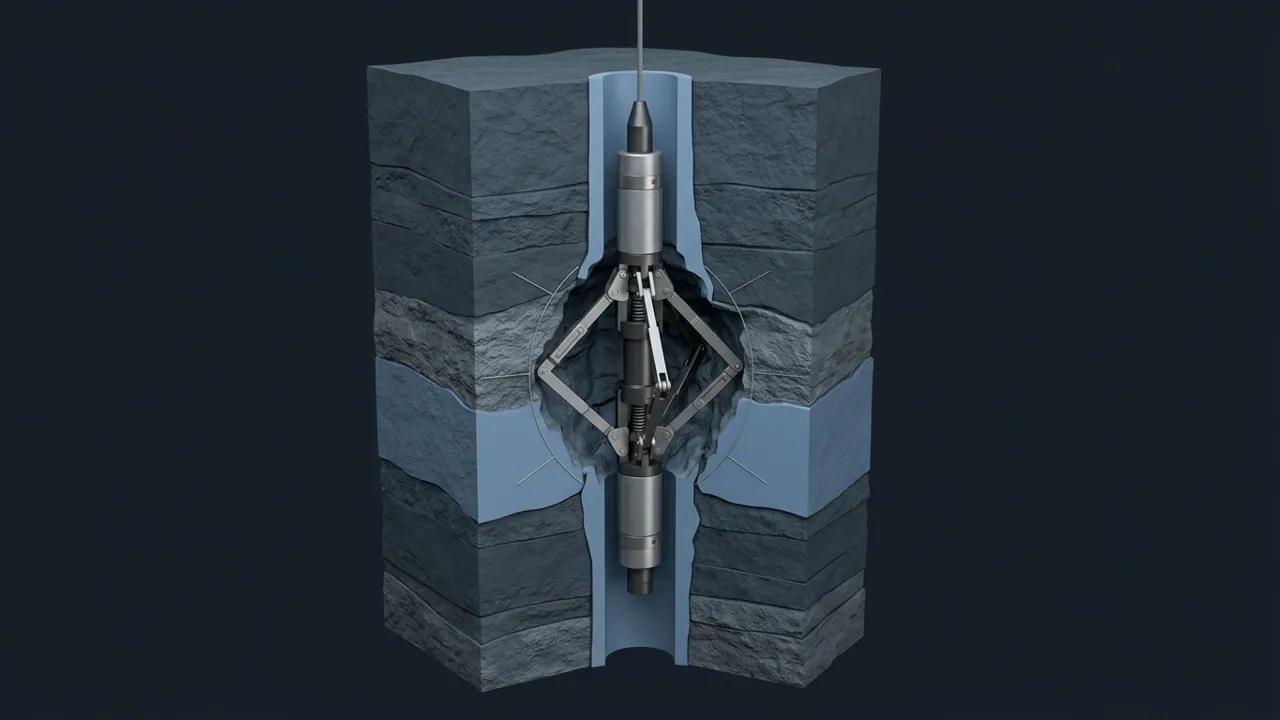
A borehole washout is a section of the wellbore that has been enlarged beyond the size of the bit that drilled it. It happens when the wall erodes or breaks down, usually in soft, weak or reactive formations. Common causes include high fluid velocity at the bit and BHA, sloughing shale, salt dissolving in undersaturated mud, and too much reaming. Washouts slow annular velocity and hurt hole cleaning, make it hard for logging tools to read accurately, and make it much harder to get a good cement job. A caliper log is the standard way to find and measure them.
What Is a Borehole Washout?
The SLB Energy Glossary lists two meanings for washout. One is an enlarged section of the hole. The other is a hole eroded through the drill string. This article covers the first one, with a quick look at the second further down.
Hole enlargement can be mild, where the hole is just a little over gauge. Or it can be severe, where whole sections cave out to several times the bit diameter. Even mild washouts can cause problems when they alternate with in-gauge sections and leave ledges.
What Causes Hole Enlargement?
Here are the usual causes:
- Erosion of soft or unconsolidated rock by high fluid velocity at the bit nozzles and around the BHA
- Sloughing or swelling shale that weakens and falls in
- Salt dissolving because the mud isn't salt-saturated
- Mud weight too low, so the wall fails and caves in
- Repeated reaming and backreaming through the same section
- Drill string vibration banging on the wall
- Long open-hole exposure, letting weak rock deteriorate
Most washouts come from a mix of these. Soft rock plus high flow rate plus lots of time is a common recipe.
How Does a Caliper Log Find Washouts?
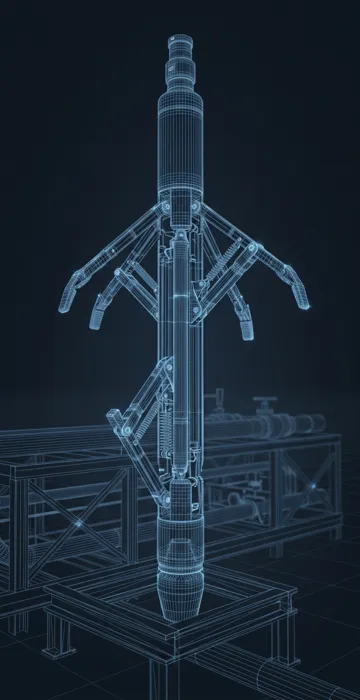
A caliper log measures the diameter of the hole. Wireline caliper tools use arms that press against the wall as the tool is pulled up the hole. Multi-arm tools can show whether the hole is round or oval. Some LWD tools also estimate hole size while drilling.
The log plots hole size against depth, usually alongside the bit size. Anywhere the caliper reading swings well above bit size, you've got a washout. Engineers also use the caliper to figure how much cement they'll need to fill the annulus.
Why Is a Washout a Problem?
Hole Cleaning
Mud slows way down in an enlarged section, because the same flow is spread across a bigger area. Cuttings drop out and collect there. When the pumps go off or you pull the BHA through, that pile can slide back and pack off.
Stuck Pipe and Tight Spots
Washouts next to in-gauge sections leave ledges. Stabilizers and bits can hang on those ledges going in or out of the hole. Washed-out shale above the BHA can also drop chunks behind it on a trip.
Logging
Many logging tools need good contact with the wall or a predictable standoff to read accurately. In a washout, pad tools can lose contact and read the mud instead of the rock. That can make porosity and density readings unreliable across the zone you most want to understand.
Cementing
This is the big one. In a washout, it's hard to move all the mud out of the way before the cement gets there. Cement tends to channel past pockets of mud, leaving gaps. Those gaps can mean poor zonal isolation and remedial cement work later. Washouts also mean more cement volume, and if the caliper isn't run, nobody knows how much more.
How Do You Prevent Borehole Washouts?
Follow the mud and hydraulics program, and let the company man and engineers make changes. Here are the general practices:
- Size flow rate and bit nozzles to clean the hole without blasting soft rock.
- Run inhibitive mud through reactive shale.
- Run salt-saturated mud through salt sections.
- Keep mud weight inside the stability window.
- Avoid unnecessary reaming and backreaming.
- Manage vibration with the right parameters and BHA.
- Limit open-hole time where you can.
Where crews go wrong: cranking up the pumps to clean a washed-out section without thinking about why it washed out. If the rock is soft and eroding, more flow may just make the hole bigger.
Can You Fix a Washout Once It's There?
Not really. You can't put rock back. What you can do is stop it from getting worse and work around it.
Fix the cause first, whether that's mud chemistry, mud weight or flow rate. Then plan around the damage. That might mean extra circulation time to clean the enlarged section, careful trip speeds past ledges, and a cement design with spacers and centralizers aimed at moving mud out of the washout. In severe cases, the operator may set casing sooner than planned or sidetrack around a section that won't hold up.
Washout vs Drill Pipe Washout: What's the Difference?
Same word, different problem. A drill pipe washout is a hole cut through the drill string itself, usually at a fatigue crack or a leaking connection. High-pressure mud squirts through the crack and erodes it bigger and bigger.
Here's what you'll see: a slow, steady drop in pump pressure at the same pump rate, often with a small rise in pump strokes. Don't ignore it. A washed-out joint is one step away from a twistoff, and the fix is to pull out and find the bad joint before it parts.
Pump pressure is one of your best diagnostic tools in general. A slow drop points to a hole in the pipe. Rising pressure with falling ROP in soft shale points somewhere else entirely, often to bit balling.
What Is a Borehole Washout, and Should You Worry?
A borehole washout is hole that's bigger than the bit that drilled it, caused by erosion, sloughing shale, dissolving salt or weak rock. It's not always a crisis, but it hurts hole cleaning, logs and cement, and it can set you up for stuck pipe.
Prevent it with the right mud, sensible hydraulics and less time in open hole. Use the caliper log to find washouts and size the cement job. And remember, a slow pump pressure drop means a different kind of washout, the one in your pipe, so pull and check it.