What Causes Wellbore Instability?
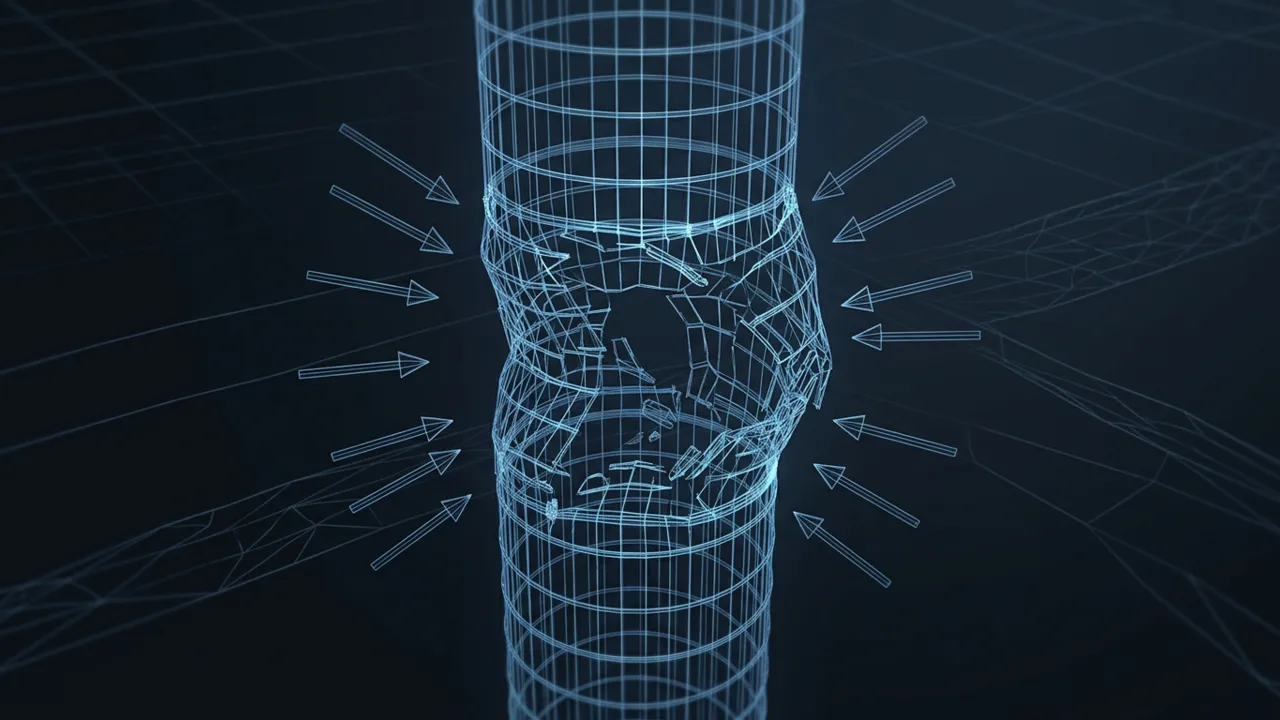
The shakers start throwing out big, curved chunks of shale that the bit never cut. Trips get tighter every time, and now there's fill on bottom after every connection. The hole is falling apart around you. Every driller has seen it, and most have watched it turn into stuck pipe at least once. So what causes wellbore instability, and what can you do about it?
Wellbore instability is caused by the rock around the hole failing, either mechanically because the mud pressure doesn't balance the stresses in the rock, or chemically because the mud reacts with the formation. On the mechanical side, mud weight that's too low lets the wall collapse, while mud weight that's too high can fracture it. On the chemical side, water in the mud can hydrate and weaken shale, and salt can dissolve or creep. Fractures, hole angle, surges and open-hole time make it worse. The main fixes are the right mud weight, inhibitive mud, less open-hole time and careful trips.
What Is Wellbore Instability?
Before you drill a hole, the rock is holding up its share of the weight above it and the stresses around it. Drill out a cylinder of that rock, and the load shifts onto the rock right around the wellbore wall. The only thing pushing back is the mud.
If the mud's pressure and chemistry match what that rock needs, the hole stays in gauge. If they don't, the wall starts to fail. It might cave in, crack, swell, squeeze inward or wash out. That's wellbore instability.
It shows up in two ways. The hole gets bigger, when chunks fall in, or the hole gets smaller, when the rock swells or creeps. Both can stick your pipe.
What Are the Mechanical Causes of Wellbore Instability?
Mechanical instability is about stress and pressure. The rock is strong enough or it isn't, given the support the mud is giving it.
Mud Weight Too Low
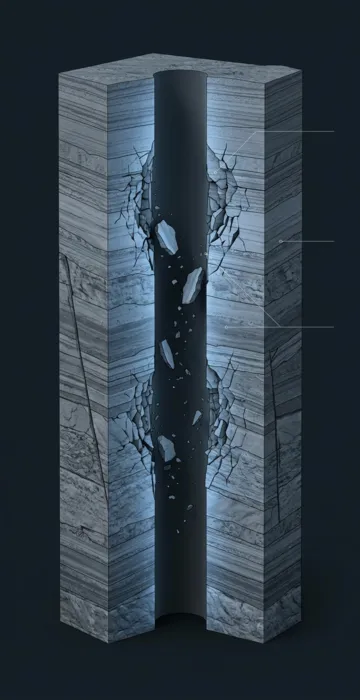
Not enough mud weight means not enough support for the wall. The rock fails in shear, and chunks break off and fall into the hole. This is the most common route to borehole collapse. You'll see angular cavings at the shakers and an enlarged hole on the caliper log.
Mud Weight Too High
Too much mud weight can push the wall past its fracture pressure. The rock cracks in tension, and you get losses. In weak or fractured rock, high pressure can also force mud into existing cracks and loosen blocks of formation.
The Safe Mud Weight Window
Put those two together and you get a window: heavy enough to hold the wall up, light enough not to break it. Some wells have a wide window. Others, especially deep, depleted or highly stressed wells, have a narrow one, and every pressure spike matters.
Other Mechanical Factors
- Hole angle and direction relative to the earth's stresses, which can make the same rock stable in one well and unstable in another
- Weak bedding planes in laminated shale that split when you drill along them
- Natural fractures and faults that let blocks of rock fall loose
- Surge and swab pressures from tripping too fast
- Drill string vibration and pipe banging on the wall
- Erosion of soft rock from high annular velocity at the bit or BHA
- Overpressured shale, where pore pressure is higher than expected
What Are the Chemical Causes of Wellbore Instability?
Chemical instability is about what the mud does to the rock over time. It's mostly a shale and salt problem.
Many shales contain clays that take up water. When water-based mud contacts them, water moves into the shale, and the clays hydrate. The rock swells, weakens and eventually falls apart. That's shale swelling, and it's one of the biggest drivers of hole trouble in water-based mud.
Salt is a different animal. Freshwater mud can dissolve it and wash out the hole. Salt also creeps under stress, slowly flowing into the wellbore and making it undergauge.
The big difference from mechanical problems is time. Chemical instability gets worse the longer the hole is open. A shale that looked fine on the first trip can be falling in by the third.
What Are the Warning Signs of Wellbore Instability?
Here's what you'll see:
- Cavings at the shakers that are bigger or a different shape than drilled cuttings
- More volume at the shakers than the ROP explains
- Tight hole and overpull on trips and connections
- Fill on bottom after connections or trips
- Rising and erratic torque and drag
- Pump pressure spikes or packoffs
- Reaming needed to get back to bottom
- Caliper logs showing an enlarged or undergauge hole
What Do Cavings Tell You?
Cavings are pieces of the wall, not cuttings from the bit. Their shape is a clue to what's going on. Many mud loggers and geologists read them roughly like this:
| Caving shape | Likely cause |
|---|---|
| Angular, with rough curved faces | Shear failure, often mud weight too low for the stresses |
| Long and splintery | Pore pressure higher than mud pressure in shale |
| Flat, blocky or tabular | Weak bedding planes or natural fractures |
Save a sample and show it to the mud logger and company man. It's one of the best tools you have for figuring out the fix.
What Causes Tight Hole and Undergauge Hole?
Tight hole is extra overpull or drag in a section of the hole. Undergauge hole is when the hole is actually smaller than the bit that drilled it. They often go together.
Common causes include:
- Swelling shale closing in on the hole
- Salt or plastic shale creeping inward
- Thick filter cake across permeable zones
- A worn, undergauge bit
- Ledges and doglegs that make the hole act smaller than it is
The habit that makes it worse: pulling hard through a tight spot every trip. Ream it, figure out why it's tight, and fix the cause. Tight hole that keeps getting tighter is a stuck pipe event waiting for its moment.
Is Wellbore Instability Worse in Deviated and Horizontal Wells?
Often, yes. In most areas, the stresses in the earth aren't equal in every direction. A vertical hole sees one set of stresses, and a high-angle hole through the same shale sees a different set. Many deviated wells need more mud weight to stay stable than a vertical well in the same field.
Bedding planes matter too. Drill nearly parallel to laminated shale and the layers can peel off the top of the hole like pages from a wet book. That's a common source of blocky cavings in high-angle sections.
Deviated wells also have a harder time cleaning out the cavings once they fall. In a vertical hole, a caving drops toward the bit and gets ground up. In a high-angle hole, it lands on the low side and joins the cuttings bed. So instability and poor hole cleaning tend to feed each other.
How Does Wellbore Instability Lead to Stuck Pipe?
It's one of the most common roads to stuck pipe. Here's how it usually plays out:
- Cavings pile up in the annulus faster than the mud can carry them, and the string packs off.
- Big blocks fall in behind the BHA during a trip and bridge the hole above it.
- Swelling shale or creeping salt squeezes the hole around the stabilizers.
- An enlarged section leaves ledges that catch the BHA.
The common thread is warning time. Instability rarely sticks the pipe on the first sign. It gives you hours or days of cavings, fill and drag first. Crews that report those early signs and adjust the plan usually stay out of trouble.
How Do You Fix Wellbore Instability?
The fix depends on the cause, so diagnose first. The company man and the drilling and mud engineers set the plan, and changes to mud weight are always a well control decision too.
- Adjust mud weight within the safe window. Raising it often helps shear failure. Lowering it can help if you're fracturing the wall.
- Use inhibitive water-based mud or oil-based mud through reactive shale.
- Add sealing materials that plug microfractures and slow pressure getting into shale.
- Use salt-saturated mud through salt so it doesn't dissolve the formation.
- Control trip speeds to limit surge and swab.
- Keep the hole clean so cavings don't pile up and pack off.
- Cut down open-hole time with good planning and fewer unplanned trips.
- Manage vibration and avoid excessive reaming that beats up the wall.
If the hole just won't stabilize, the long-term fix may be setting casing sooner or changing the well path. Those are planning decisions, but they start with good reports from the rig.
Can Wellbore Instability Be Prevented?
Mostly, yes, with planning. Before the well is drilled, engineers often build a geomechanical model from offset wells, logs and leak-off tests. That model estimates the stresses and the safe mud weight window for each section.
On the rig, prevention is about discipline. Stick to the mud program, watch the shakers every tour, report cavings, and respect trip speed limits. The rig crew sees the problem first, and quick reports give the engineers time to adjust before the hole falls in. If you want a simple reference on how enlarged hole sections are described, the SLB glossary entry on washouts is a good one.
What Causes Wellbore Instability? Stress, Chemistry and Time
Wellbore instability comes from rock failing around the hole. Mechanically, mud weight that's too low lets the wall collapse and mud weight that's too high cracks it. Chemically, water-based mud can swell shale and freshwater can dissolve salt. Time in open hole makes every one of those worse.
Watch for cavings, fill, tight hole and rising torque and drag. Save cavings and report them. Then follow the plan the company man and engineers put together, whether that's mud weight, inhibition, trip practices or casing. Catch it early, and wellbore instability is a manageable nuisance instead of a stuck BHA.