Lost Circulation Materials – What Goes Down the Hole to Stop Losses

The well is taking mud, the mud engineer is already pulling sacks off the pallet, and somebody asks the obvious question: what exactly are we about to pump down there? Ground nut shells? Fiber? Flakes? But each of those products does a specific job, and picking the wrong one wastes time and mud. So what are lost circulation materials, and which one goes down the hole for which kind of losses?
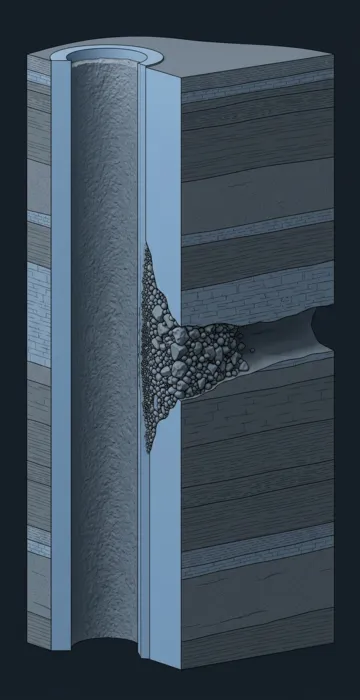
Lost circulation materials (LCM) are solids added to drilling mud to bridge, plug and seal the openings in a formation that are stealing the mud. They come in three main shapes: granular particles like calcium carbonate, ground nut shells and graphite; fibrous materials like cedar fiber, cottonseed hulls and synthetic fibers; and flaky materials like mica. Granular LCM wedges into openings to form a bridge, fibers knit across them into a mat, and flakes lay over the face like shingles. The key to making any of them work is sizing the particles to the openings you're trying to plug.
How Do Lost Circulation Materials Work?
LCM is one more ingredient in the drilling fluid, and it only works if it gets to the right place. Think of a crack in the rock as a gap you need to close. You can't fill it with one big rock, because you don't know its exact size. Instead, you pump a mix of particles. The bigger ones wedge into the opening first and form a bridge. Smaller ones fill the gaps between them. Finally, the mud's normal solids and filtrate build a filter cake over the top.
That three-step build, bridge then pack then seal, is how most LCM treatments work. It's why a good blend usually has a range of particle sizes instead of just one.
LCM only works on losses into openings it can bridge. It doesn't change the formation's strength or the pressure you're putting on it. If the hole is fracturing because the mud weight is too high, LCM helps but doesn't solve the root problem.
What Are the Main Types of LCM?
Granular LCM
Granular materials are hard-ish particles that bridge across openings. Common ones include:
- Calcium carbonate, often sized in several grades. It's acid-soluble, so it's popular across reservoir zones where it can be cleaned up later.
- Ground walnut or other nut shells, which are tough and come in fine, medium and coarse grades.
- Graphite and other resilient particles, which can deform and spring back as the crack opens and closes.
Fibrous LCM
Fibers tangle together and form a mat across an opening. That mat catches other solids and builds a seal. Cedar fiber, cottonseed hulls, shredded paper, sugar cane fiber and synthetic fibers all show up on location.
Flaky LCM
Flakes like mica and cellophane lay flat against the formation face. They overlap and form a layer that slows filtrate and mud loss. They're often blended with granular and fibrous materials.
Blends
Most service companies sell premixed blends of all three. Blends cover a wider range of opening sizes, which helps when you don't know exactly what the mud is going into.
Fibrous vs Granular LCM: Which Is Better?
Neither is better across the board. They do different jobs, and they often work best together.
| Type | How it seals | Where it fits | Watch out for |
|---|---|---|---|
| Granular | Wedges into openings to form a bridge | Porous zones, small fractures, wellbore strengthening | Needs proper sizing to bridge |
| Fibrous | Tangles into a mat across openings | Larger porous zones, mixing into pills | Can plug tools and screens |
| Flaky | Overlaps on the face like shingles | Seepage, blended with others | Weak alone in big fractures |
For seepage into a sand, a fine granular package in the whole mud may be enough. For partial losses into fractures, a pill with a blend of coarse granular and fibrous material is a common choice.
What Is an LCM Pill?
An LCM pill is a small, concentrated batch of mud loaded with lost circulation material. It's mixed in a separate pit, pumped down the string and placed across the loss zone. Then the crew lets it sit or squeezes it lightly so it can seal.
Pills are usually measured by concentration, in pounds of LCM per barrel of mud. Higher concentrations and coarser materials go to more severe losses. The mud engineer sets the recipe based on the loss rate and the formation.
Here's the general sequence:
- Pull the bit up so it sits just above or across the loss zone, per the procedure.
- Mix the pill to the recipe in a separate pit.
- Pump it down and displace it into place.
- Pull up above the pill and let it sit, or apply light squeeze pressure if the plan calls for it.
- Check whether the losses have slowed before going back to drilling.
How Do You Size LCM?
LCM sizing is the part a lot of people skip, and it's why some pills don't work. Particles need to be large enough to bridge the opening, but not so large they can't get into it.
For porous zones, a long-standing rule of thumb says the bridging particles should be at least about one third the size of the pore openings. For fractures, the engineer will estimate the fracture width and pick a size spread to match. Many operators use software to design a particle size distribution for each interval.
When you don't know the opening size, a broad blend of fine, medium and coarse is the safe bet. That's also why you'll see more than one grade of the same material on location.
Can LCM Plug Your Downhole Tools?
It sure can. Coarse LCM and fibers can plug bit nozzles, MWD tools, mud motors and float valves. Murphy's Law says it'll happen right when you need the MWD most.
Before pumping a pill, check the tool limits. MWD and motor vendors publish maximum LCM size and concentration. Some rigs run a circulating sub above the BHA so pills can be pumped out the side instead of through the tools. Others pull out and pump pills through open-ended pipe for severe losses.
A costly mistake: pumping a coarse pill through a tool string without checking the vendor's limits. A plugged string with losses in the hole is twice the trouble.
What Happens to LCM at the Shakers?
Your shale shakers don't know the difference between cuttings and expensive LCM. Fine screens will strip the coarse material right out of the mud. If you're running LCM in the whole system, the mud engineer may call for coarser screens or a shaker bypass while drilling through the loss zone.
That trade-off means more drilled solids stay in the mud for a while. It's a balancing act the mud engineer and company man work out together.
What If LCM Doesn't Stop the Losses?
LCM works best on seepage and partial losses. For severe or total losses into big fractures or caverns, crews often move to stronger options:
- Cross-linked polymer pills that set into a firm gel
- High-fluid-loss squeeze pills that dewater quickly into a solid plug
- Cement plugs
- Gunk squeezes, which use bentonite in oil that swells when it hits water
Sometimes the losses aren't really a plugging problem at all. If the hole is breaking down because of weak or unstable rock, the fix may involve mud weight, casing points or how you're handling wellbore instability overall.
Lost Circulation Materials: Pick the Right Plug for the Hole
Lost circulation materials are solids that bridge and seal the openings taking your mud. Granular particles form the bridge, fibers knit a mat, and flakes cover the face. Fine LCM in the whole mud handles seepage, and concentrated LCM pills handle bigger losses.
Size the material to the openings, check your tool limits before you pump, and don't expect LCM to fix a pressure problem by itself. Follow the mud engineer's recipe and the rig's procedure, and keep an eye on the pits to see if it's working.