Differential Sticking – Causes and How to Free the Pipe
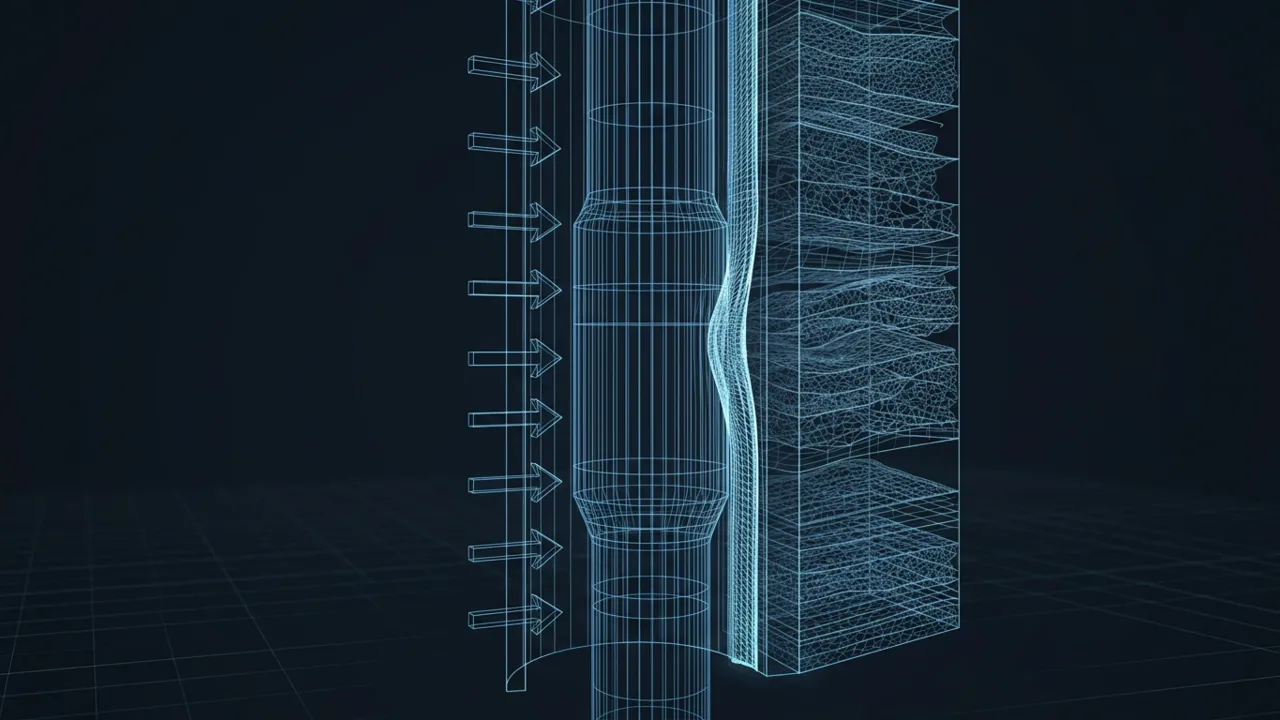
You stopped for a survey, the MWD took its time, and now the string won't budge. Pumps are fine. Pressure is normal. But the pipe won't go up, down or around. That's the calling card of differential sticking, and the clock is already running against you. So what causes differential sticking, and how do you free the pipe?
Differential sticking happens when the mud's hydrostatic pressure is higher than the pressure in a permeable formation, and that difference pushes a stationary drill string into the filter cake on the wall. The sticking force grows with the pressure difference and the contact area. The classic signs are full circulation, no rotation and no movement after the pipe sat still across a sand. The first fix is to keep circulating, slack off and apply torque within limits, and jar down while the contact area is still small. If that fails, crews spot a pipe-freeing fluid or, where well control allows, cut hydrostatic pressure.
What Is Differential Sticking?
Differential sticking, also called differential pressure sticking, is a type of stuck pipe where pressure, not rock or cuttings, holds the string. The SLB Energy Glossary describes it as the pipe being held against the wellbore wall by the difference between wellbore pressure and formation pressure.
Here's what's going on downhole. You run a little overbalance on purpose to keep formation fluids out. Across a permeable zone, mud filtrate leaks into the rock and leaves a filter cake on the wall. When pipe rests against that cake, the cake seals around it. Now the full mud pressure pushes on one side of the pipe, while only formation pressure acts on the sealed side.
That imbalance can add up to a huge side force. Pull on the pipe and friction against the wall resists you. Pull harder and you're just stretching steel.
What Causes Differential Pressure Sticking?
Three things have to come together. Take any one of them away and the pipe doesn't stick this way.
- A permeable formation, usually sandstone or carbonate, that lets filtrate in and builds a filter cake.
- Overbalance, meaning the hydrostatic pressure of the mud is greater than the formation pressure.
- Stationary pipe in contact with the wall, giving the cake time to seal around it.
Several conditions make it worse:
- Depleted zones, where formation pressure has dropped and the overbalance is much higher than in the rest of the hole
- Heavier mud weight than the hole really needs
- Thick, sticky filter cake from poor fluid loss control or high drilled solids
- Large-diameter, smooth drill collars with lots of wall contact
- Deviated hole, where the string lies on the low side
- Long connections, slow surveys, rig repairs or anything else that leaves the pipe parked
Time is the big multiplier. The longer the pipe sits, the more the cake builds around it and the bigger the contact area gets. That's why the first few minutes matter so much.
What Are the Signs of Differential Sticking?
Here's what you'll see when it happens. It's one of the easier stuck pipe types to recognize if you know what to look for.
- The pipe was stationary, or nearly so, right before it stuck
- Circulation is full and pump pressure is normal
- You can't rotate the string
- You can't move it up or down
- The stuck point is across a known permeable formation, often at the collars or BHA
- Overpull on connections across that zone was rising before it finally stuck
Normal circulation is the key difference. If pressure spikes and returns drop off, you're probably looking at a packoff instead. If circulation is fine but you got stuck while moving through a dogleg, think about keyseat sticking or other geometry problems instead.
How Do You Free Differentially Stuck Pipe?
Start with your rig's stuck pipe procedure. The company man and toolpusher call the shots, and the jar and string limits come from the engineer's numbers, not a gut feeling. With that said, here's the general order most procedures follow.

Step 1: Act Immediately
Keep the pumps running at the normal rate. Slack off as much weight as the procedure allows and apply right-hand torque within the pipe's makeup limits. You're trying to roll the pipe off the wall before the contact area grows.
Step 2: Jar
Jar down first with torque held in the string, if your jar is above the stuck point. Then try jarring up. Respect the jar's rated loads and the string's tensile limits. A parted string turns a stuck pipe job into a fishing job real fast.
Step 3: Spot a Pipe-Freeing Fluid
If jarring doesn't free it, the next move is usually a spotting fluid. This is a pill pumped down and placed across the stuck zone, then left to soak. Depending on the mud system, it may be oil-based or a specially formulated water-based product. The goal is to break down or dehydrate the filter cake and reduce the friction holding the pipe.
The team will calculate volumes so the pill covers the stuck interval with some extra, and they'll move a small amount periodically during the soak. While it soaks, the crew keeps working the pipe within limits.
Step 4: Reduce the Hydrostatic Pressure
Less overbalance means less sticking force. Options include cutting mud weight or pumping a lighter fluid down the pipe to reduce bottomhole pressure. This is a well control decision, full stop. It only happens with the company man's approval and a clear plan to keep the well under control.
Step 5: Back Off and Fish
If nothing works, the crew runs a free point to find the stuck depth, backs off above it, and goes fishing or plans a sidetrack. At that point it's an economics question for the operator.
Don't make this mistake: waiting around to "see what the engineer says" before doing anything. The immediate actions on your posted procedure are there because the first minutes give you the best odds. Do those, then call for help.
How Does a Spotting Fluid Work?
A spotting fluid attacks the seal between the pipe and the filter cake. Some products work by penetrating and cracking the cake, which lets pressure equalize behind the pipe. Others mainly lubricate and lower friction so the pipe can slide out.
Spotting works best when it goes on early. A string that's been stuck a long time has a bigger contact area and a firmer cake. Soak time varies by product and situation, so follow the mud engineer's recommendation.
There's an environmental side too. Oil-based spotting fluids may need special handling when they come back to surface, so plan where that pill goes before you pump it.
How Do You Prevent Differential Sticking?
Prevention beats any spotting pill. Most of it comes down to controlling the three ingredients: overbalance, filter cake and stationary time.
- Keep the mud weight as low as safe well control and hole stability allow.
- Control fluid loss so the filter cake stays thin and slick.
- Keep drilled solids low with good solids control equipment.
- Minimize the time the pipe sits still across permeable zones, especially on connections and surveys.
- Rotate or reciprocate the pipe whenever you're circulating and can safely do so.
- Use spiral drill collars, heavyweight drill pipe and a BHA design that cuts down on wall contact.
- Know where the depleted zones are, and be extra careful when you're parked across them.
- Add lubricants to the mud if the engineer recommends them for a sticky interval.
If the rig goes down for repairs with the bit off bottom, think about where the BHA is sitting. Pulling up into casing or a shale section, if possible, keeps the collars away from that sand.
Is Differential Sticking Worse in Directional Wells?
It usually is. In a deviated hole, gravity lays the string on the low side, so more of it touches the wall. That means more contact area and more potential sticking force.
Directional work also involves more stationary time. Orienting a motor, taking surveys and sliding all give the cake time to grab hold. Good directional crews keep the pipe moving whenever they can and keep an eye on overpull trends at every connection.
Differential Sticking: Free It Fast or Don't Stick at All
Differential sticking is pressure holding the pipe against a permeable wall. You'll recognize it by full circulation, no rotation and no movement after the pipe sat still. The best chance to free it is right away, with circulation, slack-off, torque and jarring down.
If that doesn't work, a spotting fluid and lower hydrostatic pressure are next, always under the company man's direction and well control limits. And the best fix of all is the boring one: keep the overbalance reasonable, keep the filter cake thin, and keep that pipe moving.