Keyseat Sticking vs. Packoff – Telling Stuck Pipe Apart
The string is hung up and the driller wants to pull harder. Should he? That depends on what's holding it, and the two most common mechanical culprits, a keyseat and a packoff, need very different handling. Get the diagnosis wrong and you can turn a tight spot into a fishing job. So how do you tell keyseat sticking from a packoff, and what do you do about each one?
Keyseat sticking happens when the larger BHA gets pulled up into a narrow groove worn into the wall at a dogleg, while a packoff happens when cuttings or caving rock fill the annulus around the string. The quickest way to tell them apart is circulation. With a keyseat, you can usually circulate normally and pump pressure doesn't change. With a packoff, pressure spikes and returns drop or stop. A keyseat also only grabs while pulling out, at about the same depth each time, and the pipe will usually still go down.
What Is Keyseat Sticking?
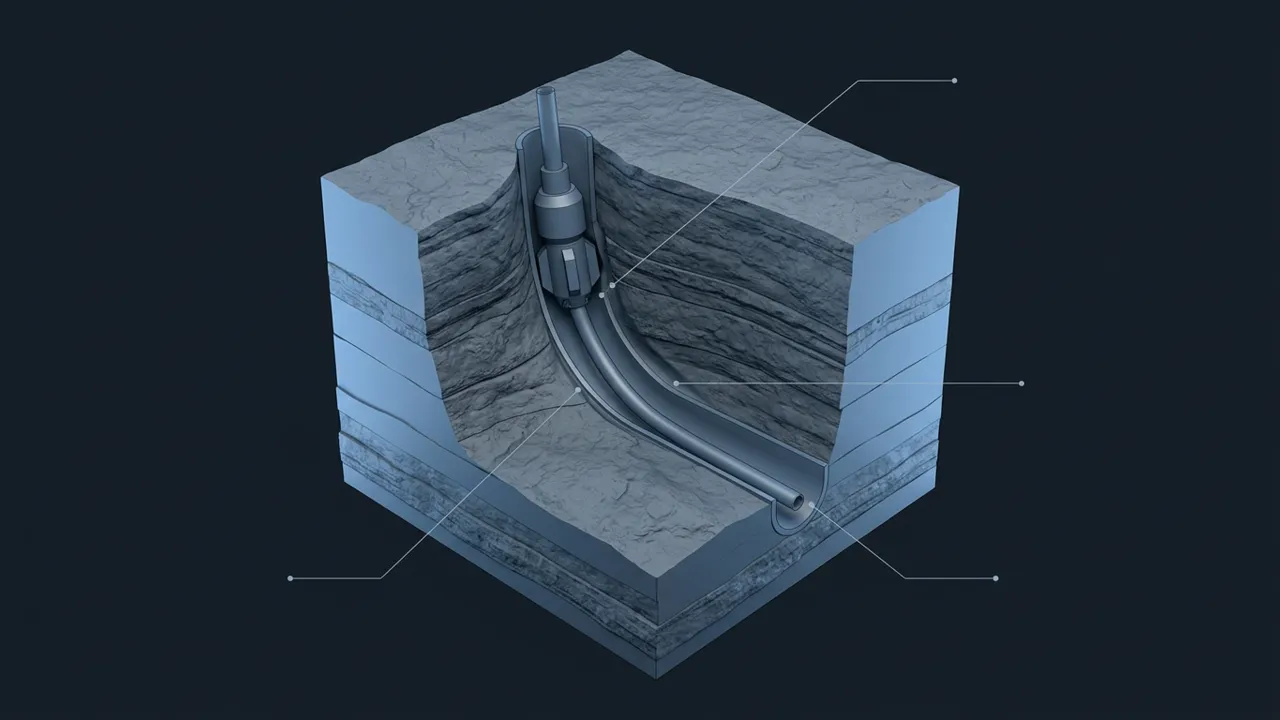
A keyseat is a slot worn into the side of the hole, usually at a dogleg. The SLB Energy Glossary describes it as a groove cut into the wall that can trap larger tools as they pass.
Here's how it forms. In a dogleg, the drill pipe under tension presses hard against the inside of the bend. As the pipe rotates and moves, the tool joints and pipe body grind a channel into the wall. That channel ends up about the size of the tool joints.
Drill pipe slides through it just fine. But the drill collars and stabilizers are bigger. When you pull out of the hole, the top of the BHA gets dragged up into that narrow slot and wedges in like a key in a lock. That's keyseat sticking.
Where Do Keyseats Form?
- Sharp doglegs, whether planned or accidental
- Soft to medium formations that wear easily
- Long sections drilled with lots of rotating hours above the bend
- Build and drop sections in directional wells
What Is a Packoff?
A packoff is when the annulus around the string fills with solid material and locks the pipe in place. A bridge is the same idea, but the material collects in one spot and blocks the hole.
The material can be drilled cuttings that settled out, shale caving off the wall, loose sand or gravel, broken rock from a fault zone, cement chunks or junk. Poor hole cleaning is behind a lot of packoffs, especially in high-angle wells where cuttings beds slide back when the pumps go off.
Packoffs can happen while you're drilling, tripping, or even sitting still. The common thread is that something is plugging the annulus, and the pump pressure shows it.
Is Keyseat Sticking a Type of Mechanical Sticking?
Yes. Mechanical sticking is a broad term for any stuck pipe that's caused by something physical, not by differential pressure. It covers two main groups:
- Packoffs and bridges, where material in the annulus holds the string
- Wellbore geometry problems, like keyseats, ledges, doglegs, undergauge hole and mobile formations
Differential sticking is the odd one out. Nothing physical is in the way. Pressure is doing all the holding.
How Do You Tell Keyseat Sticking From Packoff?
Ask three questions right away. Can you circulate? Can you rotate? Which way was the pipe moving when it stuck? Then compare against this table.
| Symptom | Keyseat | Packoff | Differential |
|---|---|---|---|
| Circulation | Normal | Restricted or lost | Normal |
| Pump pressure | Normal | Spikes | Normal |
| Rotation | Often possible, maybe restricted | Restricted or none | None |
| Movement when stuck | Pulling out | Any, or static | Static |
| Can go down? | Usually yes | Sometimes | No |
| Depth pattern | Same depth each trip, at a dogleg | Varies | Across permeable zone |
| Shaker clues | Nothing unusual | Low returns, cavings, then a surge | Nothing unusual |
A good tip for spotting a keyseat: the overpull shows up when the top of the BHA reaches the dogleg depth. If the overpull keeps appearing as the collars pass the same depth on trip after trip, that's a strong hint.
What Else Can Look Like a Keyseat?
A few other geometry problems act a lot like a keyseat. They all show normal circulation and sticking while the pipe is moving, so you have to use the depth and hole history to sort them out.
- Ledges: Hard and soft layers wash out at different rates, leaving lips that a stabilizer can hang on. These can catch the BHA going either way.
- Undergauge hole: A worn bit drills a slightly smaller hole. Run a new full-gauge bit straight to bottom and it can wedge in that section. That's why crews ream the last stretch after a bit trip.
- Stiff BHA: A new assembly with more stabilizers may not bend through a dogleg the old one drilled. It usually sticks going in, not coming out.
- Mobile formations: Salt and some plastic shales slowly creep into the hole and squeeze it smaller over time.
The fix is often similar: work opposite to the direction of movement, then ream the trouble spot. But the prevention is different for each, so it pays to know which one you're dealing with.
What Does Tight Hole Tell You?
Tight hole is the warning shot. You get more overpull than normal on the way out, or more drag going in, but the pipe still moves. It's the hole telling you something is changing.
Don't treat tight hole as a nuisance to muscle through. Note the depth, tell the driller, and work through it the way your procedure says, which usually means reaming or backreaming with circulation. Pulling straight through tight spots is how a lot of keyseats and packoffs turn into stuck pipe.
How Do You Free a Keyseat?
Follow the rig's stuck pipe procedure and let the company man and toolpusher direct anything beyond the first actions. The general approach looks like this:
- Don't keep pulling. You'll only wedge the BHA deeper into the slot.
- Slack off and work the pipe down. Jar down if needed.
- Once the BHA drops free, rotate and keep circulating.
- Backream slowly through the keyseat to open it up, or plan a trip with a keyseat wiper or string reamer above the collars.
How Do You Free a Packoff?
Packoffs need a gentle hand on the pumps. Here's the usual first response:
- Cut the pump rate right away to keep from packing the annulus tighter.
- If you were pulling out, slack off and apply torque within limits.
- Jar down, holding low pressure on the string.
- Try to establish circulation slowly. Bring the rate up only as returns allow.
- Once free and circulating, clean the hole thoroughly before moving on.
What not to do: hitting a packoff with full pump pressure. It can pack the cuttings harder and break down a weak zone below, giving you losses on top of stuck pipe. Murphy loves a two-for-one.
How Do You Prevent Keyseats and Packoffs?
For keyseats:
- Keep doglegs as low as the well plan allows
- Run a keyseat wiper or reamer above the BHA in known trouble spots
- Ream doglegs on trips before they develop a slot
- Watch for overpull that repeats at the same depth
For packoffs:
- Keep flow rate and rotation up for good hole cleaning
- Circulate the hole clean before trips
- Run a mud that inhibits reactive shale and holds the wall up
- Watch the shakers for cavings and changes in returns
- Bring the pumps on slowly after connections
Keyseat or Packoff? Check the Pumps Before You Pull
Keyseat sticking and packoffs both stop the pipe, but they behave differently. A keyseat grabs the BHA on the way out at a dogleg, with normal circulation and the pipe still free to go down. A packoff chokes the annulus, and the pump pressure tells on it.
So check circulation, rotation and direction of movement before anything else. Then work opposite to the way you were moving, keep the pumps gentle on a packoff, and follow your rig's procedure. The driller's first few moves usually decide whether this is a short delay or a long fishing job.