What Causes a Drill Pipe Twistoff?
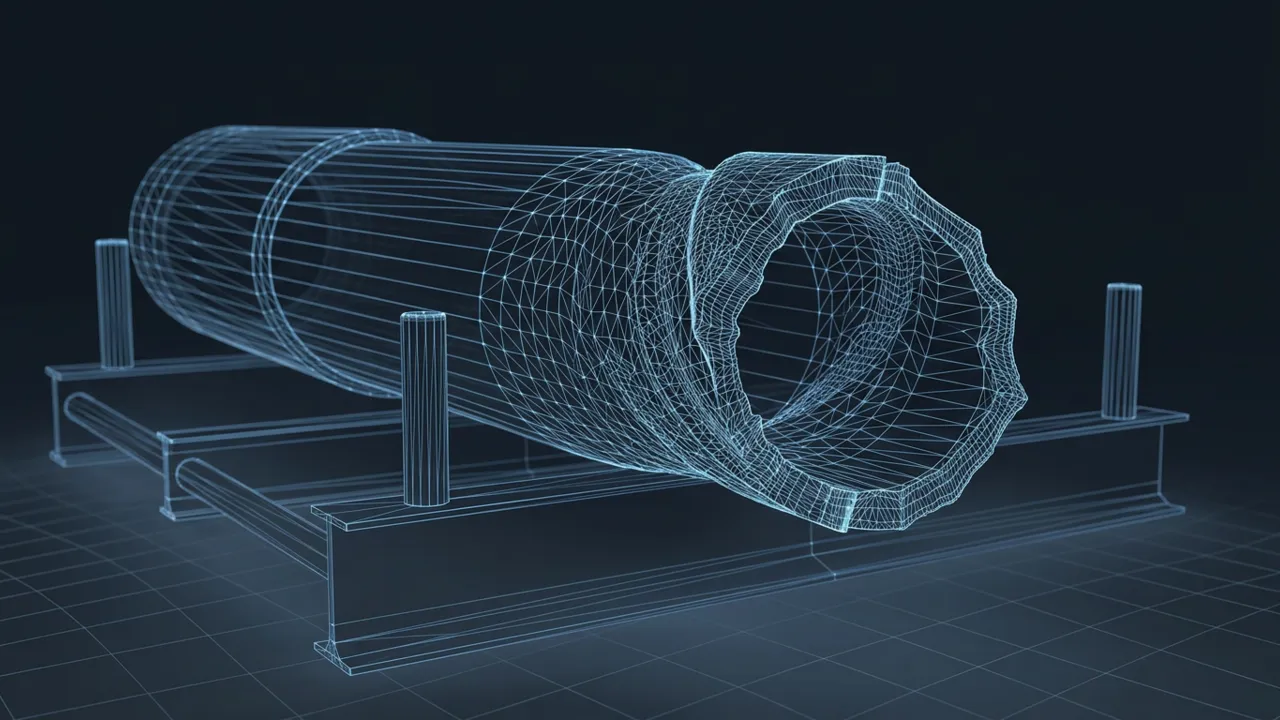
The pump pressure has been sliding for an hour. Nobody thinks much of it. Then the torque drops off, the hookload falls, and the pump pressure takes a big step down. The string just parted somewhere below you, and now there's a fish in the hole. So what causes a drill pipe twistoff, and how do you catch it before it happens?
A drill pipe twistoff is usually caused by fatigue cracking that grows until the pipe or connection can't carry the load, often finished off by high torque or tension. Fatigue comes from rotating through doglegs, vibration and corrosion. Many twistoffs start as a drill pipe washout, where mud cuts through a crack and slowly erodes it bigger. Twistoffs can also happen when torque goes past what the pipe or connection is rated for, especially when the string is stuck. The best warning sign is a slow, unexplained drop in pump pressure, and the right response is to stop and pull out to find the washout before the pipe parts.
What Is a Drill Pipe Twistoff?
A twistoff is when the drill string breaks downhole, leaving part of it in the hole. The name comes from the torque that's usually on the string when it fails, though the real damage may have been building for days.
The part left in the hole is the fish. Getting it out means a fishing job, with an overshot or spear, jars, and a lot of rig time. The SLB Energy Glossary covers the basics of fishing if you want the background. If the fish can't be recovered, the operator may have to plug back and sidetrack.
What Causes a Drill Pipe Twistoff?
Fatigue Failure
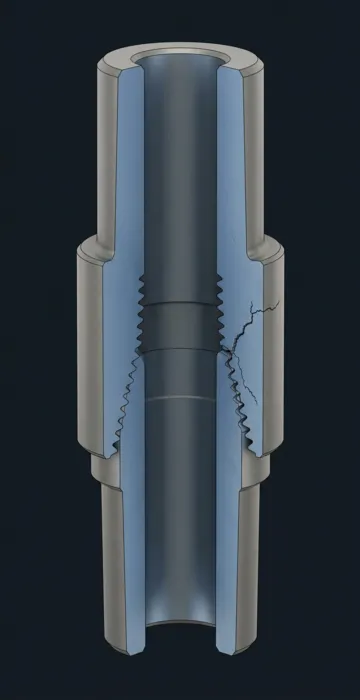
Fatigue is the number one cause. Every time a piece of pipe rotates through a bend, it flexes back and forth. Over thousands of cycles, tiny cracks form at stress points and slowly grow. Eventually the remaining steel can't carry the load and it snaps.
Fatigue gets worse with:
- High doglegs, especially when you're rotating through them
- Drill string vibration, which adds extra stress cycles
- Corrosive mud, especially with oxygen, hydrogen sulfide or carbon dioxide
- Slip cuts, tong marks and pits that act as crack starters
- Stiff spots, like the transition between pipe body and tool joint
Drill Pipe Washout
Once a fatigue crack goes all the way through the wall, mud starts squirting through it. That high-pressure jet erodes the crack wider. That's a drill pipe washout. Left alone, it weakens the pipe until it parts.
Overtorque
Every pipe and connection has a torsional limit. Apply more than that and it can twist off or the connection can fail. This often happens while working stuck pipe, when torque gets stacked into the string on top of high tension.
Bad Connections
Connections made up below the recommended torque can flex and work loose, which leads to fatigue in the threads and leaks. Connections over-torqued can stretch pins or swell boxes. Galled threads, wrong dope or damaged shoulders all add risk.
Worn or Damaged Pipe
Pipe that has lost wall thickness from wear or corrosion has less strength. Running it in a tough well without inspection is asking for trouble.
What Are the Twistoff Signs to Watch For?
Before the failure, here's what you'll see:
- A slow, steady drop in pump pressure at the same pump rate
- The drop continues after the pumps and surface lines check out
- No other explanation, like a mud weight change or a lost nozzle
When the twistoff happens, it's usually obvious:
- Sudden loss of hookload, because part of the string's weight is gone
- Sudden drop in pump pressure
- Torque drops off and the top drive RPM jumps
- ROP goes to zero
Where twistoffs start: blaming a slow pressure drop on the pumps and drilling on. Check the pumps, sure. But if they check out, assume there's a hole in the string and start out of the hole. A washout found at surface is a cheap fix. A washout that becomes a twistoff is a fishing job.
How Do You Find a Drill Pipe Washout?
Once the pumps and surface equipment check out, the crew pulls out of the hole and looks at each connection and joint. Washouts often leave a visible cut or a wet streak on the pipe. Some crews pump at low rate while tripping out and watch for mud spraying from a joint as it comes up.
Lay down the bad joint and tag it. It's a good idea to inspect joints near it too, since they've seen the same conditions.
What Happens After a Twistoff?
After a twistoff, the procedure takes over and the company man and toolpusher run the plan. Typical steps are:
- Pull out of the hole with what's left of the string.
- Look at the broken end at surface to see the type of failure and estimate what the top of the fish looks like.
- Measure to figure out how much pipe is in the hole and where the top of the fish is.
- Pick a fishing tool to grab the fish, often an overshot.
- Run in with a fishing assembly and try to latch and pull it.
The broken end tells you a lot. A flat, smooth fracture with beach marks points to fatigue. A twisted, necked-down break points to overload.
Is a Twistoff the Same as a Backoff?
No. A twistoff is a break in the steel, either through the pipe body or through a connection. A backoff is when a connection unscrews downhole, leaving the threads intact.
Backoffs can happen by accident, often from stick-slip or reverse torque when a stuck string unwinds. They can also be done on purpose, as part of a stuck pipe job, to leave the stuck section behind and recover the rest. An accidental backoff is still a fish, but the top of it is usually a clean connection, which makes it easier to screw back into.
How Do You Prevent a Drill Pipe Twistoff?
- Inspect drill pipe and BHA components on a regular schedule, following industry standards and the operator's program
- Make up connections to the correct torque with the right thread compound
- Keep doglegs within the well plan, and limit rotating through severe ones
- Manage vibration to cut down on stress cycles
- Control corrosion with the right mud chemistry and inhibitors
- Avoid slip and tong damage, and lay down pipe with bad marks
- Rotate pipe positions in the string so the same joints don't always sit in the worst spot
- Respect torque limits when working stuck pipe
- Act fast on any unexplained pump pressure loss
Pipe failures and downhole tool failure share many of the same root causes: vibration, fatigue and erosion. A rig that's good at managing one is usually good at the other.
What Causes a Drill Pipe Twistoff, and How Do You Stop One?
Most twistoffs start with fatigue. Cracks grow at stress points from bending, vibration and corrosion, turn into washouts, and finally part under torque or tension. Overtorque and bad connections cause the rest.
Watch for that slow pump pressure drop and take it seriously. Pull out and find the washout before it becomes a fish. Keep the pipe inspected, the connections made up right, and the vibration under control. The cheapest fishing job is the one you never have to run.