Torque and Drag – What Rising Readings Tell the Driller

Pick-up weight was right on the trend line yesterday. Today it's running heavy, slack-off is light, and the off-bottom torque keeps creeping up stand after stand. Nothing's broken yet. But the string is telling you something is changing in that hole. So what do rising torque and drag readings actually mean, and what should the driller do about them?
Torque and drag are the friction forces the drill string fights as it rotates and moves through the hole, and rising readings mean that friction is increasing somewhere downhole. Torque is the twisting resistance to rotation. Drag is the extra force, beyond the string's own weight, needed to pull up or push down. The most common causes are cuttings beds from poor hole cleaning, tight or unstable hole, doglegs and keyseats, and changes in mud lubricity. Driller response starts with comparing readings to the expected trend, then fixing hole cleaning or hole condition before the friction gets bad enough to stick the pipe or overload the string.
What Are Torque and Drag in Drilling?
Every time the string turns, it rubs on the wall or casing. That rubbing takes torque, on top of what the bit needs to cut rock. Every time the string moves up or down, that same rubbing resists it. That resistance is drag.
Crews usually track a handful of readings at each connection:
- Pick-up weight: hookload while pulling up, without rotation
- Slack-off weight: hookload while lowering, without rotation
- Rotating off-bottom weight: hookload while rotating just off bottom, which is close to the string's free weight
- Off-bottom torque: torque while rotating off bottom
- On-bottom torque: torque while drilling
The gap between pick-up and rotating weight is the upward drag. The gap between rotating and slack-off weight is the downward drag. In a straight vertical hole those gaps are small. In a deviated well they can be large, and they grow with depth.
What Is a Friction Factor?
A friction factor is a number that describes how much the string resists sliding against the hole or casing. It's like a coefficient of friction, but it also lumps in other effects that are hard to model separately, like small doglegs, cuttings and stabilizers.
Engineers calibrate friction factors from real readings. Cased hole usually shows a lower friction factor than open hole, and oil-based mud usually shows lower friction than water-based mud. When the back-calculated friction factor starts climbing, something in the hole is changing.
How Does Torque and Drag Modeling Work?
Before the well is drilled, the engineer runs a torque and drag model using the well plan, string design, mud weight and expected friction factors. The model predicts pick-up, slack-off, rotating weight and torque for every depth.
Those predictions are often plotted as a set of lines for several friction factors. Some people call it a broomstick chart, because the lines fan out like the bristles of a broom. As the well is drilled, actual readings are plotted on the same chart.
Here's the payoff. If the actual points track one friction line, the hole is behaving. If they start drifting to higher friction lines, you've got an early warning, often well before anyone feels it on the brake.
What Causes Rising Torque and Drag?
Here are the usual suspects, roughly in the order I'd check them:
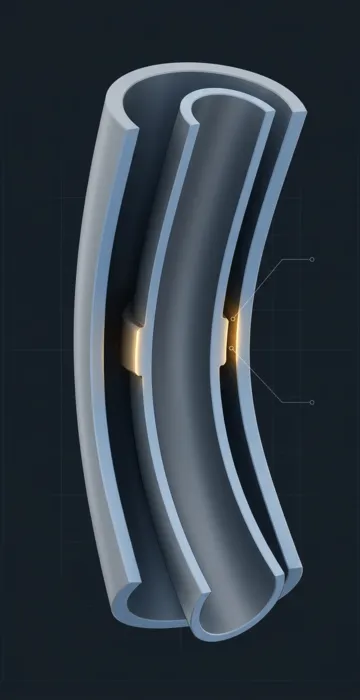
- Poor hole cleaning. Cuttings beds on the low side add friction and can pack around the BHA.
- Wellbore instability. Cavings, swelling shale and tight hole all grab at the string.
- Doglegs and tortuosity. Every bend pushes the pipe harder into the wall.
- Keyseats and ledges. These hang up the BHA and stabilizers at specific depths.
- Mud changes. Rising solids, a lower lubricant level or a switch in mud type can raise friction.
- Differential sticking tendencies. Pipe being pulled into filter cake across permeable zones adds drag.
- Balled stabilizers or BHA. Clay buildup increases contact and drag.
- Buckling while sliding. When slack-off weight compresses the string, it can buckle into a spiral against the wall and add drag.
Look at the pattern, not just the number. A slow, steady rise over many stands points to hole cleaning or friction trends. A sudden jump at one depth points to geometry, like a ledge or keyseat.
Why Is Excessive Drilling Torque Dangerous?
Excessive drilling torque puts the whole string closer to its limits. The weakest point is often the connections. If the torque on the string gets above what a connection was made up to, the connection can make up further downhole. If it climbs past what the pipe or connection can take, it can twist off.
Know your limits. The top drive has a torque setting, and the pipe and connections have their own ratings. The SLB glossary entry on tool joints is a quick refresher on the threaded ends that carry that load. Running near the limit with erratic torque spikes is how a drill pipe twistoff happens.
High drag carries its own risks. Too much pick-up weight can push the string or rig past tension limits. Too little slack-off weight can mean you can't get weight to the bit or can't get casing to bottom.
Don't make this mistake: raising the top drive torque limit to "get through it" without talking to the company man. That limit is there to protect the string. Find out why the torque is high first.
Why Do Torque and Drag Matter When Running Casing?
Casing usually can't be rotated as freely as drill pipe, and it's stiffer. So drag is often the thing that decides whether casing reaches bottom. In a long horizontal well, the slack-off weight available at surface may barely be enough to push the string to total depth.
That's why the torque and drag readings from the last drilling run are so useful. They tell the engineer what friction factor to plan for. If the open hole friction climbed during the run, the casing plan may need changes, like extra circulation before pulling out, a reamer run, centralizer changes, or a floating section.
Here's the practical tip. On the last trip out before casing, take good readings and note every tight spot. Those notes are worth more to the casing crew than any guess.
What Should the Driller Do When Torque and Drag Rise?
Follow your well-site procedure, and loop in the company man and directional driller early. A typical response looks like this:
- Take clean pick-up, slack-off and rotating readings at the same speed and conditions so the data is trustworthy.
- Compare them to the model and the last few connections.
- Check the shakers. Are cuttings returns matching ROP? Any cavings?
- Circulate and rotate to clean the hole if cuttings beds are suspected.
- Ask the mud engineer about lubricity, solids and inhibitor levels.
- Note any depth where drag spikes so you can ream it on the next trip.
- Recheck the readings after each change to see what helped.
Torque and Drag: Listen When the Numbers Talk
Torque and drag are friction, and rising readings mean the hole is getting harder on the string. The most common causes are dirty hole, unstable rock, doglegs, keyseats and mud changes.
Take consistent readings, compare them to the model, and act on trends before they turn into stuck pipe or broken pipe. The numbers give you plenty of warning, as long as somebody's reading them every connection.