Drill String Vibration – Stick-Slip, Whirl and Bit Bounce
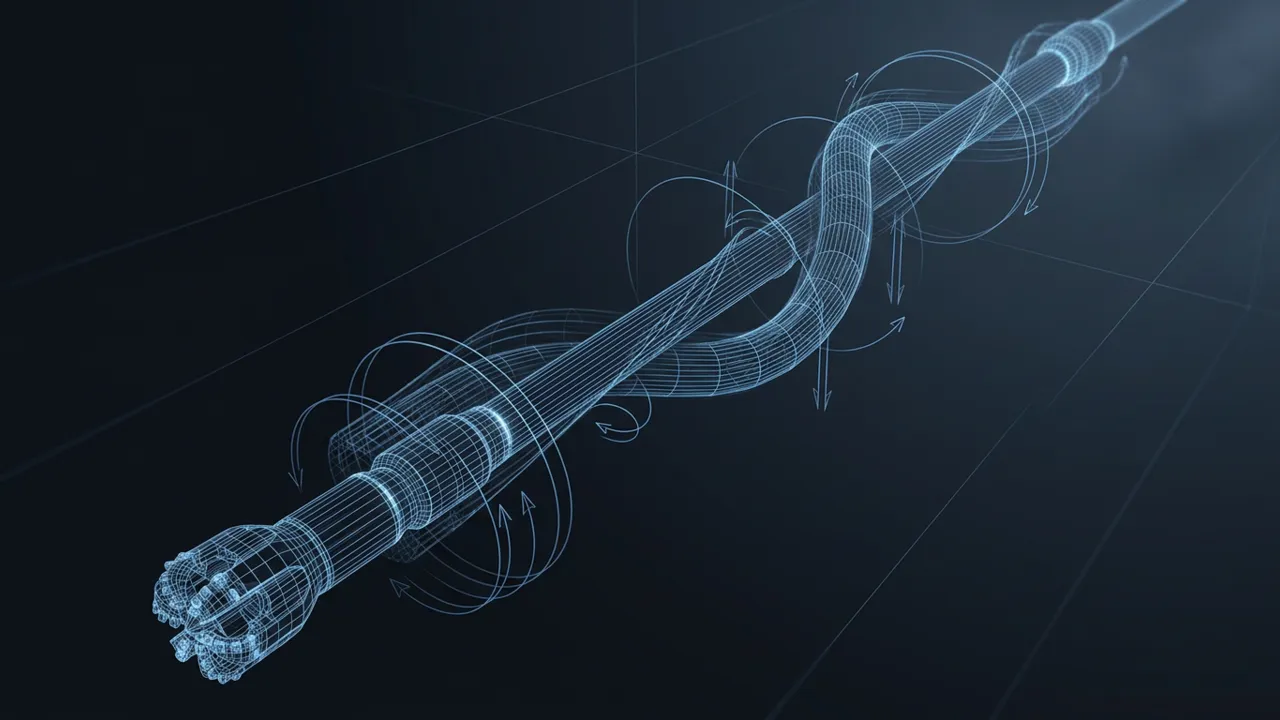
Surface torque is swinging like a pendulum. The MWD keeps dropping out. The last bit came out with chipped cutters even though the run was short. Something downhole is shaking itself apart, and it's taking your tools with it. Vibration is one of those problems you can't see directly from the floor, but you sure pay for it. So what kinds of drill string vibration are there, and how do you stop each one?
Drill string vibration comes in three main modes: torsional (stick-slip), lateral (whirl) and axial (bit bounce). Stick-slip is when the bit stops turning and then spins free much faster than the surface RPM, which shows up as cycling surface torque. Whirl is when the bit or BHA rotates off center and bangs into the hole wall, which is the hardest on MWD tools and is often hard to see at surface. Bit bounce is when the bit lifts off bottom and slams back down, which you can see in the hookload and feel on the rig. Most fixes come down to adjusting weight on bit and RPM for that mode.
Why Does Drill String Vibration Matter?
A drill string is a long, skinny steel spring. Twist it, push it and spin it against hard rock, and it's going to vibrate. A little is normal. The trouble starts when the vibration builds into one of the damaging modes.
Here's what bad vibration costs you:
- Broken or chipped bit cutters and short bit runs
- MWD, LWD and motor failures
- Fatigue cracks in pipe and connections, leading to washouts and twistoffs
- Backed-off or over-torqued connections
- Lower ROP, because energy goes into shaking instead of cutting
- Hole enlargement and poor hole quality
Most of the damage happens downhole where nobody's watching. By the time the tool fails, the vibration may have been going on for hours.
What Are the Three Types of Drill String Vibration?
| Mode | What it is | Surface symptoms | Typical fixes |
|---|---|---|---|
| Torsional (stick-slip) | Bit stops, then spins up fast | Cycling surface torque, RPM fluctuations | More RPM, less WOB, stick-slip control on the top drive |
| Lateral (whirl) | Bit or BHA rolls off center around the hole | Higher, noisy torque; often little else | Less RPM, more WOB, stop and restart, better stabilization |
| Axial (bit bounce) | Bit lifts off and hits bottom repeatedly | Bouncing hookload and WOB, rig shaking | Change WOB and RPM, shock sub, different bit |
These modes can also feed each other. Stick-slip can trigger whirl when the bit spins up fast, and a bouncing bit can start lateral shocks. That's why a good fix for one can sometimes cause another.
What Is Stick-Slip?
Stick-slip is torsional vibration. The bit grabs the rock and stops, or nearly stops, while the top drive keeps turning. The drill string winds up like a spring. When the stored torque finally breaks the bit loose, it spins free much faster than the surface RPM, then slows and sticks again. The cycle repeats every few seconds.
Here's what you'll see:
- Surface torque cycling up and down in a regular pattern
- Top drive RPM wobbling with it
- Downhole RPM data, if available, showing the bit stopping and overspeeding
- Chipped PDC cutters when the bit comes out
Stick-slip is common with aggressive PDC bits, high weight on bit and low RPM, especially in deep, hard or deviated wells with lots of friction along the string.
The usual fixes are to raise RPM, lower weight on bit, or both. Many modern rigs also run stick-slip mitigation software on the top drive, which adjusts the drive's response to damp out the torsional swings. A less aggressive bit or a reduced-friction mud can also help.
What Is Bit Whirl?
Bit whirl is lateral vibration. Instead of turning around its center, the bit or BHA starts rolling around the hole wall. In backward whirl, it rolls the opposite way from the rotation, like a gear running on the inside of a ring. Each contact is a hard sideways hit.
Whirl is often called the most damaging mode, because the lateral shocks are hard on MWD and LWD electronics, stabilizers and connections. It's also the sneakiest. Surface data may only show torque that's higher and noisier than usual.
Whirl is more likely with high RPM and low weight on bit, a poorly stabilized BHA, an enlarged hole, or tools like hole openers and underreamers.
The usual fixes run opposite to stick-slip: lower RPM and raise weight on bit. A common reset is to pick up off bottom, stop rotation, then go back to bottom and restart at lower RPM before building back up. Over the longer term, better BHA stabilization and anti-whirl bit designs help.
What Is Bit Bounce and Axial Vibration?
Axial vibration moves up and down along the string. In its worst form, bit bounce, the bit actually lifts off bottom and slams back down. It's most common with roller cone bits in hard rock, especially in vertical holes.
Here's what you'll see:
- Hookload and weight on bit bouncing
- The top drive or kelly visibly bouncing
- Rig floor shaking
- Broken teeth or bearing damage on roller cone bits
Fixes include changing weight on bit and RPM to move away from the bouncing condition, adding a shock sub to absorb the hits, or switching bit types. Small changes are usually better than big jumps.
How Do You Detect Downhole Vibration?
Surface data only tells part of the story. Most MWD tools carry accelerometers and can report shock and vibration levels in real time. Some also record high-speed data you can download when the tool comes out.
The SLB glossary entry on measurements-while-drilling gives a good overview of what those tools measure. Dedicated vibration subs and memory tools in the BHA can add more detail on tough wells.
The key is that someone has to watch the numbers. Set alarm levels with the MWD hand and the directional driller, and agree on what the driller should do when they're hit.
Can BHA and Bit Design Reduce Vibration?
Yes, and on a known problem well, that's often where the biggest gains come from. Parameter changes only go so far if the assembly itself wants to shake.
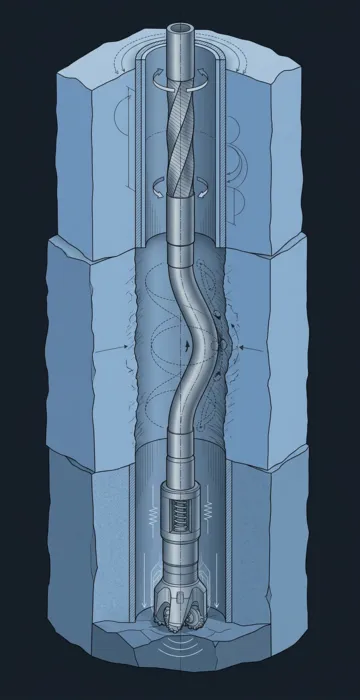
Here are some of the levers engineers pull:
- Stabilizer placement and gauge, to keep the BHA centered and cut down on whirl
- Bit design, including cutter layout, blade count and depth-of-cut control features that make a PDC bit less grabby
- Shock subs or dampening tools that absorb axial and torsional energy
- Running a mud motor below the string, so the bit can turn faster while the string turns slower
- Avoiding sharp changes in stiffness that concentrate bending
Many service companies model the BHA before the run to predict which RPM ranges are likely to cause trouble. The output is often a chart of RPM and weight combinations to stay away from. If your rig has one, keep it handy at the driller's console.
Is Vibration Worse in Horizontal Wells?
Stick-slip often is. In a long lateral, the string drags along the low side of the hole for thousands of feet. All that friction soaks up torque, so the string winds up more before the bit breaks free. The longer the lateral, the more spring you have to deal with.
Lateral shocks can also be a problem where the BHA passes through build sections and doglegs. On the other hand, bit bounce tends to be less common in horizontal sections than in vertical hard-rock drilling. Every well is different, so let the downhole data guide you rather than assumptions.
What Should the Driller Do When Vibration Shows Up?
Every rig should have a vibration plan agreed between the operator, the directional company and the drilling contractor. Follow that first. In general:
- Identify the mode from the surface and downhole data.
- Make one change at a time, in small steps, so you know what worked.
- For stick-slip, try more RPM or less WOB.
- For whirl, try less RPM and more WOB, or stop and restart rotation off bottom.
- For bit bounce, adjust WOB and RPM away from the bouncing range.
- Give each change a little time to settle before judging it.
- Write down what worked so the next tour doesn't start from scratch.
The usual trap: fighting a vibration problem by chasing ROP. Pushing more weight to make hole faster can turn mild stick-slip into a cutter-wrecking mess. Murphy will happily trade you a few feet an hour for a dead MWD tool.
Does Drill String Vibration Affect Torque and Drag?
It does, both ways. High friction along the string, which shows up as high torque and drag, makes stick-slip more likely because the string winds up more before it releases. And vibration can make torque readings noisy, which makes it harder to read the hole condition from the torque trend.
Good hole cleaning, a smooth well path and lubricity in the mud all help reduce friction. Less friction usually means less stick-slip.
Taming Stick-Slip, Whirl and Bit Bounce
Drill string vibration comes in three modes. Stick-slip winds up and releases the string. Whirl bangs the BHA around the hole. Bit bounce lifts the bit and slams it back down. Each one damages bits, tools and pipe, and each one has a different fix.
Know the signs, watch the downhole data, and make small, deliberate changes to weight on bit and RPM. Follow the rig's vibration plan and talk to the directional driller and MWD hand. A smooth string drills faster and lasts longer, and your tools will thank you.