Why Do Downhole Tools Fail?
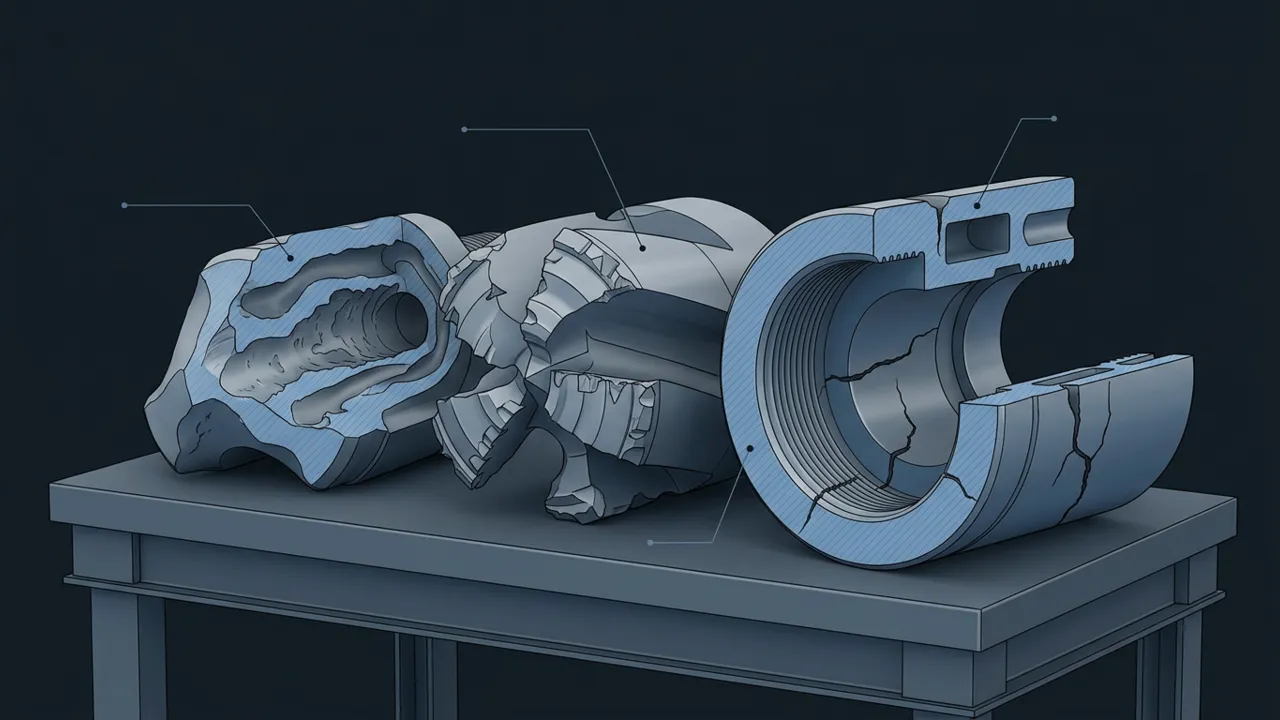
The MWD quit pulsing halfway through the build section. Or the motor stopped giving you differential pressure and the ROP fell off to nothing. Either way, you're looking at a trip, lost hours and an unhappy phone call. Downhole tools are tough, but the bottom of a well is a brutal place to work. So why do downhole tools fail, and what can the rig do to keep them alive?
Most downhole tool failure comes down to four things: vibration and shock, heat, erosion, and fatigue, with poor handling and makeup at surface adding to all of them. Vibration breaks electronics and loosens connections in MWD and LWD tools. Heat wears out electronics and the rubber stators in mud motors. Erosion from abrasive solids, high flow rates and LCM cuts through tool bodies and internal parts. Fatigue cracks connections and housings that flex through doglegs. Most failures can be prevented by running tools inside their rated limits, managing vibration, keeping the mud clean and handling the tools right on the rig floor.
Why Do Downhole Tools Fail So Often?
Think about where these tools live. They sit at the bottom of miles of spinning steel, getting hammered by the bit, soaked in abrasive mud at high pressure, and baked in hot rock. Many of them carry sensitive electronics and batteries. Others depend on rubber and moving parts.
It's honestly impressive that they work as well as they do. But every tool has limits, and running outside them is where Murphy's Law shows up.
How Does Vibration Damage Downhole Tools?
Vibration is the big one for MWD and LWD tools. Lateral shocks from whirl, torsional swings from stick-slip and axial hits from bit bounce all add up.
Here's what vibration does:
- Cracks solder joints and circuit boards
- Damages batteries and sensors
- Loosens internal connections and fasteners
- Speeds up fatigue in connections and tool housings
- Chips or breaks bit cutters, which adds even more vibration
Most MWD tools record shock and vibration levels, and many send them up in real time. If those numbers stay high for long, the tool is being used up faster than normal, even if it's still working.
How Does Heat Cause Downhole Tool Failure?
Every electronic tool has a temperature rating. Run past it and electronics start to fail, batteries lose capacity and sensors drift.
Mud motors have their own heat problem. The stator is lined with an elastomer, a rubber compound. Heat softens and ages it, and some mud chemicals can swell or weaken it further. A damaged stator can start chunking, which means pieces of rubber tear out. Then the motor loses power and can stall.
Circulating mud cools the tools. Long periods without circulation, like during a trip back in or waiting on something, let the bottom of the hole heat back up toward formation temperature. In hot wells, crews often break circulation in stages on the way back in to cool things off.
How Do Erosion and Plugging Hurt Tools?
Drilling mud moves through tools at high speed. If it carries sand, drilled solids or LCM, it wears away anything it touches, like sandpaper on a belt.
Common erosion and plugging problems include:
- Washouts in tool bodies and connections
- Worn MWD pulser parts, which weakens the signal
- Rotor and stator wear in mud motors
- Jammed MWD pulsers from LCM, rubber or junk
- Plugged bit nozzles and screens
Flow rate above the tool's rating speeds up erosion. So does high sand content in the mud. Good solids control and staying inside the flow limits go a long way.
What Causes Mud Motor Failure?
A mud motor turns the bit using mud flowing through a rotor and stator. It's simple and strong, but it has a few classic ways to die:

- Stalling. Too much weight on bit stops the rotor while mud is still being pumped, which tears at the stator.
- Running above the rated differential pressure for long periods.
- Heat and chemical attack on the stator elastomer.
- Bearing wear, especially with high weight or abrasive mud.
- Fatigue in the bent housing or connections from rotating through doglegs.
- Running too many hours without a rebuild.
Here's what you'll see when a motor is going: differential pressure dropping or acting erratic, ROP falling off, more frequent stalls, or not being able to build angle while sliding.
The expensive habit: stalling a motor over and over to "push through" a hard streak. Every stall chews up the stator. Pick up, let it recover, and adjust weight on bit.
What Causes MWD Failure?
MWD failure means the tool stops sending usable data, or sends bad data. Not every lost signal is a downhole failure, so the MWD hand checks the surface side first.
Common causes include:
- Vibration and shock damage to electronics
- Pulser jammed by debris or LCM
- Battery failure
- Heat beyond the tool's rating
- Signal problems from gas or air in the mud, or pump noise
- Surface sensor or software issues
Some signal problems can be fixed without a trip, by changing flow rate, pulse settings or the surface decoding. A good MWD hand works through those before calling for a trip.
Can Handling on the Rig Floor Cause Tool Failure?
Absolutely. A lot of tools are damaged before they ever go in the hole. Common handling problems:
- Under- or over-torqued connections
- Damaged threads from poor stabbing or lack of thread protectors
- Dropping or banging tools while picking them up
- Wrong tool configuration or settings at surface
- Skipping the vendor's surface test
Respect the tool hands' procedures. If the directional or MWD hand wants a specific makeup torque or a surface test, that's not a suggestion.
How Do You Prevent Downhole Tool Failure?
Here's a practical checklist. The company man and tool vendors set the specifics.
- Know each tool's limits: flow rate, temperature, pressure, differential pressure, LCM size and vibration.
- Watch shock and vibration data, and change parameters when it climbs.
- Keep sand and drilled solids low with good solids control.
- Run a drill pipe screen to catch debris before it reaches the tools.
- Check LCM limits before pumping any pill.
- Plan for heat with cooling stops on the way in.
- Make up connections to the specified torque.
- Track run hours and send tools for maintenance on schedule.
- Report every stall, shock event and odd reading.
What Happens When a Downhole Tool Breaks Apart?
Most failures just mean the tool stops working and you trip to change it. But sometimes a tool parts, a connection backs off or pieces get left behind. Then you're into fishing operations to recover what's in the hole before you can drill ahead.
That's why early warning matters. A tool that's getting weak almost always gives some sign first, like rising vibration, a dropping pressure or a fading signal. Pulling it while it's still in one piece is a lot cheaper than fishing for it.
Why Do Downhole Tools Fail? Shake, Heat, Grit and Bad Handling
Downhole tools fail mostly from vibration, heat, erosion and fatigue, with handling mistakes at surface making everything worse. MWD tools suffer most from shock and heat. Mud motors suffer from stalling, heat on the stator and abrasive mud.
Keep the tools inside their limits, watch the vibration data, keep the mud clean and follow the tool hands' procedures. And when a tool starts acting up, take it seriously. Pulling a sick tool beats fishing for a dead one.