Drilling Jars – How Hydraulic and Mechanical Jars Work
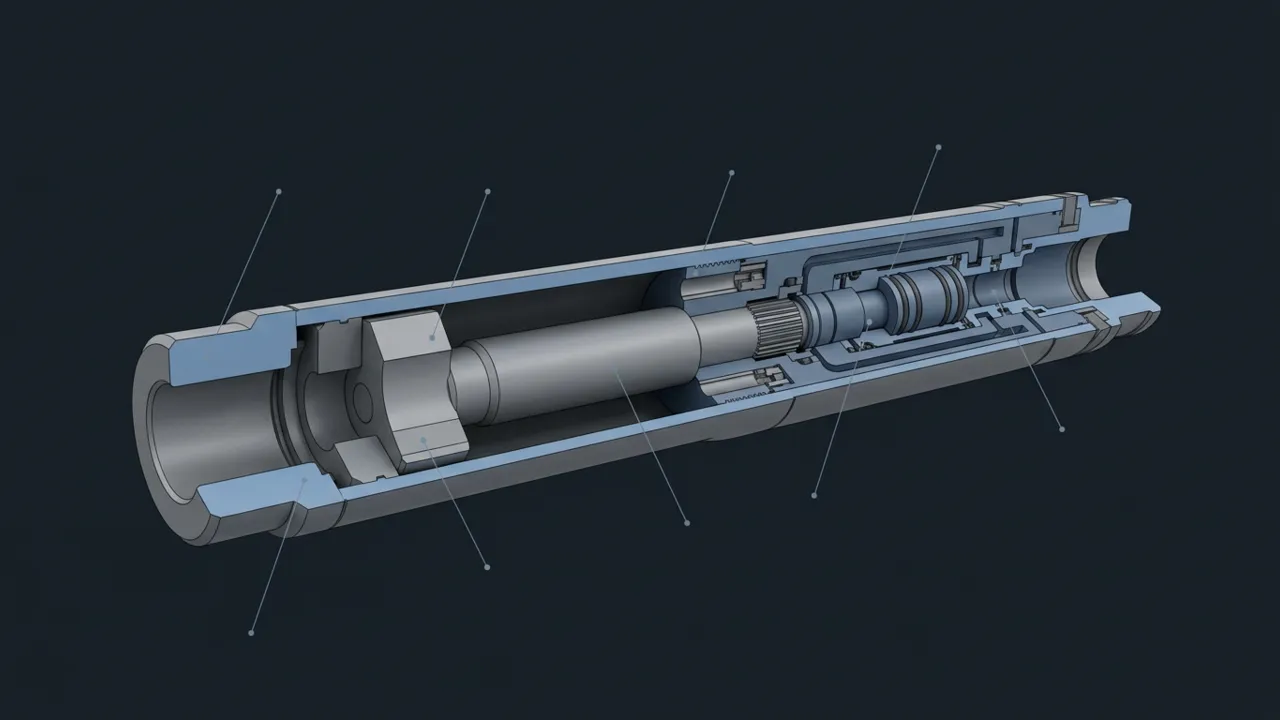
Sooner or later, every drilling crew deals with stuck pipe. The string won't come up, won't go down, and sometimes won't even turn. Pulling harder on the hook only helps so much, because a steady pull spreads out over thousands of feet of stretchy steel. What you need is a sharp blow right at the stuck point. That's the job of one clever tool in the BHA. So how do drilling jars work, and what's the difference between hydraulic and mechanical jars?
Drilling jars work by letting the driller stretch or compress the drill string, storing energy like a drawn bow, and then releasing it suddenly so a steel hammer inside the jar strikes an anvil. That impact sends a strong, short shock to the stuck section, which can break it loose when a steady pull can't. A hydraulic jar uses oil forced through a small passage to create a time delay before it fires, so the driller controls how hard it hits by how much pull is applied. A mechanical jar uses a preset latch or spring that releases at a fixed load. Most jars can strike both upward and downward.
What Is a Drilling Jar?
A drilling jar is a downhole impact tool run in the drill string to free stuck pipe. It sits in the BHA as an insurance policy. You hope never to fire it, but if the string sticks, it can save days of fishing.
The SLB glossary entry for the jar sums it up as a downhole impact tool, mainly used to free stuck pipe. That's a clean summary of what we're about to unpack.
How Does a Jar Turn Pipe Stretch Into Impact?
Here's the key idea. Steel pipe is a long, stiff spring. When the driller pulls on a stuck string, the pipe above the stuck point stretches. That stretch is stored energy. The jar is a latch that holds the stretch back, then lets go all at once.
A slingshot is a good comparison. You pull back the band slowly and hold it. When you let go, the stored energy comes out in a fast snap. In a jar, the "snap" drives a mandrel up (or down) until a hammer face slams into an anvil face inside the tool body. Because the jar is close to the stuck section, the impact arrives where it's needed most.
A typical jarring sequence goes like this:
- The driller "cocks" the jar by moving the string to reset it.
- The driller pulls up (to jar up) or slacks off (to jar down) to a chosen load and holds it.
- The jar holds back the motion, then releases and lets the mandrel travel freely.
- The hammer strikes the anvil, delivering the impact.
- The driller resets and repeats, often many times.
How Does a Hydraulic Jar Work?
A hydraulic jar uses oil and a restriction to create a delay. When the driller pulls, a piston inside the jar has to push oil through a very small passage, so the mandrel moves only slowly. Meanwhile, the string above keeps stretching.
After a short stroke, the piston reaches a wider section where the oil can bypass the restriction freely. Suddenly nothing is holding the mandrel back. It accelerates through the free stroke and the hammer hits the anvil.
The big advantage is control. The harder the driller pulls, the faster the oil meters through and the harder the hit. So the driller can start gently and increase the impact as needed. The trade-off is that hydraulic jars depend on seals and oil, so very high temperatures and long jarring sessions can reduce their effectiveness as the oil heats up.
How Does a Mechanical Jar Work?
A mechanical jar uses a latch held by springs or a friction mechanism, set to release at a specific load. When the pull reaches that setting, the latch trips and the jar fires right away. There's no time delay.
Mechanical jars are simple and don't rely on hydraulic oil, which makes them a good fit for hot wells. Their release load is usually set at surface before running, so it can't be adjusted as freely downhole. Some designs combine both: a hydraulic delay for jarring up and a mechanical latch for jarring down.
Hydraulic Jar vs. Mechanical Jar: Which Is Better?
Each has its place. This table sums up the differences.
| Feature | Hydraulic jar | Mechanical jar |
|---|---|---|
| How it holds load | Oil metered through a small passage | Preset spring or friction latch |
| Firing delay | Yes, a short delay | No, fires at the set load |
| Impact control | Driller varies it with pull | Mostly fixed by the setting |
| Heat tolerance | Limited by seals and oil | Generally better |
| Accidental firing risk | Lower, because of the delay | Can fire during normal drilling if loads hit the setting |
What Is a Jar Accelerator?
A jar accelerator (also called an intensifier) is a tool placed above the jar that stores extra energy, usually in compressed gas or a spring stack. When the jar fires, the accelerator releases its energy to speed up the hammer and strengthen the blow.
It also acts as a cushion that keeps the shock from traveling all the way up the string to the rig. Accelerators are especially useful in shallow wells or high-angle wells, where there isn't enough free pipe stretch to store much energy on its own.
Where Should the Jar Go in the BHA?
Jar placement in the BHA is a careful engineering choice. The jar should sit above the parts of the BHA most likely to stick, such as the stabilizers and the bulk of the collars. If the jar ends up below the stuck point, it can't help.
Engineers also keep the jar away from the neutral point, where the string switches from compression to tension. A jar sitting there gets cycled back and forth constantly, which wears it out and can cause accidental firing. Many designs place the jar in the heavyweight drill pipe section, and service companies often run jar placement software to fine-tune the spot.
Should You Jar Up or Jar Down?
A common rule of thumb is to jar in the opposite direction from the movement when the pipe stuck. If it stuck while pulling out, as with a keyseat, jarring down is often the first choice. If it stuck while running in, jarring up is usually first. The SLB glossary entry on stuck pipe gives a short definition of the problem jars are built to solve.
Always follow the well-site procedures and the company representative's plan. Jarring puts heavy loads on the derrick, the string and the crew's attention, and the sequence matters.
Jars aren't the only tools that change hole conditions near a sticky spot. When the hole is too tight for the BHA, the fix may be to enlarge it, which is the job of underreamers and hole openers.
How Do Drilling Jars Work?
Drilling jars store energy by stretching or compressing the drill string, then release it in one sharp hammer blow near the stuck point. Hydraulic jars use an oil delay for adjustable impact. Mechanical jars use a preset latch that fires instantly.
If you're new to stuck pipe, remember three things. Put the jar above what's likely to stick, keep it off the neutral point, and jar opposite the direction you were moving when it stuck. Those basics cover a surprising amount of what the tool can do for you.