Drill String Stabilizers – Types and Placement
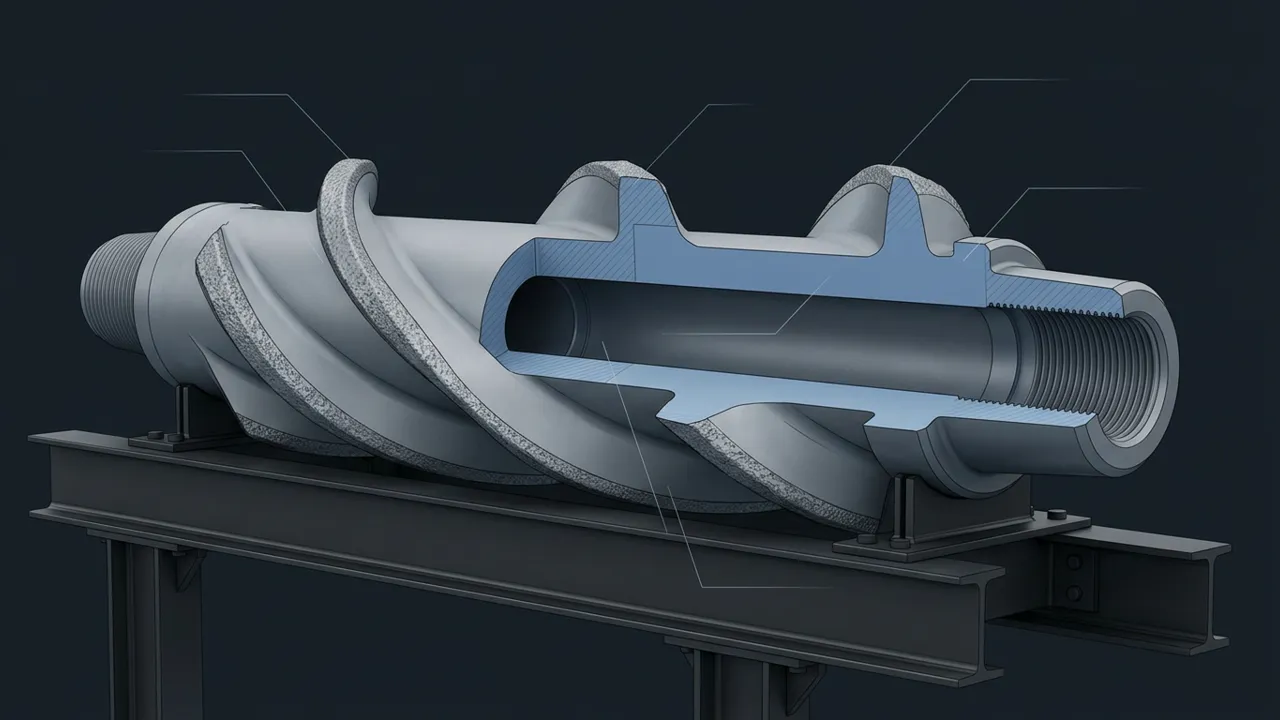
Shoot an arrow without its feathers and it tumbles. Add the fletching and it flies true. A drill string has a similar problem, thousands of feet below the rig, and the fix is surprisingly similar too. Short tools with blades keep the bottom of the string centered and pointed where it should go. So what does a drill string stabilizer do, and how do you choose the type and placement?
A drill string stabilizer is a short tool with blades that nearly match the hole diameter, used to center the bottomhole assembly and control the direction of the well. By touching the hole wall at chosen points, stabilizers decide where the drill collars can bend, which determines whether the hole builds, drops or holds angle. They also reduce vibration, protect the collars from wall contact and help keep the hole in gauge. Common types include integral blade, welded blade, replaceable sleeve and non-rotating stabilizers. A near-bit stabilizer sits right above the bit, while string stabilizers go higher in the BHA.
What Does a Stabilizer Do in the Drill String?
A stabilizer's main job is to control how the bottomhole assembly bends. Drill collars are stiff, but over long lengths and under weight they still flex. Stabilizers act as contact points that limit that flexing.
Stabilizers also help in other ways:
- They keep collars off the wall, which lowers wear and the risk of differential sticking.
- They reduce lateral vibration and bit whirl by keeping the BHA centered.
- They help the bit drill a round, full-size hole.
- They give a consistent, predictable response, which makes directional drilling easier to plan.
The principle is simple. The bit goes where the BHA points it, and stabilizers decide where it points.
What Are the Main Types of Stabilizers?
Stabilizers are grouped by how the blades are made and attached. This table covers the common ones.
| Type | How it's built | Strengths |
|---|---|---|
| Integral blade | Blades machined from one solid piece of steel | Very strong, no welds to fail, common in hard drilling |
| Welded blade | Blades welded onto a body | Cheaper, often used in large, soft-formation holes |
| Replaceable sleeve | Bladed sleeve screwed onto a mandrel | Change the sleeve instead of the whole tool, handy at remote sites |
| Non-rotating | Rubber sleeve that stays still while the mandrel turns | Less wear on casing and the hole wall |
| Roller reamer | Rolling cutters instead of fixed blades | Reams and stabilizes in hard, abrasive rock |
Blades can be straight or spiral. Spiral blades give full 360-degree contact around the hole, which smooths the ride. Straight blades allow good flow past the tool. Blades are usually hardfaced with tungsten carbide to resist wear.
Near-Bit vs. String Stabilizers
A near-bit stabilizer goes directly above the bit. It usually has a box connection on both ends, so the bit's pin screws straight into it. A string stabilizer goes higher in the BHA, between collars, and has a pin on one end and a box on the other. That one connection detail is an easy way to tell them apart on the rack.
How Does Stabilizer Placement Control Hole Angle?
Stabilizer placement controls angle by changing where the collars can sag. There are three classic setups:
- Building (fulcrum): a near-bit stabilizer with the next stabilizer far above. The collars bow down above the near-bit, levering the bit upward, so the angle builds.
- Dropping (pendulum): no near-bit stabilizer, with the first stabilizer some distance up. The unsupported collars hang like a pendulum and pull the bit toward vertical.
- Holding (packed): several stabilizers close together near the bit. The stiff section resists bending, so the hole keeps its angle.
Spacing matters as much as count. Moving a stabilizer even one joint up or down can noticeably change how the assembly behaves, which is why engineers lean on offset well data. For the formal definition of the assembly stabilizers live in, see the SLB glossary entry for the bottomhole assembly.
What Does "In Gauge" Mean for a Stabilizer?
A stabilizer is "in gauge" when its blades are close to the full hole diameter. Full-gauge stabilizers match the bit size, and undergauge stabilizers are made slightly smaller on purpose to fine-tune the assembly's behavior.
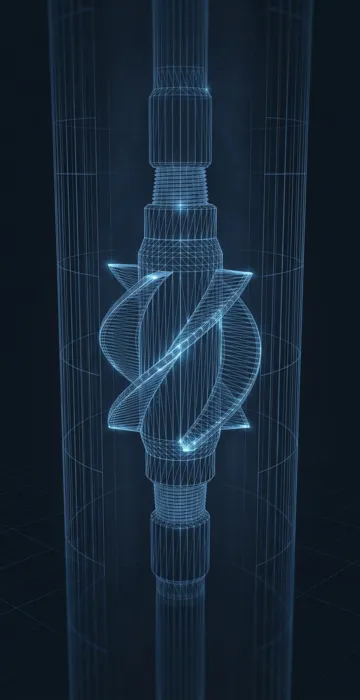
Blades wear as they drill, especially in abrasive rock. A worn stabilizer behaves like an undergauge one, which can change a holding assembly into a dropping one without anyone planning it. That's why crews check stabilizer gauge with a ring gauge when the BHA comes out of the hole. If the bit and stabilizers come out undergauge, the next run usually starts with a reaming pass to bring the hole back to size.
What Is an Adjustable Gauge Stabilizer?
An adjustable gauge stabilizer can change its blade diameter while it's downhole, usually triggered by changes in flow or weight. That lets the directional driller switch the assembly between building, holding or dropping without tripping out to swap stabilizers. It's a clever middle ground between a fixed rotary assembly and a full steering system.
Can Stabilizers Cause Problems?
Yes. Stabilizers are close to the hole wall by design, so they can hang up. In sticky shales or swelling clays, the blades can collect clay and "ball up," acting like a piston. In doglegs and ledges, a stiff, packed assembly can get stuck when pulling out.
That's one reason the BHA usually includes a jar placed above the stabilized section. If you want to know how that tool frees a stuck string, read our article on drilling jars.
What Does a Drill String Stabilizer Do?
A drill string stabilizer centers the BHA and controls how it bends, which controls where the hole goes. Choose integral blades for strength, sleeves for flexibility, and non-rotating designs to protect casing.
Then think about placement. Near-bit plus a far stabilizer builds, no near-bit drops, and a tight pack holds. Get that pattern clear in your head, and stabilizers stop looking like simple spacers and start looking like steering tools.