Crossover, Float and Shock Subs – What Each Sub Does
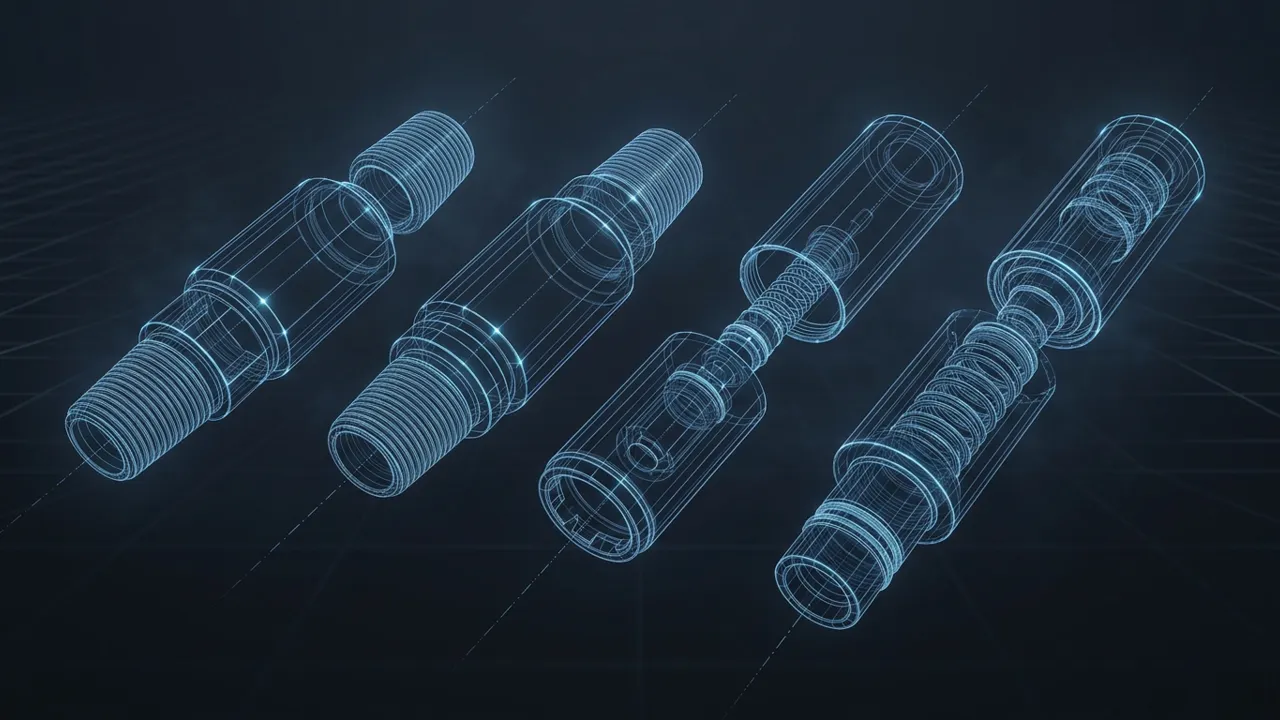
Read through any drilling program and you'll find the word "sub" scattered all over the BHA list. Crossover sub, bit sub, float sub, shock sub. They're short, they're easy to overlook, and each one quietly solves a specific problem. If you've ever wondered why the string needs so many little adapters, you're not alone. So what does a crossover sub do, and what are the other drilling subs for?
A crossover sub is a short threaded adapter that joins two drill string components with different connection types or sizes. It's the drilling version of a plumbing adapter fitting. Other subs each have their own single job. A bit sub connects the bit to the BHA and often holds a float valve. A float sub holds a one-way valve that stops mud and well fluids from flowing back up the pipe. A shock sub absorbs vibration from the bit, and a saver sub takes thread wear so the top drive's own threads last longer.
What Is a Sub in Drilling?
A sub is a short length of heavy tubular with threaded connections, used to connect, adapt or add a function to the drill string. The word is short for "substitute." Subs are usually only a few feet long, though some are longer.
One quick note to avoid confusion. On a rig, "sub" can also mean the substructure, the steel base that holds up the rig floor. In this article, we're talking only about the downhole and drill string kind.
Connections on subs follow the same pin (male) and box (female) system as the rest of the string. A sub can be pin-by-box, box-by-box or pin-by-pin, depending on what it needs to join.
What Does Each Drilling Sub Do?
Here's a quick reference. Each sub has one main job.
| Sub | Main job | Where it usually goes |
|---|---|---|
| Crossover sub | Joins different thread types or sizes | Anywhere two connections don't match |
| Bit sub | Connects the bit to the BHA, often holds a float valve | Directly above the bit |
| Float sub | Holds a one-way float valve | Near the bit, low in the BHA |
| Shock sub | Absorbs vibration and impact loads | Close above the bit |
| Saver sub | Takes repeated thread wear | On the top drive |
| Lift sub | Lets elevators pick up collars safely | Screwed into collars at surface for handling |
| Circulating sub | Opens side ports to divert flow | Above sensitive BHA tools |
How Does a Crossover Sub Work?
A crossover sub works by having one connection on each end, each matched to a different component. For example, the drill collars might use one rotary shouldered connection while the heavyweight drill pipe above uses another. A crossover sub with the right pin and the right box joins them.
The rule is simple. You can't force two different thread forms together. They won't seal and they won't carry the load. The crossover sub makes the change in a controlled, engineered way, with each end machined to the right thread and torque rating.
Crossovers also handle size changes, like stepping down from a larger collar to smaller tools. A typical BHA may contain several of them. Each one should be checked for strength, because a crossover can become the weakest link if its outside or inside diameter isn't matched to the load.
What Is a Bit Sub?
A bit sub connects the bit to the rest of the BHA. Most bits have a pin connection, and most collars have a pin on the bottom too, so the bit sub is usually box-by-box to join them.
Bit subs are often bored to hold a float valve, which makes them do double duty. In some assemblies, a near-bit stabilizer or the bottom of a mud motor takes the bit sub's place.
What Is a Float Sub?
A float sub holds a float valve, a one-way valve that lets mud flow down the drill string but blocks flow coming back up. There are two common styles: flapper type and spring-loaded plunger type.
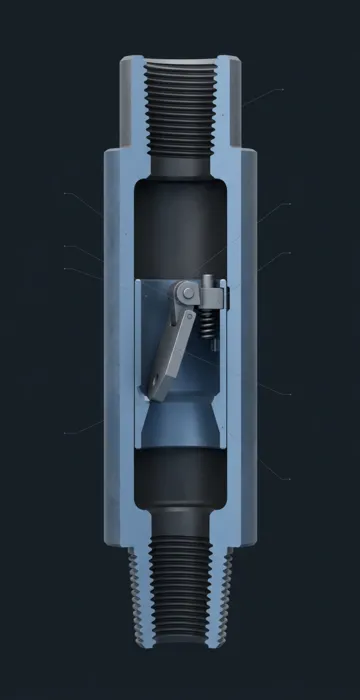
Float valves help in several ways:
- They stop cuttings and mud from flowing back into the string during connections, which helps prevent plugged bit nozzles.
- They reduce U-tubing, where heavy mud in the pipe and lighter fluid in the annulus try to balance out.
- They add a barrier against well fluids entering the drill string during a kick.
The trade-off is that a closed float means the pipe doesn't fill automatically when running in the hole. The crew has to fill the string at intervals, and some float designs make it harder to read shut-in drill pipe pressure during well control. Well-site procedures cover how to handle both.
What Does a Shock Sub Do?
A shock sub absorbs vibration and impact coming up from the bit. Inside, it has a spring element, such as stacked disc springs or elastomer, that lets the tool compress and extend slightly.
Think of it as a shock absorber on a truck. The bit bouncing on hard or broken rock sends jolts up the string. The shock sub soaks up some of that energy before it reaches the MWD tool, the motor and the rest of the BHA. Shock subs are most useful in hard, interbedded rock where axial vibration is a known problem.
What Are Saver Subs and Lift Subs?
A saver sub screws onto the top drive's main shaft. Every connection the rig makes goes through the saver sub's threads instead of the top drive's own. When those threads wear out, the crew replaces a cheap sub instead of repairing the top drive.
A lift sub (also called a lifting sub or handling sub) screws into the top of a drill collar so standard elevators can pick it up. Collars without elevator recesses need one, since their smooth outside gives elevators nothing to grip.
How Do Subs Fit With the Rest of the BHA?
Subs are the glue of the bottomhole assembly. Collars, stabilizers, MWD tools, motors and jars rarely share the same connection, so subs join them in the right order.
Stabilizers are a good example. Some are built as short subs with blades, placed between collars to center the string. To learn how blade types and placement affect the hole, see our article on the drill string stabilizer. And for the broader definition of the assembly these subs live in, the SLB glossary entry for the bottomhole assembly is a good reference.
Crossover Sub, Float Sub, Shock Sub: Small Parts, Big Jobs
A crossover sub joins different connections. A bit sub connects the bit. A float sub holds a one-way valve. A shock sub soaks up vibration, and a saver sub protects the top drive.
When you read a BHA list, don't skip over the subs. Ask what each one is joining or protecting. That simple question tells you a lot about how the assembly was designed and what problems the engineer expected to face.