Heavyweight Drill Pipe – What HWDP Is Used For
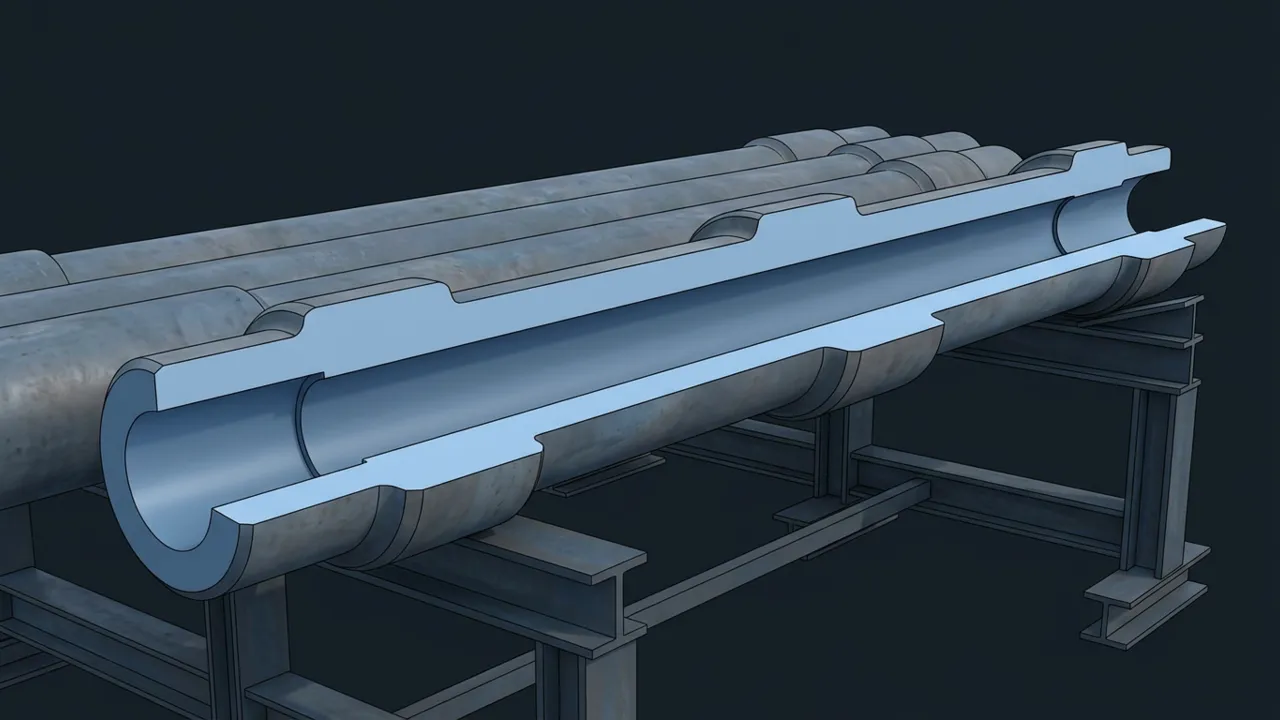
Look at a drill string diagram and you'll see a section that seems to be neither drill pipe nor drill collar. It looks like pipe, but heavier, with an odd bulge in the middle of every joint. That's heavyweight drill pipe, and it quietly solves some of drilling's most stubborn fatigue problems. So what is heavyweight drill pipe used for, and why not just use more collars or more pipe?
Heavyweight drill pipe (HWDP) is a thick-walled drill pipe used as a transition zone between stiff drill collars and flexible drill pipe, and as a source of extra weight in high-angle wells. Going straight from collars to regular pipe creates a sharp change in stiffness that concentrates bending stress and causes fatigue failures. HWDP smooths that change. Because it bends more easily than collars and touches the hole wall less, it can also supply weight on bit in directional wells with less drag and less risk of differential sticking. It handles like drill pipe on the rig floor, which saves time on trips.
What Is HWDP?
HWDP is a drill pipe with a much heavier wall than standard pipe, built in the same general joint length. It has three features that make it easy to recognize:
- A thick tube wall, which adds weight and stiffness.
- Extra-long tool joints, which give more room for recutting threads and more wear surface.
- A center upset, or wear pad, in the middle of the joint that keeps the tube body off the hole wall.
From a distance, a joint of HWDP looks a lot like regular drill pipe that has been bulked up. On the pipe rack, that center pad is the giveaway. Crews can usually pick it out at a glance, which is handy when building a string from mixed inventory.
It's still a drill pipe in the basic sense, with welded tool joints and the same kind of rotary shouldered connections. For a refresher on standard pipe, the SLB glossary entry for drillpipe is a good reference.
What Is the Transition Zone in a Drill String?
The transition zone is the part of the string where stiffness steps down from the heavy BHA to the lighter drill pipe. HWDP fills that zone.
This is the reason HWDP exists. When a stiff section and a flexible section are joined, the flexible part does almost all the bending right at the joint. Rotate that string thousands of times in a curved hole, and the drill pipe just above the collars flexes back and forth at the same spot. That's a recipe for fatigue cracks and washouts.
Think of a fishing rod. A good rod tapers smoothly from a thick butt to a thin tip, so it bends along its length. A rod that jumped from thick to thin in one step would snap at that step. HWDP gives the drill string its taper.
HWDP vs. Drill Collar: What's the Difference?
HWDP is lighter and more flexible than drill collars, and heavier and stiffer than drill pipe. This table shows how they compare.
| Feature | Drill collar | HWDP | Drill pipe |
|---|---|---|---|
| Wall thickness | Very thick | Thick | Thin |
| Stiffness | Highest | Medium | Lowest |
| Tool joints | Threads cut into the body | Long welded tool joints | Standard welded tool joints |
| Wall contact | Full length (unless spiral) | Mainly at tool joints and center pad | Mainly at tool joints |
| Can it run in compression? | Yes | Yes, within limits, especially in deviated holes | Generally avoided |
| Rig floor handling | Often needs lift subs or special handling | Handled like drill pipe | Standard |
Why Is HWDP Used in High-Angle Wells?
In high-angle and horizontal wells, HWDP is often the preferred way to supply weight on bit. Collars lying on the low side of a horizontal hole add a lot of drag and contact area, but contribute little weight along the hole.
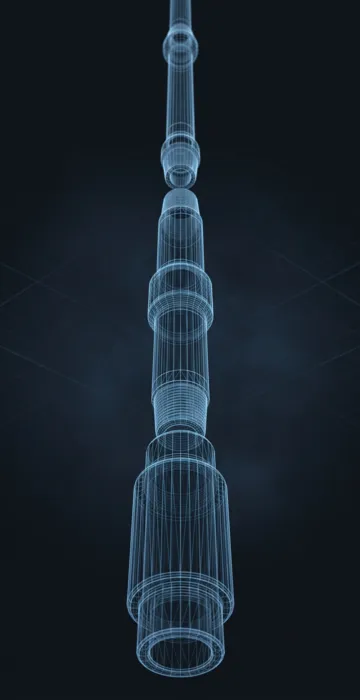
So engineers move the weight higher, placing HWDP in the vertical or lower-angle part of the well where gravity can push straight down. The hole wall supports the pipe in deviated sections, which helps it carry compression without buckling as badly as regular pipe would. The center wear pad keeps the tube off the wall, which reduces both wear and the chance of differential sticking.
The result is a lighter, more flexible BHA near the bit that slides and rotates more easily through the curve.
Where Does HWDP Go in the Drill String?
In a conventional vertical well, HWDP sits directly above the drill collars, with drill pipe above it. In directional wells, it may be placed higher up the string, sometimes with a section of regular drill pipe between it and the BHA.
The drilling jar is often placed in or near the HWDP section. That location helps keep the jar away from the neutral point, where it could be cycled back and forth between tension and compression.
When the HWDP's connections don't match the collars or the drill pipe, the string uses crossover subs to join them. That's normal and shows up in most BHAs.
Are There Different Types of HWDP?
Yes. Standard HWDP has a single center upset, but variations exist:
- Spiral HWDP has spiral grooves on the upset or body, for the same anti-sticking reason as spiral collars.
- Some designs add extra wear pads or hardbanding for long, abrasive horizontal runs.
- HWDP comes in different sizes to match common drill pipe diameters.
What Is Heavyweight Drill Pipe Used For?
Heavyweight drill pipe is used to bridge the stiffness gap between drill collars and drill pipe, and to supply weight on bit in high-angle wells without the drag of a long collar section. It protects the drill pipe from fatigue and keeps the BHA flexible enough to steer.
When you read a string design, look at where the HWDP sits. Directly on top of the collars, it's mainly a transition. Higher up in a directional well, it's doing double duty as the weight that pushes the bit.