Drill Collars – What They Do in the Drill String
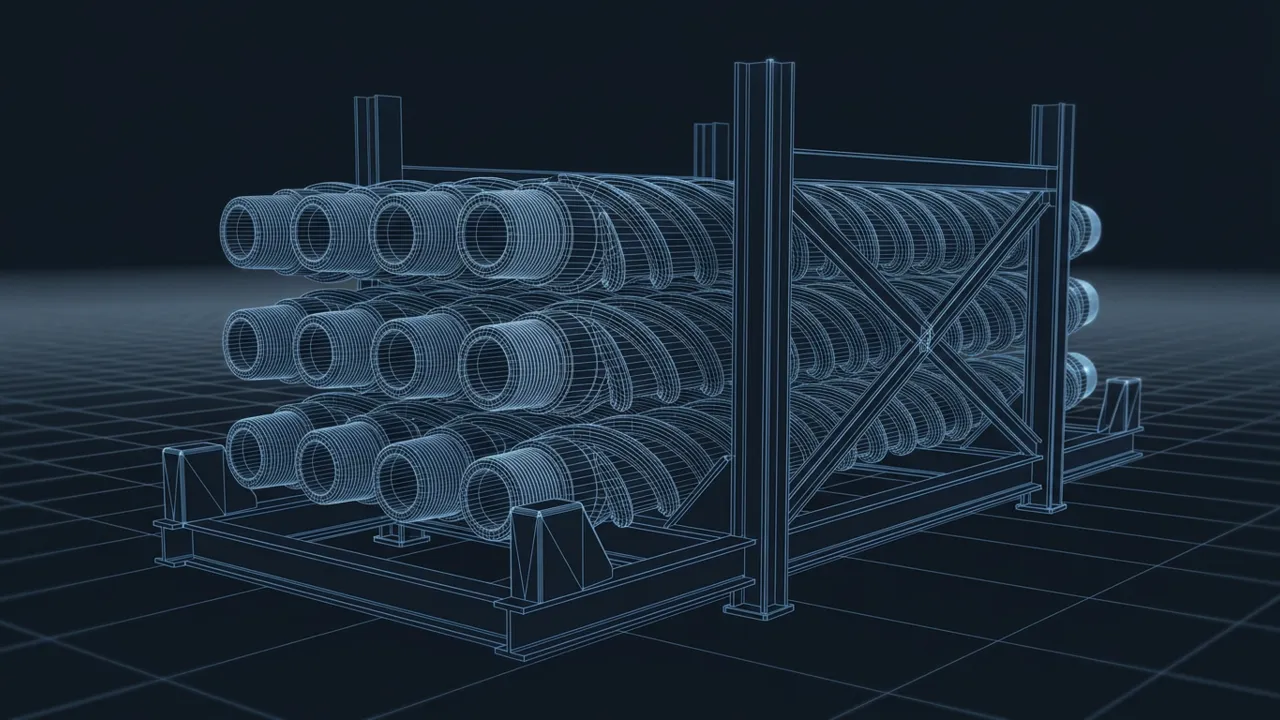
If you've ever tried to push a long, thin rod into the ground, you know what happens. It bends long before it does any useful work. Drilling faces the same problem, only thousands of feet deep. The solution is a set of heavy steel tubes at the bottom of the string. So what do drill collars do in the drill string, and why are they built the way they are?
Drill collars are heavy, thick-walled steel tubes at the bottom of the drill string that supply weight on bit and stiffness to the bottomhole assembly. Because they are so heavy, gravity pushes the bit into the rock while the lighter drill pipe above stays in tension and away from buckling. Their stiffness also helps keep the hole straight and gives stabilizers something solid to work against when controlling the well's angle. Collars come in slick and spiral-grooved designs, plus nonmagnetic versions for housing MWD tools. In short, they are the weight and backbone of the BHA.
What Is a Drill Collar?
A drill collar is a solid-looking steel tube with a relatively small bore and a very thick wall. Joints are commonly around 30 feet long. Unlike drill pipe, there is no separate tool joint welded on. The threads are machined right into the collar body, with a pin on one end and a box on the other.
The SLB glossary describes the drill collar as a thick-walled tubular component that provides weight on bit. That short description captures the main idea well.
Here's an everyday picture. Drill pipe is like a long chain, strong when you pull on it but useless for pushing. Drill collars are like a heavy steel bar hung from the bottom of that chain. The chain stays tight, and the bar does the pushing.
What Are the Main Drill Collar Functions?
Drill collars do several jobs at once. These are the main drill collar functions:
- Provide weight on bit, so the cutters can bite into the rock.
- Keep the drill pipe in tension by placing the compression in the heavy, stiff collars instead.
- Add stiffness to the BHA, which helps hold direction and resist bending.
- Work with stabilizers to build, drop or hold angle.
- Create the pendulum effect in assemblies designed to bring a hole back toward vertical.
- Smooth out rotation a little, acting somewhat like a flywheel at the bottom of the string.
How Do Drill Collars Put Weight on Bit?
Drill collars put weight on bit through gravity, not by pushing from surface. The driller slacks off the hook load, letting part of the collars' weight rest on the bit while the rest of the string hangs from the rig.
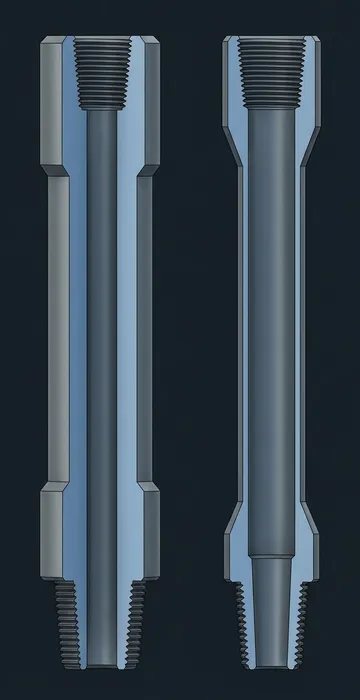
Think about what the driller actually sees. The weight indicator on the rig floor shows how much the string weighs while hanging. When the driller lowers the bit to bottom and slacks off, the indicator drops. That drop is the weight on bit.
The point in the string where compression changes to tension is called the neutral point. Good design keeps it inside the collars or heavyweight drill pipe. Engineers size the collars by taking the desired weight on bit, correcting for buoyancy (mud partly floats the steel) and adding a safety margin. In deviated wells, they also account for the hole angle, because a collar lying on the low side contributes less useful weight.
What Are the Types of Drill Collars?
Drill collars come in a few main styles. Each solves a specific problem.
| Type | What makes it different | Why use it |
|---|---|---|
| Slick collar | Smooth round outside | Simple and strong, standard choice |
| Spiral drill collar | Spiral grooves cut along the outside | Less wall contact, lower risk of differential sticking |
| Square collar | Square cross-section that nearly fills the hole | Extra stiffness for straight-hole drilling (less common today) |
| Nonmagnetic collar | Made from special nonmagnetic alloys | Houses MWD compass sensors without magnetic interference |
Why Use Spiral Drill Collars?
Spiral drill collars reduce the area of steel pressed against the hole wall. That matters because of differential sticking. When the mud pressure in the wellbore is higher than the pressure in a permeable rock, a smooth collar resting against the wall can get pinned there by the pressure difference, like a suction cup. Spiral grooves leave channels so pressure can equalize, which makes that kind of sticking less likely. The trade-off is a small loss of weight per foot.
What Design Features Protect Drill Collars?
Collar connections take a beating, because the bending and vibration in the BHA concentrate at the threads. Several features help:
- Stress relief grooves on the pin and bore-back designs on the box reduce stress concentration at the threads.
- Slip and elevator recesses machined near the top let the crew handle collars more safely without a lift sub.
- Hardbanding on some collars resists wear from contact with the hole and casing.
- Cold rolling of thread roots on some connections improves fatigue life.
Collars are also inspected regularly for cracks, especially at the connections, because a cracked collar can wash out or part downhole.
Drill Collars vs. Heavyweight Drill Pipe: What's the Difference?
Drill collars are heavier and much stiffer. Heavyweight drill pipe has a thinner wall than collars but a heavier wall than regular drill pipe, with long tool joints and usually a center wear pad.
The two often work as a team. Collars sit near the bit for weight and stiffness. Heavyweight drill pipe sits above them as a transition, so stiffness changes gradually rather than all at once. In high-angle wells, HWDP often replaces some collars because it bends more easily and creates less drag.
What Do Drill Collars Do in the Drill String?
Drill collars are the heavy backbone of the bottomhole assembly. They supply weight on bit, keep the drill pipe in tension and add the stiffness that stabilizers need to control direction.
When you look at a BHA diagram, find the collars first. Their length tells you how much weight the design can deliver, and their placement relative to the stabilizers tells you whether the assembly is meant to build, drop or hold angle.