Is Oil Rig Work Dangerous? – Real Risks and How Crews Manage Them
Maybe you have seen the job posting: good pay, no degree required, two weeks on and two weeks off. Maybe your son, daughter or partner just told you they signed on with a drilling contractor. Either way, a question sits underneath the excitement, and it deserves a straight answer. Is oil rig work dangerous?
Yes, oil rig work is more dangerous than most jobs, but the risks are well understood and a large share of them can be managed with training, good habits and a strong safety culture. Oil and gas extraction has a fatality rate several times higher than the average for all U.S. workers. Leading causes of death include vehicle crashes, struck-by and caught-in incidents, falls, and fires or explosions. Most rig workers finish their careers without a serious injury, and modern rigs are far safer than the rigs of earlier generations. How dangerous it is for any one person depends heavily on the company, the crew and their own habits.
Is Oil Rig Work Dangerous Compared to Other Jobs?
Oil and gas extraction regularly appears among the higher-risk industries in the United States. Federal safety researchers have long reported fatality rates for the industry that are several times the rate for all workers combined. It sits in the same general company as logging, fishing, roofing and construction.
That number does not tell the whole story, though. "Oil and gas" covers drilling, well servicing, trucking, frac crews, production and more. The risks vary a lot between those jobs and between companies. A well-run rig with a seasoned crew is a very different workplace from a rushed operation that cuts corners.
I grew up around people who did this work. They did not talk about danger much, but they all knew someone who had been hurt. That quiet awareness, more than any statistic, is what most families in oil country carry.
What Are the Most Common Oil Rig Injuries?
The OSHA guide to common wellsite incidents lists the hazards that cause the most harm. The main ones are:
- Vehicle crashes: long drives to remote locations, often after long shifts, make highway crashes a leading cause of death in the industry.
- Struck-by incidents: being hit by pipe, tongs, chains, falling tools or swinging loads.
- Caught-in or caught-between: hands, arms or bodies caught in rotating equipment, between pipe and other objects, or in pinch points.
- Falls: from the derrick, the rig floor, stairs, catwalks or trucks.
- Fires and explosions: from gas released during drilling or from equipment.
- Hazardous gases: especially hydrogen sulfide (H2S), which can be deadly in small concentrations.
- Heat, cold and fatigue: long shifts in extreme weather that wear down attention.
Day to day, the most common injuries are hand and finger injuries, back strains, cuts and bruises. These are not headline events, but they can still end a career.
What Are the Most Dangerous Rig Jobs?
No rig job is risk-free, but some carry more exposure than others.
Floorhands (Roughnecks)
Floorhands work on the rig floor, handling pipe, tongs, slips and chains. They are closest to the moving iron and the pinch points. Hand injuries and struck-by incidents are common risks. Automation such as iron roughnecks and pipe-handling systems has reduced some of this exposure on modern rigs.
Derrickhands
Derrickhands work high in the derrick during trips, handling pipe at the monkeyboard. Falls and dropped objects are the main hazards. They also often tend the mud pits, which can expose them to chemicals and gas.
Motorhands and Roustabouts
Motorhands maintain engines and equipment. Roustabouts do general labor, moving materials and working around cranes and forklifts. Struck-by and caught-in hazards are part of the job.
Drivers and Crews Traveling to Location
It surprises many people, but the drive to and from location can be one of the most dangerous parts of the job. Rural roads, heavy trucks, fatigue and long distances add up.
Is Offshore Rig Work More Dangerous Than Land Rig Work?
Offshore and land work each have their own risks. Offshore crews face helicopter transport, weather, and the challenge of evacuating at sea if something goes wrong. Major offshore disasters have been especially deadly because there is nowhere to run.
On the other hand, offshore rigs tend to operate under detailed safety regimes, with strict permit systems, regular drills, onboard medics and dedicated safety staff. Land crews often face more driving exposure and work under a wider range of company standards.
Before going offshore, workers typically complete sea survival and helicopter underwater escape training, where they practice getting out of a flipped, sinking cabin in a pool. Nobody enjoys it. Everyone who has done it understands why it exists.
Neither is simply "safer." What matters more is the specific operator, contractor and crew.
How Do Crews Manage the Risks?
Good rigs do not rely on luck. They build safety into every task, every day. Common practices include:
- Pre-tour safety meetings to talk through the day's work and hazards.
- Job safety analyses (JSAs) that break each task into steps and identify what could go wrong.
- Stop work authority, which gives every worker, including the newest hand, the right to stop a job they think is unsafe.
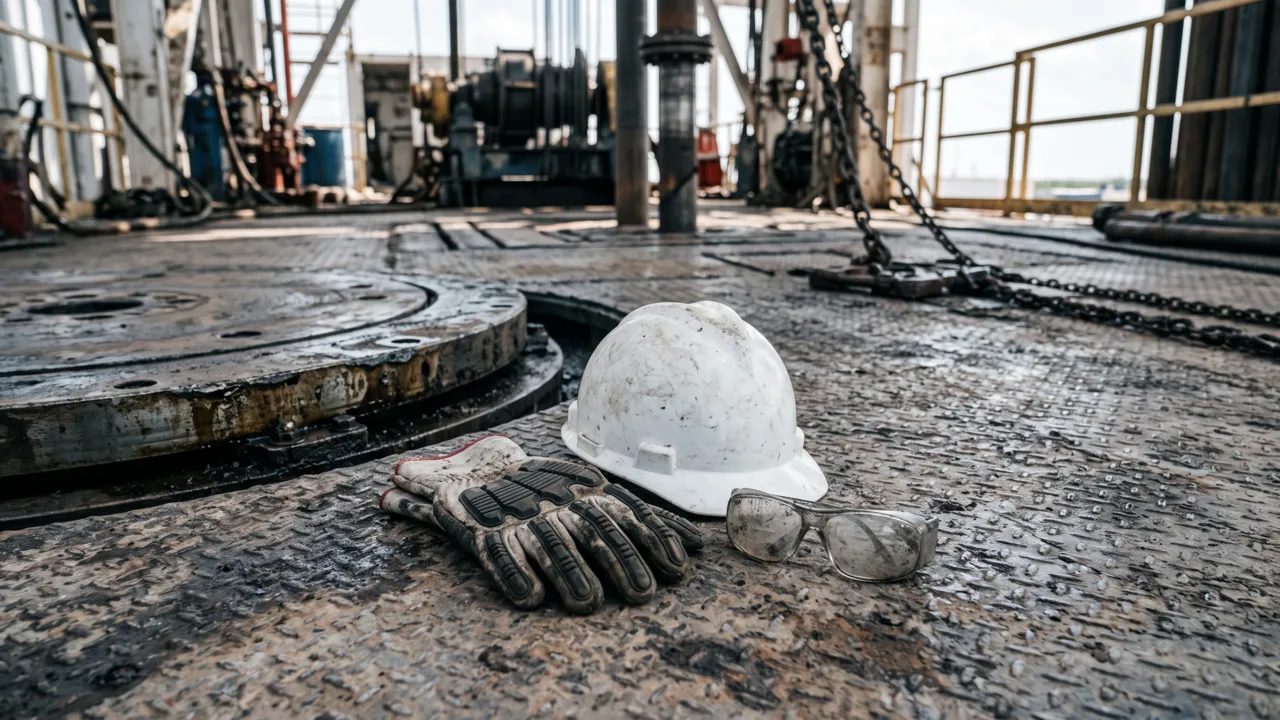
- Personal protective equipment such as hard hats, safety glasses, steel-toe boots, gloves, flame-resistant clothing and hearing protection.
- Fall protection and 100 percent tie-off when working at height.
- Gas monitors for H2S and other gases.
- Short service employee programs that mark new workers, often with a different colored hard hat, so experienced hands keep an eye on them.
- Well control training and drills so the crew knows exactly what to do if the well kicks.
The habits behind these tools matter more than the tools. If you want to see what that looks like on a real crew, our article on oilfield safety covers the daily habits that keep rig hands safe.
What Should a New Hand Know Before Starting?
If you are new to the rigs, a few things will make a big difference to your safety:
- Ask questions. Nobody expects a new hand to know everything. They do expect you to ask before you guess.
- Watch your hands. Know where your fingers are in relation to every pinch point, every time.
- Stay out of the line of fire. Do not stand under a load, in the swing path of tongs or where something could fall.
- Use stop work authority. If something feels wrong, say so. A good crew will thank you.
- Get real rest. Fatigue is behind many incidents, especially on the drive home.
The Bureau of Labor Statistics overview of oil and gas workers also describes the work environment honestly, including the physical demands and the hours.
What Makes Some Rig Companies Safer Than Others?
Two rigs can drill the same kind of well in the same county and have very different safety records. The difference usually comes down to culture, and culture shows up in small things you can see.
- Leaders who take near misses seriously and want to hear about them, instead of punishing the person who reported one.
- Equipment that is maintained and inspected, not patched to get through one more well.
- Reasonable schedules, so crews are not pushed to rush trips or skip steps.
- Real training for new hands, not just a video and a hard hat.
- A toolpusher and driller who back up a floorhand who stops the job.
When you interview, ask about these things. A company proud of its safety program will be glad to talk about it. One that changes the subject is telling you something too.
Is the Pay Worth the Risk?
That is a personal question, and there is no single right answer. Rig work often pays well for people without a college degree, and many hands use it to buy homes, pay off debt or support families. Pay varies a lot by region, employer, position and rotation, and it rises as you move up from floorhand to derrickhand to driller.
What I would say is this: the pay should never be the reason you accept an unsafe practice. No bonus is worth your hands, your back or your life. The hands who last for decades in this business are usually the ones who refused to take shortcuts.
What Should Families Know?
Families often worry most during the first hitch. It helps to know that reputable drilling companies invest heavily in training and safety, and that new hands are usually watched closely. Asking your loved one about their company's safety program, their training and their stop work authority is a fair question, and a good one.
It also helps to talk about fatigue and driving. Encouraging rest before a long drive home after a hitch might be the most practical safety advice a family can give.
Is Oil Rig Work Dangerous? Yes, and Here Is What Makes the Difference
Oil rig work is more dangerous than most jobs. Vehicle crashes, struck-by and caught-in incidents, falls, fires and gas exposure are real risks. The industry's fatality rate is higher than average, and that is not something to brush aside.
But danger on a rig is not random. Training, good habits, a strong safety culture and the willingness to stop work when something looks wrong reduce the risk dramatically. Many people work full careers on rigs and retire healthy.
If you are considering the job, choose a company with a real safety program, listen to the experienced hands and never stop paying attention. That combination is the best protection there is.