What Is a Kick in Drilling? – Warning Signs and First Response
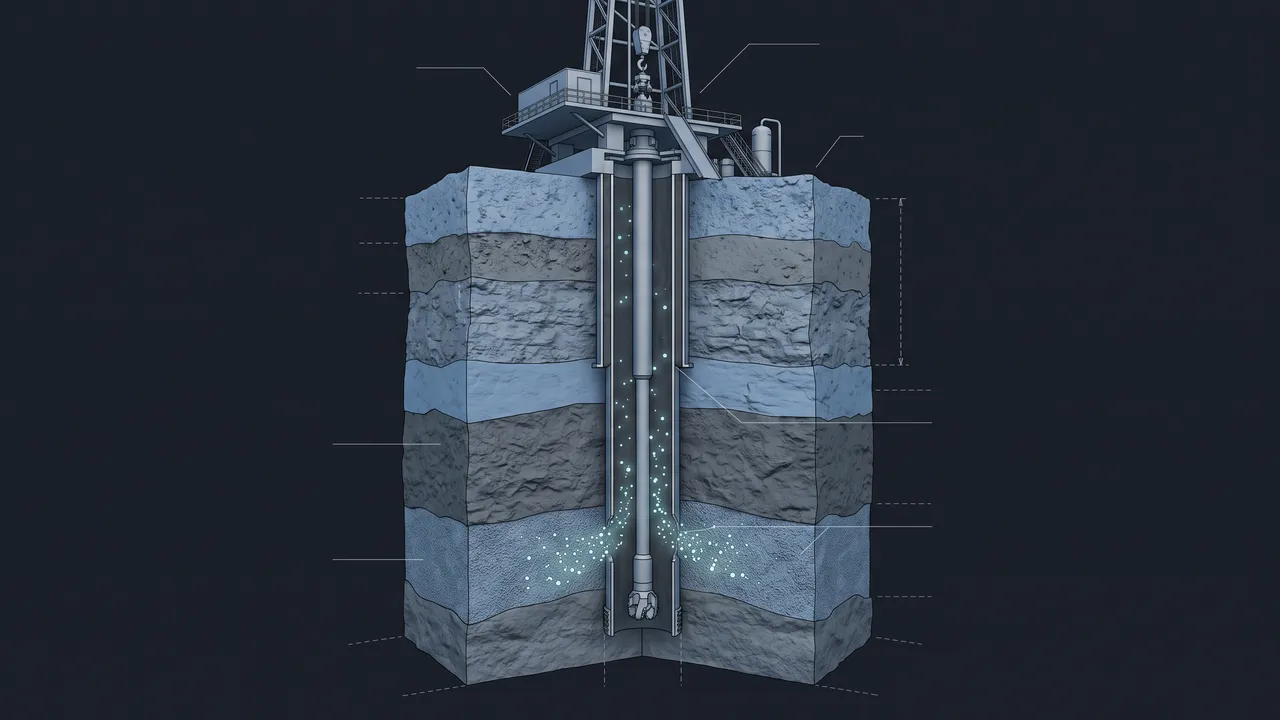
On a quiet tour, the pit volume readout barely moves. The pumps run, the bit turns, and the numbers on the driller's screen drift up and down in a pattern everyone has learned to ignore. Then one of those numbers starts climbing and does not stop. That small change, a few barrels in the pits, can be the opening moment of a well control event. What is a kick in drilling, how do you spot one, and what should the crew do first?
A kick in drilling is an unplanned flow of formation fluid (gas, oil or salt water) into the wellbore because the pressure in the rock has become greater than the pressure the mud column exerts on it. It is the first stage of a possible blowout, but it is not a blowout yet. Common warning signs are a gain in pit volume, an increase in return flow, and the well flowing with the pumps off. When a kick is suspected, the crew picks up off bottom, stops the pumps, checks for flow and shuts in if it is flowing.
What Is a Kick in Drilling, Exactly?
Every well is a pressure balancing act. The rock holds fluids under pore pressure, and the drilling mud pushes back with hydrostatic pressure. As long as the mud wins, formation fluids stay in the rock. When the mud loses, even a little, fluid starts moving into the well. That influx is the kick.
The SLB Energy Glossary definition of a kick puts it simply: formation fluids flowing into the wellbore while drilling. The word is old oilfield slang, and it fits. The well literally kicks back at you.
Gas kicks are the ones people worry about most. Gas is light, it moves up the hole, and it expands as the pressure on it drops. A gas bubble that takes up a few barrels near bottom can take up many times that volume by the time it reaches surface. That expansion is why a kick that is ignored can turn into something much worse in a short time.
What Causes a Kick?
Kicks happen when bottomhole pressure falls below formation pressure. That can happen for a handful of reasons:
- Mud weight too low for the pressure in the zone being drilled, often because the zone is more pressured than expected.
- Failing to keep the hole full while pulling pipe out, so the mud level drops.
- Swabbing, where pulling pipe too fast lowers pressure below the bit and draws fluid in.
- Lost circulation, which drops the fluid level in the annulus and reduces hydrostatic pressure.
- Gas-cut mud or other contamination that lowers the density of the mud column.
Some of these are geology. Others are human. The ones that happen during trips are especially dangerous because the crew is busy, the pumps are off, and the signs are subtle.
What Are the Signs of a Kick?
Drillers sort kick indicators into two groups. Primary indicators are strong evidence that formation fluid is entering the well. Warning signs are clues that conditions are changing and a kick is more likely.
Primary Kick Indicators
- Pit gain: the active mud system holds more fluid than it should.
- Increase in return flow rate with no change in pump rate.
- Well flowing with the pumps off.
- Hole not taking the right amount of fill-up during a trip out, or giving back too much mud on a trip in.
Warning Signs That Should Raise Your Attention
- A drilling break, meaning a sudden jump in penetration rate, which can mean the bit has entered a softer, more porous zone.
- Pump pressure dropping while pump strokes rise.
- Increase in background gas, connection gas or trip gas.
- Gas-cut mud at the flowline.
- Changes in string weight, torque or drag.
- Changes in mud chlorides or temperature at the flowline.
Not one of the warning signs proves a kick on its own. A drilling break might just be a softer rock. But each one is a reason to slow down and look harder, and often a reason to do a flow check.
What Does Pit Gain Tell You?
Pit gain is the most direct evidence of a kick. If fluid from the formation is coming in, something has to give, and what gives is the volume in the active pits. Mud that went down the drillpipe comes back up the annulus along with whatever the rock added.
The size of the pit gain when the well is shut in matters a great deal. A smaller influx means lower casing pressures, less gas to handle at surface, and an easier kill. That is why crews talk about catching a kick "early." A few barrels is a very different day from a few dozen.
Pit gain is not always a kick, though. Transfers between tanks, adding mud or water, and stopping the pumps can all change pit levels. A good derrickhand and driller know what normal looks like on their rig and question anything that does not fit.
How Do Mud Pit Sensors Help Detect Kicks?
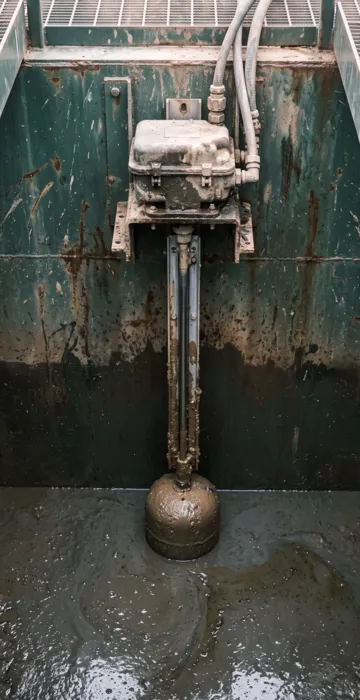
On older rigs, someone had to walk out and look at a float or a marker in the pit. Modern rigs use electronic sensors that feed directly to the driller's display and sound alarms.
- Pit volume totalizer (PVT): level sensors in each active pit that add up total volume and alarm on a gain or loss.
- Flow sensor (often called a flow paddle or flow show): measures the relative flow coming out of the flowline.
- Coriolis or other flowmeters: on some rigs, especially those running managed pressure drilling, these give much more precise flow and density readings.
- Gas detectors: the mud logging unit tracks gas in the returns.
Sensors only help if the alarms are set sensibly and left on. Nuisance alarms tempt people to turn them off or widen the limits. Investigations into fatal blowouts have pointed to disabled or ignored alarms more than once. It is one of the hardest lessons in the business.
What Is a Flow Check?
A flow check is the simplest test in well control. You stop the pumps, keep the pipe still or rotate slowly, and watch the well. If the well keeps flowing with the pumps off, something is pushing that fluid out, and the default assumption is that it is a kick.
Crews typically do flow checks when they see a warning sign, after a drilling break, before pulling out of the hole, at the casing shoe, and before the bottomhole assembly is pulled through the BOP. Watching the flowline or the trip tank for a set period is normal practice, and rig procedures spell out how long.
During trips, the flow check works hand in hand with the trip tank, a small, narrow tank that shows very small volume changes. The trip sheet compares how much mud the hole should take with how much it actually takes. If those numbers do not match, the crew stops and checks.
What Should the Crew Do First When a Kick Is Suspected?
The exact steps belong to the rig's written procedures and the operator's well control policy, and those always come first. But the basic sequence while drilling looks like this:
- Stop drilling and pick up off bottom so a tool joint is clear of the BOP elements.
- Stop the pumps.
- Do a flow check.
- If the well is flowing, shut it in using the BOP and the rig's chosen shut-in method.
- Notify the toolpusher and company representative.
- Record the shut-in drillpipe pressure, shut-in casing pressure and pit gain once they stabilize.
During a trip, the first step is different: install a full-opening safety valve on the drillpipe, close it, then shut in the BOP. Without that valve, the well could flow up the inside of the pipe.
The recorded pressures and pit gain tell the team how strong the kick is, what kind of fluid it might be, and what mud weight they need to kill it. From there, the kick is circulated out through the choke manifold using an established kill method.
Why Do Crews Shut In Even When They Are Not Sure?
If you take one thing from this article, take this: when in doubt, shut it in. Shutting in a well that turns out not to be kicking costs some rig time. Failing to shut in a well that is kicking can cost lives.
Experienced hands will tell you the dangerous moment is not the kick itself. It is the minute someone spends talking themselves out of what the pit readout is plainly saying. A good culture makes it easy for the newest hand on the crew to say "I think we're gaining" and be taken seriously.
What Is a Kick in Drilling and Why Does Catching It Early Matter?
A kick is formation fluid entering the well because the mud is no longer holding the rock's pressure back. It shows up as pit gain, increased flow, flow with the pumps off and trips that do not take the right fill. Warning signs like drilling breaks and rising gas are reasons to look harder.
The response is simple on paper: stop, pick up, check for flow and shut in. Then measure, plan and circulate it out. The hard part is noticing early and acting without hesitation.
If you work on a rig or plan to, learn your rig's alarms, its normal pit behavior and its shut-in procedure. Those three things are where every well control story starts, good or bad.