What Is a Trip Tank and Why Does It Matter?
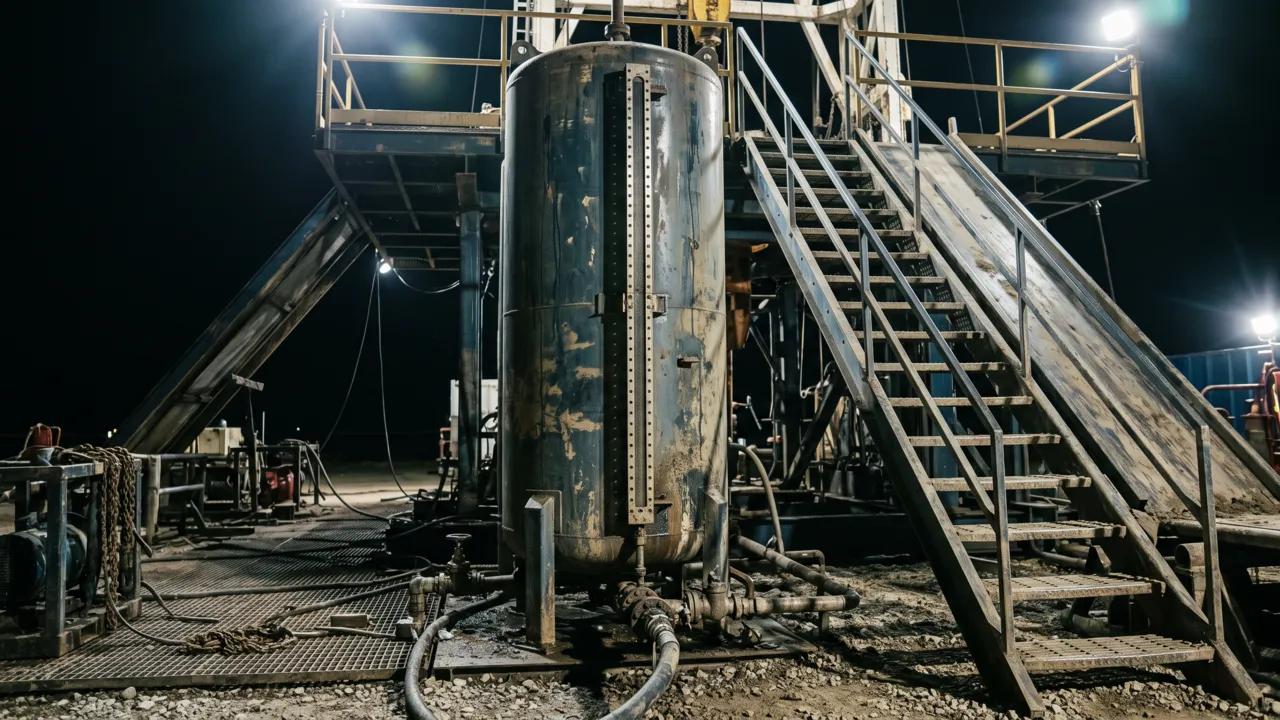
Tripping pipe has its own rhythm. The blocks go up, a stand breaks out, the derrickhand racks it back, and the whole thing repeats for hours. It is easy to fall into the beat and stop thinking about the hole. Off to the side of the rig floor sits a narrow steel tank that refuses to let anyone forget. What is a trip tank, and why does it matter so much for well control?
A trip tank is a small, tall, narrow tank used to keep the hole full and measure exactly how much mud the well takes or gives back while pipe is pulled out or run in. Because it is narrow, even a small change in volume makes a visible change in level, so the crew can spot problems a large pit would hide. As pipe comes out, steel volume leaves the hole and mud from the trip tank must replace it. If the hole takes less than it should, formation fluid may be coming in. With the trip sheet, it is a main defense against swabbed kicks.
What Does a Trip Tank Do on a Drilling Rig?
When the drill string is in the hole, it takes up space. Pull a stand out, and the space that steel occupied has to be filled with mud, or the fluid level drops. A lower fluid level means less hydrostatic pressure on bottom, and less hydrostatic pressure can let the formation flow.
The trip tank solves that with a small, dedicated volume. A pump circulates mud from the tank to the top of the hole and back, keeping the hole topped off continuously. A level sensor, and often a simple sight gauge, show how much the tank has dropped. Most rigs also send that reading to the driller's display with alarms.
Running in the hole works in reverse. The pipe going down pushes mud out, and that returned mud goes to the trip tank. The crew expects a certain volume back for each stand. Too much returned can mean the well is flowing.
Why Is the Trip Tank So Narrow?
The shape is the whole point. Picture a barrel of mud spread out in a large active pit. The level barely moves. Put that same barrel in a tall, slim tank and the level drops by a noticeable amount you can read at a glance.
That sensitivity matters because the volumes involved in a single stand are small. A few tenths of a barrel can be the difference between a normal stand and a warning. You cannot see that kind of change in a big pit, but you can in a well-designed trip tank.
What Is a Trip Sheet?
The trip sheet is the paper (or digital) record that goes with the trip tank. Before the trip, someone calculates the expected displacement of the pipe being pulled. During the trip, the crew records the actual trip tank reading at regular intervals, often every few stands.
A typical trip sheet tracks:
- Number of stands pulled or run
- Calculated fill (how much mud the hole should take)
- Actual fill from the trip tank
- The difference between the two, stand by stand and cumulative
That last column tells the story. If the hole is taking less than calculated, something else is filling that space, and it may be formation fluid. If the hole is taking more than calculated, the well may be losing mud to the formation, which can also lead to a kick by dropping the fluid level.
What Are Swabbing and Surging?
Swabbing and surging are pressure changes caused by moving pipe. They are the main reason the trip tank exists.
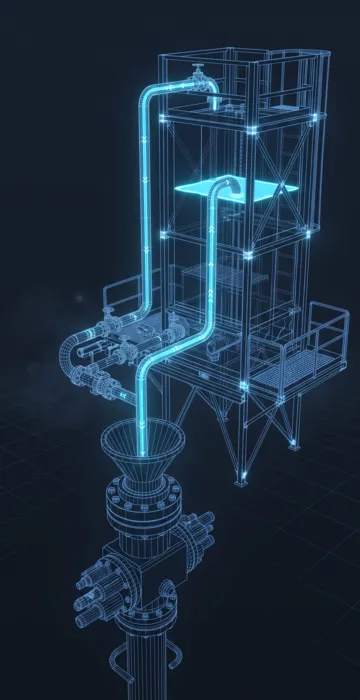
Swabbing happens when pipe is pulled. The bit and bottomhole assembly act something like a loose piston, and mud has to flow down past them to fill the space below. If the pipe moves too fast, or the mud is thick, or the clearance is tight, pressure below the bit drops. If it drops below formation pressure, fluid gets pulled into the well.
Surging is the opposite. Running pipe in too fast pushes pressure up below the bit. That extra pressure can fracture weaker formations and cause lost circulation. A loss of mud then lowers the fluid level, which can let another zone flow.
Swabbed kicks are sneaky. They often start small, the pumps are off, and the influx might sit near bottom without obvious flow at first. A trip sheet showing the hole taking a little less fill than it should, stand after stand, may be the only early sign. Gas swabbed in on a trip often shows up later as trip gas, or as gas cut mud when circulation starts again on bottom.
What Should a Crew Do If the Trip Tank Does Not Match?
The rig's own procedures and the company representative's instructions come first. In general, a mismatch on the trip sheet calls for stopping the trip and doing a flow check on the trip tank.
- If the well is static, many crews run back to bottom and circulate bottoms up to see what comes out.
- If the well is flowing, the crew installs a full-opening safety valve on the pipe, closes it and shuts in the well.
- If the hole is losing mud, the crew deals with the losses, because a falling fluid level is its own well control risk.
Flow checks are also standard at set points in the trip, such as before pulling off bottom, at the casing shoe and before the bottomhole assembly comes through the BOP. The OSHA eTool on tripping out and in covers the hazards of this part of the job, including the well control side.
Why Does the Trip Tank Matter So Much?
The trip tank is a small, sensitive tank that keeps the hole full and measures exactly what the well takes or gives during a trip. Paired with the trip sheet, it shows when the hole is not taking the fill it should, which is often the first sign of a swabbed kick.
It is not glamorous equipment. Nobody puts the trip tank on a company brochure. But some of the worst blowouts in drilling history began during trips, and a careful crew watching a narrow tank is one of the best defenses against that.
If you are learning the job, ask to fill out the trip sheet yourself and understand every number on it. Once you know what "normal" looks like stand by stand, you will notice the moment it stops being normal.