What Causes Gas Cut Mud?
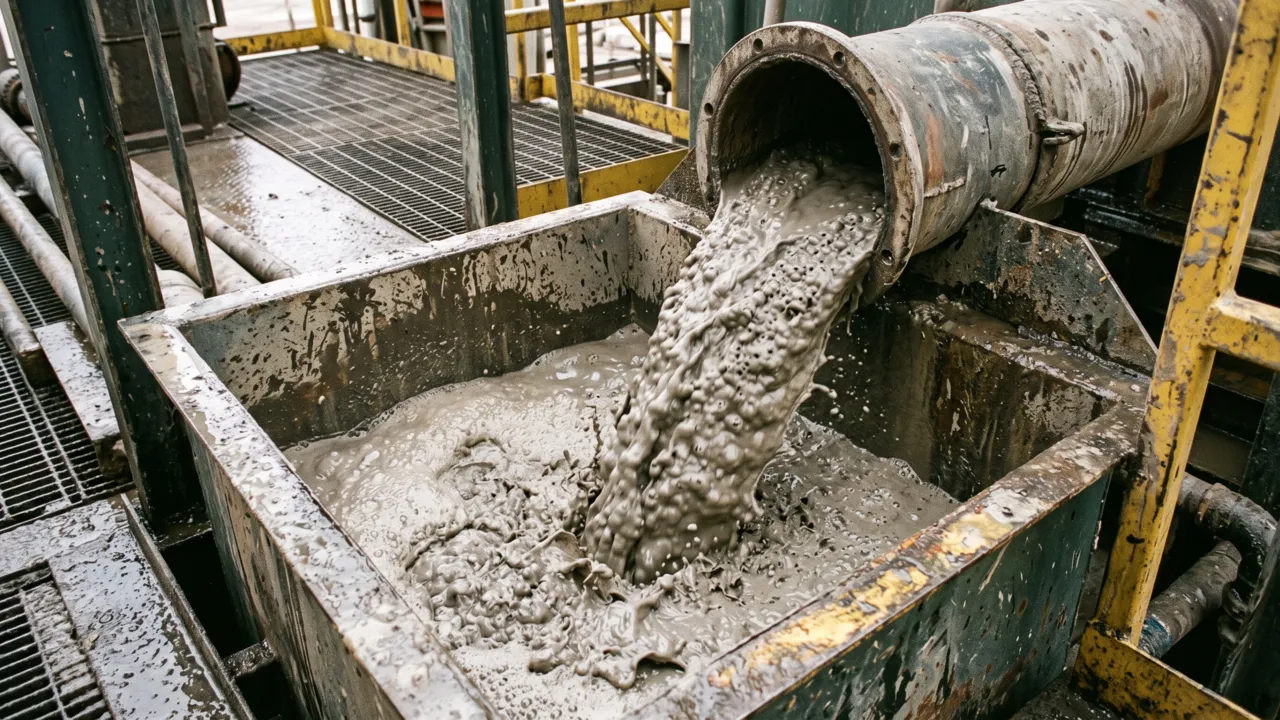
Anyone who has stood by the shakers when gas comes around knows the look. The mud foams and bubbles like a shaken soda, the mud weight at the flowline drops, and the gas readings in the logging unit jump. It can feel alarming. Sometimes it is, and sometimes it is just the well being a well. What causes gas cut mud, and when should a crew actually worry about it?
Gas cut mud is drilling fluid that has picked up gas from the formation, which lowers its density at surface and makes it look frothy or bubbly. The most common causes are gas released from drilled rock, gas that seeps in during connections or trips when pressure briefly drops, and gas from an actual influx (a kick). Gas cut mud by itself usually lowers bottomhole pressure only slightly, because the gas stays compressed deep in the hole and expands mostly near surface. It becomes serious when the well is underbalanced, the hole is shallow, or the gas keeps growing.
What Causes Gas Cut Mud?
Gas gets into mud through a few main routes. Knowing which one you are seeing changes how you respond.
- Drilled gas: when the bit cuts through a gas-bearing rock, the gas in that rock is freed into the mud. This happens even when the well is perfectly overbalanced.
- Background gas: the steady, low level of gas the logging unit sees while drilling through a given section.
- Connection gas: a spike that shows up about one bottoms-up after a connection, because stopping the pumps removes the extra pressure of circulation for a few minutes.
- Trip gas: gas that seeps in during a trip and shows up when circulation resumes.
- Swabbed gas: gas pulled into the well by moving pipe upward too fast.
- Influx gas: gas entering because the mud weight is too low for the formation pressure. This is a kick.
What Is the Difference Between Background Gas and Connection Gas?
Background gas is the baseline. It reflects what the formation gives up as the bit cuts it, and it usually changes with rock type and drilling rate. A sandstone with gas in it will show more background gas than a tight shale.
Connection gas is a recurring spike above that baseline. It means that when circulation stops and bottomhole pressure falls to just hydrostatic, the formation can push a little gas in. In practical terms, the well is close to balance during connections.
Mud loggers watch the trend. Connection gas that grows from one connection to the next is a warning that formation pressure may be rising toward the mud weight. That is a strong hint to talk with the company representative about mud weight before it turns into a kick.
Does Gas Cut Mud Cause a Kick?
Usually, no. This is one of the most misunderstood points in drilling. Gas cut mud can look dramatic at the flowline, with mud weight reading well below what went in the hole. But that low reading is mostly a surface effect.
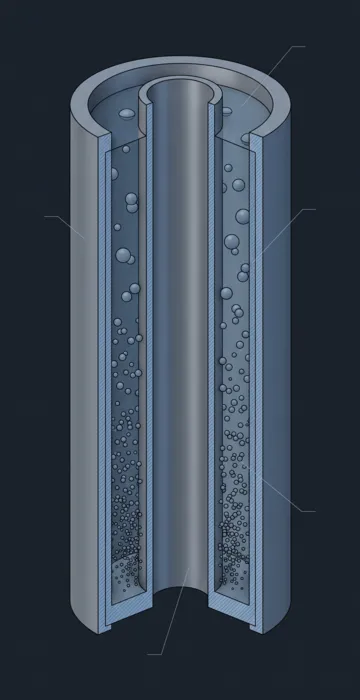
Deep in the well, the gas is under high pressure and takes up very little room. As it rises, pressure falls and the gas expands, so the cutting looks worst at the top of the hole. The overall loss of hydrostatic pressure at the bottom is typically small in a deep well. That is why crews generally do not respond to gas cut mud by immediately raising the mud weight across the whole system.
That said, gas cut mud matters in a few situations:
- When it comes from an influx. If the well is flowing, it is a kick, and the crew handles it with a flow check and shut-in.
- In shallow sections, where the mud column is short and expanding gas makes up a larger share of it.
- When gas volume keeps increasing, which suggests the well is moving toward underbalance.
- When the cutting is severe enough to overload surface equipment like the mud gas separator.
How Do Crews Handle Gas Cut Mud at Surface?
The first step is to find out whether the well is flowing. A flow check with the pumps off answers that. If it is static, the gas is likely drilled, connection or trip gas, and the focus shifts to getting it out of the mud.
Gas is removed at surface with a mud gas separator (often called a gas buster or poor boy) for larger volumes, and a degasser for entrained gas in the mud system. Getting the gas out matters because gas cut mud pumped back downhole is lighter than designed, and centrifugal pumps can struggle with gassy fluid.
Crews also watch for hydrogen sulfide, which can come out with the gas in some fields. H2S monitors around the shakers and the bell nipple are standard where it is a known risk.
Why Is Gas Cut Mud More Serious in Shallow Hole?
In a shallow well, there is less mud above the gas, so expansion happens fast and close to surface. A small amount of gas near bottom can quickly turn into a large volume that unloads mud from the hole. That reduces hydrostatic pressure further and can let more gas in.
This is part of why shallow gas is treated as a distinct hazard. The formations are weak, there may be no BOP installed yet, and the time from first sign to gas at surface can be very short.
What Causes Gas Cut Mud, and When Should You Worry?
Gas cut mud comes from drilled gas, connection gas, trip gas, swabbing or an actual influx. It looks worse at the flowline than it really is downhole, because gas expands as it rises. In a deep, static well, it is usually a signal to watch rather than a crisis.
The time to worry is when the well flows with the pumps off, when gas grows connection after connection, or when the hole is shallow. In those cases, treat it as a well control issue and follow your rig's procedures.
Learn to read the gas trend, not just the number. The trend is where the well tells you what is changing.