How Do Companies Decide Where to Drill? – Oil and Gas Exploration
Out in oil country, you can drive past a quiet pasture for years and never think twice about it. Then one spring a survey crew shows up, little flags go in the ground, and a few months later there's a drilling rig lit up like a small city where the cattle used to graze. Somebody picked that exact spot. Somebody bet a lot of money on it. So how does oil and gas exploration actually work, and how do companies decide where to drill?
Companies decide where to drill by stacking up evidence until the odds of finding oil or gas are good enough to justify the cost of a well. They start with geology: could the right rocks here have made and trapped hydrocarbons? Then they gather data, mostly from seismic surveys, that shows what the rock layers look like thousands of feet down. Geoscientists use that picture to map a "prospect," a specific target. Only after the money people sign off, the leases are secured and the permits are approved does a rig drill the first test well, called a wildcat, which is the only way to know for sure.
What Is Oil and Gas Exploration, Really?
Oil and gas exploration is the work of finding new places where hydrocarbons are trapped underground and can be produced at a profit. It comes before any production. Nobody pumps a barrel until somebody first proves it's there.
I like to think of it as detective work with a very expensive final exam. The clues are rocks, old well records and sound waves bounced off layers deep in the earth. The exam is the drill bit. You can be brilliant on paper and still drill a dry hole.
Exploration is mostly patience and judgment. Crews, scientists and landmen can spend years on an area before a single rig shows up.
What Does a Geologist Look For Before Anyone Drills?
A geologist looks for a working "petroleum system," meaning every piece needed to make and hold oil or gas is present in the same place. If one piece is missing, the prospect fails. It's a chain, and it's only as strong as its weakest link.
Here are the pieces they need to see:
- Source rock: Usually a dark, organic-rich shale where ancient plant and animal matter was buried and slowly cooked by heat and pressure into oil and gas.
- Reservoir rock: A porous, permeable rock like sandstone or limestone that can hold fluids and let them flow to a well.
- Seal: A tight layer above the reservoir, often shale or salt, that keeps the oil and gas from leaking up to the surface.
- Trap: A shape in the rock layers, like a dome, a fault or a pinch-out, where the oil and gas gather instead of spreading out.
- Timing and migration: The oil had to form and move into the trap after the trap existed, not before.
Early on, much of this comes from public geologic maps, outcrops where the rock layers poke out at the surface, and records from wells drilled decades ago. In a mature basin, there may be thousands of old wells to learn from. In frontier areas, there might be almost nothing.
Some teams also run gravity and magnetic surveys from aircraft. They're cheaper than seismic and help sketch the big shapes of a basin.
How Does a Seismic Survey Work?
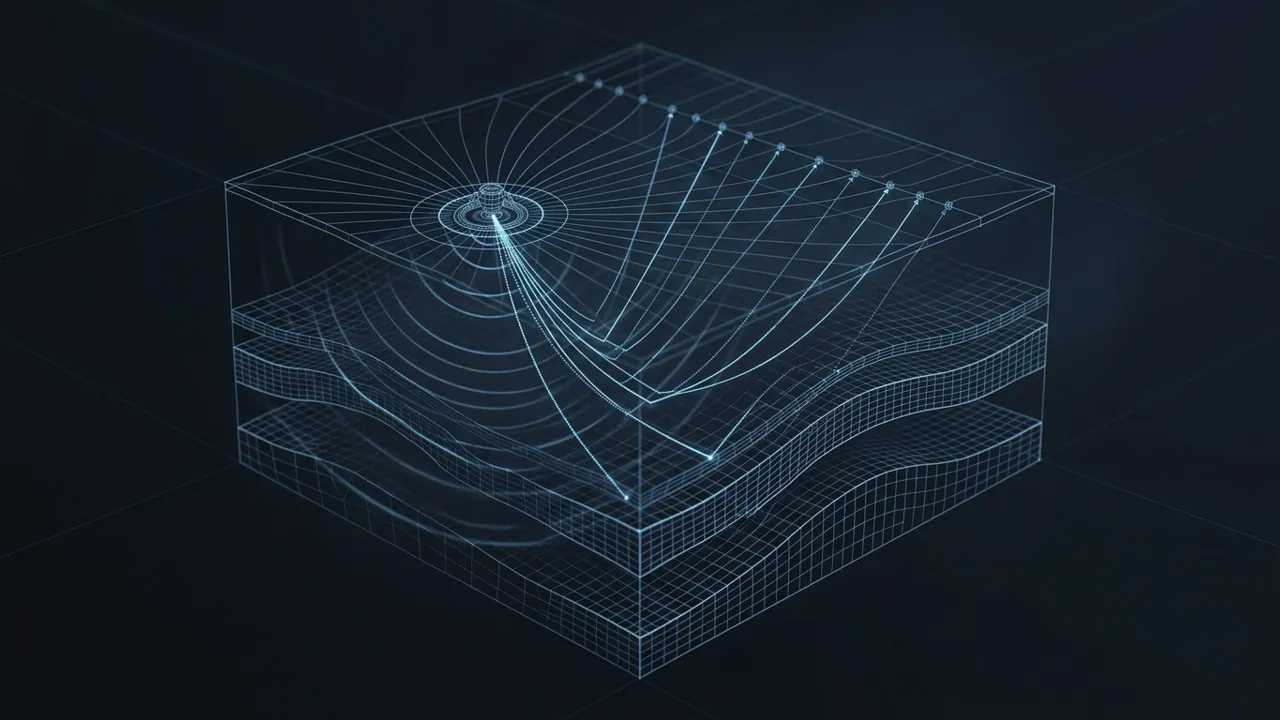
A seismic survey sends sound energy down into the ground and records the echoes that bounce back from rock layers. Different layers reflect sound differently, so the returning signals can be processed into an image of what lies below. It's the closest thing the industry has to an X-ray of the earth.
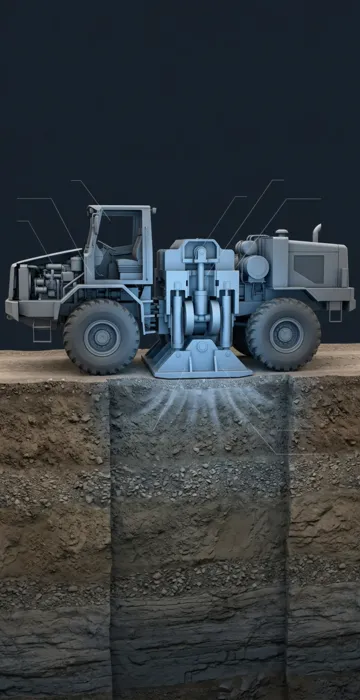
On land, the sound usually comes from vibrator trucks that shake the ground in a controlled sweep, or from small explosive charges in shallow holes. Long lines of sensors called geophones listen for the echoes. Offshore, ships tow air guns that release bursts of compressed air, along with long streamers full of hydrophones.
If you've ever seen a convoy of those big vibrator trucks crawling down a county road in a row, you've watched exploration happen. The data from that slow parade can steer decisions worth many millions of dollars.
Modern surveys often lay out sensors in a dense grid instead of a single line. That produces a full volume of data instead of a flat slice, which lets interpreters follow faults and reservoir layers in every direction. Processing all of it takes serious computing power and skilled people, and it can take months before the final image is ready.
What Happens Between the Seismic Data and the Drilling Rig?
Between the data and the rig sits a long stretch of interpretation, leasing, money and permits. This is where a "lead" turns into a "prospect," and a prospect either earns its well or gets shelved.
- Interpretation: Geoscientists map the layers and faults on the seismic, tie them to any nearby well logs, and outline the trap.
- Risking the prospect: The team estimates the chance that each part of the petroleum system works, then multiplies them together. A prospect with good odds on every piece can still carry a modest overall chance of success.
- Estimating volumes: They estimate how much oil or gas could be there if it works, usually as a range from low to high.
- Leasing: Landmen negotiate with mineral owners, or the company bids on state or federal leases, to secure the right to drill.
- Economics and approval: Engineers estimate well cost and possible returns. Management decides if the risk is worth it, often with partners sharing the bill.
- Permitting and planning: The company files with the state regulator or, offshore, federal agencies. Engineers design the well, casing program and mud plan.
Leasing deserves a moment. In the United States, minerals are often privately owned, which isn't true in most of the world. That means a landman might be sitting at a kitchen table with a family whose grandparents homesteaded the place, explaining royalties over coffee. For a lot of rural families, that conversation changes things for generations.
What Is a Wildcat Well?
A wildcat well is an exploration well drilled in an area with no proven production nearby. It's the true test of a prospect. Everything before it is an educated guess, and the wildcat is where the guess meets the rock.
The name goes back to the early days of the industry, and the spirit hasn't changed much. Wildcatters were the risk-takers who drilled on hunches and thin data, sometimes going broke and sometimes striking it rich. Today the tools are far better, but the feeling on location when a wildcat nears its target depth is still something special. Everyone is watching the mud logger's screen and the gas readings.
While drilling, the crew collects cuttings, gas shows and logs. Measurement tools in the bottomhole assembly, or wireline tools run after drilling, read the rock's properties. If the results look good, the well may be tested to see how fast it flows.
What Happens After a Discovery?
A discovery is only the beginning. The company usually drills appraisal wells to learn how big the field is and how well it will produce. Only then does it commit to full development, with more wells, pipelines and processing equipment.
A dry hole, on the other hand, gets plugged and abandoned according to the regulator's rules. Even then, the data it produced has value. A failed well can tell the team exactly which link in the chain broke.
How Has Shale Changed the Exploration Process?
Shale changed exploration by turning the source rock itself into the target. In plays like the Permian, the Eagle Ford and the Bakken, the oil and gas never fully left the tight shale. Horizontal drilling and hydraulic fracturing let companies produce it directly.
That shifted the risk. In a conventional play, the big question is whether a trap exists and holds anything. In shale, everybody knows the hydrocarbons are there. The questions become how much each well will produce, how much it costs, and where the "sweet spots" are.
So shale exploration leans more on test wells, production data from neighbors and careful study of rock properties like thickness, organic content and natural fractures. It feels more like manufacturing than treasure hunting once a play is proven. The early wells in any new play, though, still carry that old wildcat risk.
If you want to see how fracturing actually works and the questions people raise about it, Britannica's overview of fracking and its environmental concerns is a fair, plain-spoken place to start.
How Long Does Oil and Gas Exploration Take?
Exploration usually takes years, not months. A conventional onshore prospect might move from first study to a drilled well in a couple of years if leasing and permits go smoothly. A deepwater offshore project can take much longer, and full development after a discovery can stretch close to a decade.
Several things slow it down:
- Shooting and processing seismic data
- Assembling a lease position from many mineral owners
- Waiting on permits and environmental reviews
- Lining up partners and a rig
- Commodity prices that make the economics swing back and forth
When oil drops hard, exploration budgets are usually the first thing companies cut. Good prospects go back in the drawer until the market recovers.
Who Works in Oil and Gas Exploration?
Exploration is a team effort that stretches from the office to the field. Here's who you'd typically find:
- Geologists who study the rock, the basin's history and old well data
- Geophysicists who plan, process and interpret seismic surveys
- Petrophysicists who read well logs to figure out porosity and fluids
- Landmen who research ownership and negotiate leases
- Reservoir and drilling engineers who estimate volumes, costs and well designs
- Seismic crews who lay out sensors, run vibrator trucks and work in all kinds of weather
- Rig crews and service hands who drill and log the wildcat
I have a soft spot for the seismic crews. They walk miles of brush and mud laying out cable, often far from town, and they rarely get the credit when a discovery hits the news. Every successful well starts with somebody like them.
The industry's roots in this kind of searching go way back. If you're curious how it all started, the story of who invented oil rigs shows how early drillers found oil with far less to go on.
How Do Companies Decide Where to Drill?
They decide by building a case. Geology says whether oil or gas could exist here. Seismic data shows whether a trap is down there. Risk and economics say whether the bet is worth making, and leases and permits make it legal.
Then a rig goes up and drills the wildcat, because no amount of science replaces the bit. That's the humbling truth of oil and gas exploration. Good data improves the odds, but the earth still has the final word.
Next time you see a new rig light up a dark pasture, you'll know there's a long story behind that spot. Years of work, a lot of careful people and one big decision put it there.