What Is the Oil and Gas Industry? – Upstream, Midstream and Downstream
Drive through West Texas, western Oklahoma or North Dakota and you see it everywhere: pumpjacks nodding in pastures, rigs lit up on the horizon, trucks hauling water and sand down county roads. Then you fill your tank, heat your house or pick up something made of plastic and never think about where it came from. It is one of the biggest industries on Earth, and most people only see small slices of it. What is the oil and gas industry, and how do upstream, midstream and downstream fit together?
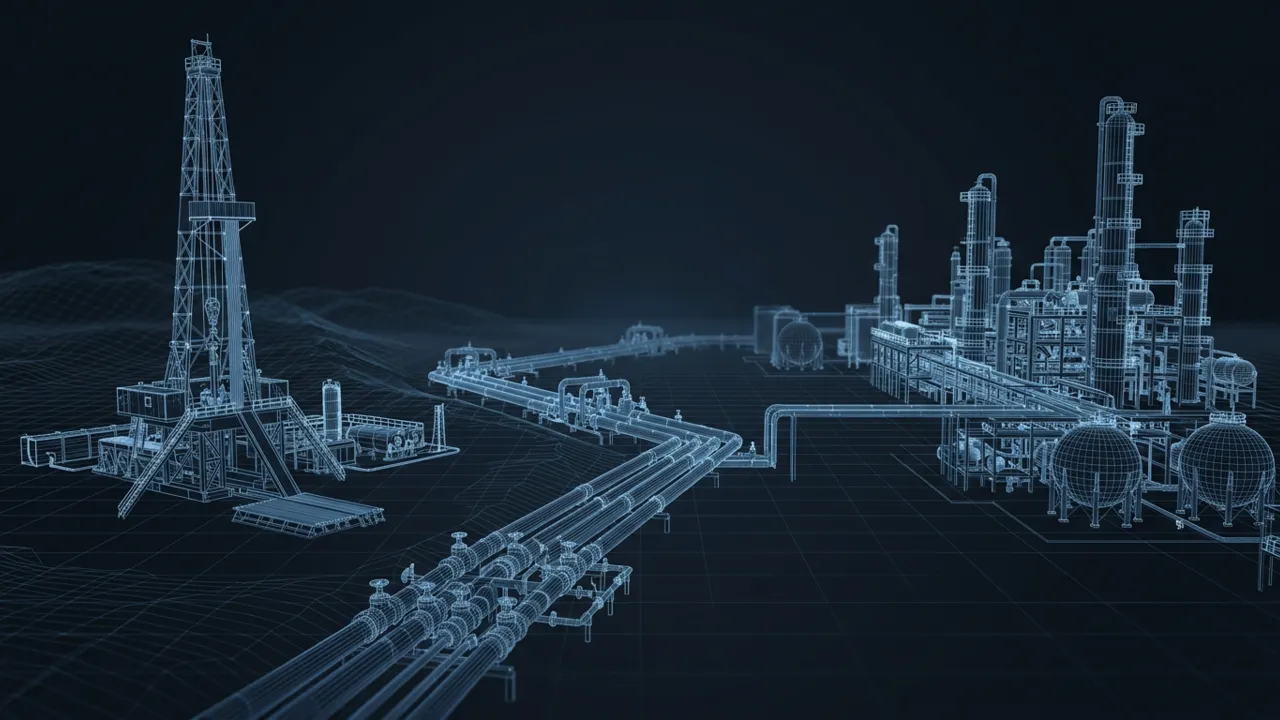
The oil and gas industry is the global business of finding, producing, moving, processing and selling crude oil and natural gas, and it is usually divided into three segments: upstream, midstream and downstream. Upstream covers exploration and production, meaning finding oil and gas underground and drilling wells to bring it to the surface. Midstream covers moving and storing it, through pipelines, tankers, trucks, rail and storage, along with some gas processing. Downstream covers refining crude oil into products like gasoline, diesel and jet fuel, and selling those products to customers. Together, these segments turn hydrocarbons trapped in rock into the fuels and materials modern life runs on.
What Is the Oil and Gas Industry?
At its simplest, the oil and gas industry takes hydrocarbons out of the ground and gets them to the people who use them. Crude oil becomes fuels, lubricants, asphalt and feedstock for plastics and chemicals. Natural gas heats homes, generates electricity and supplies industry.
The U.S. Energy Information Administration's guide to oil and petroleum products is a good, plain-language starting point for how crude oil is used. The industry includes giant international companies, national oil companies owned by governments, thousands of smaller independent producers, and a huge network of service companies that do much of the field work.
For a lot of families in oil country, including the one I grew up around, the industry is not an abstraction. It is the reason the town exists. It is the paycheck, the high school football sponsor and the reason the motel is full during a boom and empty during a bust.
What Are Upstream, Midstream and Downstream?
The three segments describe where a company works along the path from rock to customer.
| Segment | What it does | Examples |
|---|---|---|
| Upstream | Finds and produces oil and gas | Geology and seismic surveys, drilling, completions, production |
| Midstream | Moves, stores and partly processes oil and gas | Pipelines, gathering systems, gas processing plants, storage, tankers |
| Downstream | Refines and sells products | Refineries, petrochemical plants, fuel distribution, gas stations |
Some companies, often called integrated companies, work in all three segments. Others focus on just one, or on a single part of one.
What Happens in the Upstream Sector?
Upstream is where oil and gas are found and produced, and it is where drilling rigs live. It is often called exploration and production, or E&P.
Exploration
Exploration starts with geology. Geologists and geophysicists study rocks, old well records and seismic data to find places where oil and gas may be trapped. Understanding how oil and gas form, from ancient organic material buried and cooked deep underground, is the foundation of that search.
Drilling and Completion
Once a target is chosen, a drilling contractor brings in a rig to drill the well. Crews drill in sections, run steel casing, cement it in place and keep the well under control with drilling mud and blowout preventers. After drilling, completion crews prepare the well to produce, which can include perforating the casing and, in many shale wells, hydraulic fracturing.
Production
Production is the long tail of a well's life. Oil, gas and water flow to the surface, sometimes on their own and often with help from pumps or gas lift. Field equipment separates the fluids, and the oil and gas head into the midstream system.
Upstream is the most volatile part of the industry. When prices fall, drilling slows quickly, and the number of active rigs drops. The weekly Baker Hughes rig count is one of the most watched indicators of that activity.
What Does the Midstream Sector Do?
Midstream connects the oilfield to the refinery and the city. Without it, oil and gas would be stranded at the wellhead.
- Gathering systems: small pipelines that collect oil, gas and water from individual wells.
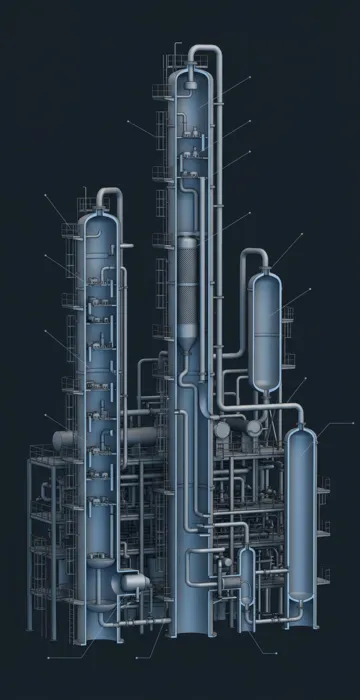
- Gas processing plants: facilities that remove water, impurities and natural gas liquids from raw gas so it can go into transmission pipelines.
- Transmission pipelines: large lines that move oil, gas and products long distances.
- Storage: tank farms, underground gas storage and terminals.
- Marine, rail and truck transport: moving crude and products where pipelines do not reach, or across oceans.
Midstream companies often earn fees for moving and storing product, which makes them somewhat less sensitive to oil prices than upstream producers. Their work is less visible, but when a pipeline is full or a region lacks capacity, local oil and gas prices can drop sharply.
What Happens in the Downstream Sector?
Downstream is where crude oil becomes something people can use. Refineries heat and separate crude into fractions, then convert and treat them into gasoline, diesel, jet fuel, heating oil, asphalt and feedstocks for chemicals.
Petrochemical plants turn some of those products, along with natural gas liquids, into plastics, fertilizers, synthetic rubber and countless everyday materials. Distribution networks then move fuels to terminals, gas stations, airports and industrial customers.
Downstream is the part of the industry most people interact with directly, every time they buy fuel.
What Are Majors, Independents and National Oil Companies?
You will hear these three labels a lot, and they describe who owns the oil.
- Majors: very large, publicly traded, integrated companies that work in upstream, midstream and downstream around the world.
- Independents: companies that focus mainly on exploration and production. They range from large public companies to small family outfits operating a handful of wells.
- National oil companies (NOCs): companies owned wholly or mostly by a government, which control a large share of the world's oil and gas reserves.
In the United States, independents drill a large share of onshore wells, especially in shale basins. Many of them started small, and some families in oil country have run their own operating companies for generations.
What Is the Difference Between an Oil Company and an Oilfield Service Company?
An oil company, also called an operator, holds the lease or rights to the oil and gas, plans the wells and pays for them. It owns what comes out of the ground.
An oilfield service company is hired to do specific work. Drilling contractors own and run the rigs. Other service companies provide cementing, wireline logging, directional drilling, fracturing, trucking, rental tools and more. Most people who work in the field actually work for service companies, not for the operator. On a typical land rig, the operator may have only one or two representatives on location, while everyone else works for a contractor.
Who Works in the Oil and Gas Industry?
The industry employs a huge range of people. In the field, there are rig crews (floorhands, derrickhands, drillers and toolpushers), well servicing crews, frac crews, truck drivers, welders, pumpers and lease operators. Behind them are engineers, geologists, landmen, accountants, safety professionals and many more.
A single well can involve dozens of companies, each handling its own piece of the work, all coordinated by the operator's representative on location.
How Big Is the Oil and Gas Industry?
It is one of the largest industries in the world by revenue and by its effect on the global economy. Oil prices influence inflation, transportation costs and the budgets of entire nations. Natural gas prices affect electricity bills and manufacturing.
In recent years, the United States has been the world's largest producer of crude oil and of natural gas, according to the EIA, with production concentrated in states like Texas, New Mexico, North Dakota, Pennsylvania and Oklahoma. Other leading oil producers include Saudi Arabia, Russia and Canada.
Why Is the Oil and Gas Industry So Cyclical?
Anyone who has lived in an oil town knows the rhythm: booms and busts. When prices rise, companies drill more, towns fill with workers and wages climb. When prices fall, rigs are stacked, crews are laid off and businesses close.
Prices swing because supply and demand for oil are global and can change quickly. Decisions by major producing countries, economic slowdowns, wars, weather and new technology all play a part. Upstream feels these swings first and hardest.
The human side of that cycle is real. People move across the country for work, then move back. Families learn to save in the good years. It shapes the character of oil country as much as the land itself.
What Is the Future of the Oil and Gas Industry?
The industry faces pressure to reduce emissions, especially methane, and to adapt as more energy comes from renewable sources. At the same time, global demand for oil and gas remains high, and most energy outlooks expect it to stay significant for decades.
Many companies are investing in efficiency, emissions reduction, carbon capture and new technologies. How fast things change will depend on policy, prices and innovation. What seems certain is that the industry will look different in thirty years than it does now, just as today's industry looks very different from that of the gusher era.
What Is the Oil and Gas Industry, From Upstream to Downstream?
The oil and gas industry finds, produces, moves, refines and sells crude oil and natural gas. Upstream explores and drills. Midstream moves and stores. Downstream refines and markets.
Each segment depends on the others, and together they support a huge share of the world's energy and materials. They also support the communities and families whose lives rise and fall with each cycle.
If you are new to the industry, start by learning where your job fits along that chain. Understanding what happens before and after your part makes you better at your own.