Oilfield Equipment List – Names Every Newcomer Should Know
Your first week on location, the words come at you fast. Somebody yells for the slips, somebody else says the shakers are blinding, and the derrickhand is talking about the monkeyboard like everyone already knows what that is. Nobody means to leave you out. They just forget they once had to learn it all too. So if you want to walk on location already knowing the basics, what equipment should be on your oilfield equipment list, and what does each piece do?
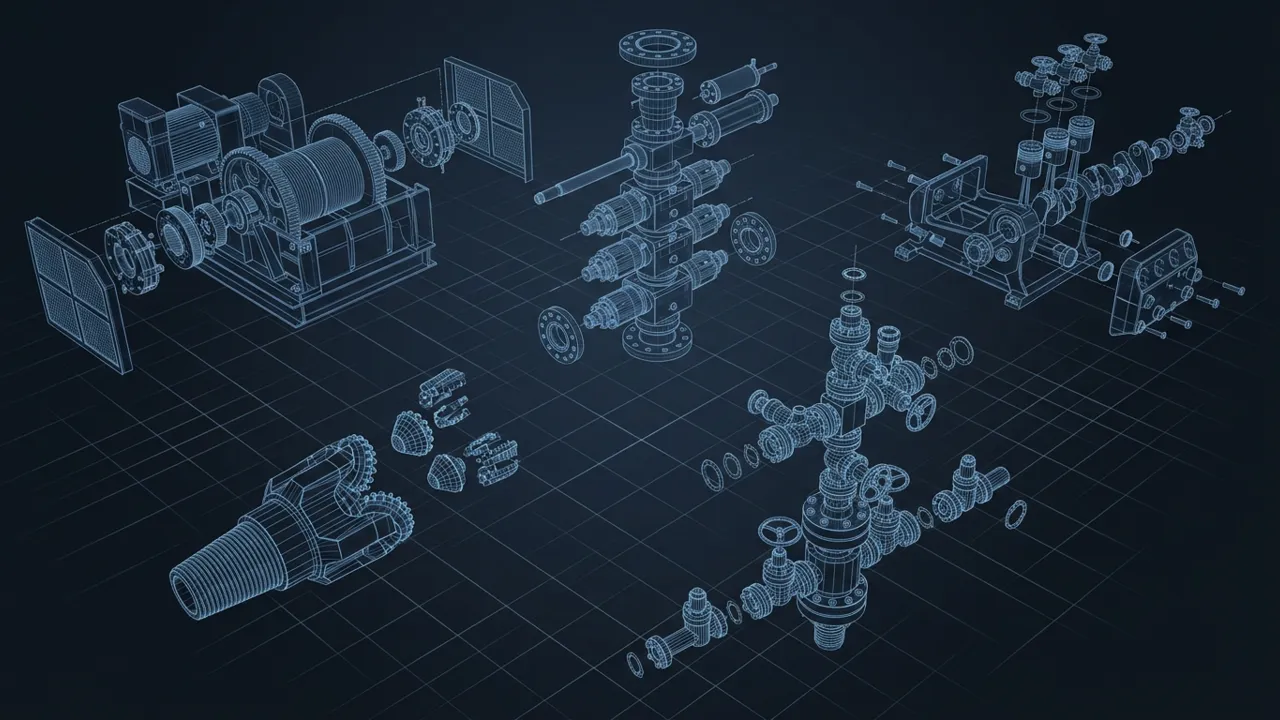
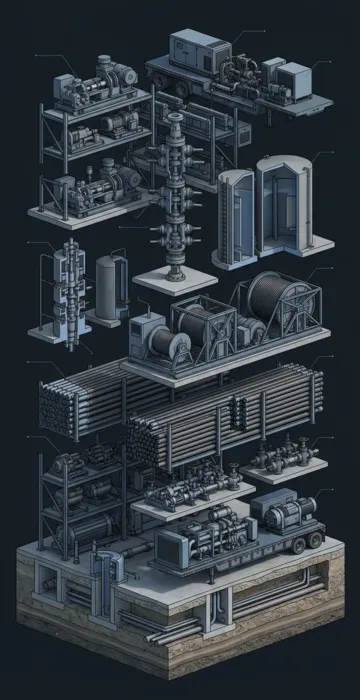
A good oilfield equipment list groups the gear by the job it does: hoisting, rotating, the drill string, pipe handling, mud circulation, power, well control, the wellhead and production equipment. The hoisting system (derrick or mast, crown block, traveling block and drawworks) lifts the pipe. The top drive or rotary table turns it, and the drill string carries the bit down the hole. Mud pumps, tanks and shale shakers circulate and clean the drilling fluid, while the blowout preventer stack keeps the well under control. After drilling, the wellhead, Christmas tree, pumps and separators take over to produce the oil and gas.
What Is the Equipment Used for Drilling Oil Called?
The equipment used for drilling oil is called a drilling rig, and it's really a collection of systems working together. Most people in the field break it into five main systems: power, hoisting, rotating, circulating and well control. Everything on location fits into one of those, or into the support gear around them.
Oilfield equipment names can sound strange because many date back to the cable tool days or came from ranching and mining. Some are just nicknames that stuck. Once you know what each piece does, the names start to make sense.
A good visual companion to this article is OSHA's illustrated glossary of rig components, which shows labeled drawings of most of the items below.
Hoisting Equipment: What Lifts the Pipe?
Hoisting equipment raises and lowers everything that goes in and out of the hole. It handles the heaviest loads on the rig, so it gets constant inspection.
- Derrick or mast: The tall steel tower. A derrick is built in place, while a mast is folded and raised as a unit, which is what most land rigs use.
- Crown block: A set of pulleys, called sheaves, fixed at the top of the mast.
- Traveling block: The moving set of sheaves that rides up and down the mast on the drilling line.
- Drawworks: The big winch on the rig floor that reels the drilling line in and out. It's the muscle of the hoisting system.
- Drilling line: Heavy wire rope strung between the crown and traveling blocks.
- Deadline anchor: Where the fixed end of the drilling line is clamped. It often holds the weight sensor.
- Hook and elevators: The hook hangs below the traveling block, and the elevators are clamps that grab pipe by its tool joint so it can be lifted.
- Substructure: The steel base that holds the rig floor high enough to fit the well control equipment underneath.
Watching a heavy string of pipe come up smoothly on the blocks is one of those sights that never gets old. It's a lot of weight trusting a lot of steel and a good driller.
Rotating Equipment: What Turns the Bit?
Rotating equipment turns the drill string so the bit can cut rock. Modern rigs mostly use a top drive, while older and smaller rigs still use a kelly and rotary table.
- Top drive: A powerful motor that hangs from the traveling block and turns the pipe from above. It also lets crews drill with full stands instead of single joints.
- Kelly: A square or six-sided pipe that fits through the kelly bushing and transfers rotation to the drill string on rigs without a top drive.
- Rotary table: The turning section of the rig floor that spins the kelly. It also holds the slips when pipe is hung off.
- Kelly bushing and master bushing: Inserts that connect the rotary table to the kelly.
- Swivel: Hangs the drill string and lets it turn while mud flows in through a hose. A top drive has this function built in.
Drill String Equipment: What Goes Down the Hole?
The drill string is everything connected from the surface to the bit. Its lower part, the bottomhole assembly or BHA, does the cutting, steering and measuring.
- Drill pipe: Steel joints, usually around 30 feet long, screwed together to reach the bottom of the hole.
- Tool joints: The thicker threaded ends of each drill pipe joint.
- Heavyweight drill pipe: Thicker-walled pipe that bridges the stiff collars and the lighter drill pipe.
- Drill collars: Very heavy, thick-walled pipe near the bit that puts weight on it.
- Drill bit: The cutting tool at the bottom. PDC bits shear rock with diamond cutters, while roller cone bits crush it with rolling teeth.
- Stabilizers: Blades on the BHA that keep it centered and help control the hole's direction.
- Mud motor: A downhole motor powered by mud flow that turns the bit, often with a bend for steering.
- Rotary steerable system: A tool that steers the well while the whole string keeps rotating.
- MWD and LWD tools: Sensors that measure direction and rock properties while drilling and send the data up.
- Drilling jars: Tools that deliver a hammer blow to free stuck pipe.
- Subs: Short connectors that join pieces with different threads or add a function.
Pipe Handling Equipment: What Do Floorhands Use?
Pipe handling equipment is the gear floorhands and derrickhands use to make and break connections and move pipe. This is where most new hands start, and where hands get hurt when they're careless.
- Slips: Wedge-shaped grips set in the rotary to hold the drill string while connections are made.
- Tongs: Giant wrenches used to tighten or break out threaded connections.
- Iron roughneck: A machine that spins and torques connections, replacing much of the manual tong work.
- Spinning wrench or pipe spinner: Spins pipe quickly so threads can be made up before final torque.
- Catwalk: The long ramp where pipe is laid before being lifted to the floor. Many rigs now use a powered catwalk machine.
- Pipe racks: Steel racks where joints are stored on location.
- Monkeyboard: The derrickhand's platform high in the mast, used to handle stands of pipe during trips.
- Fingerboard: The rack in the mast where stands are stood back in rows.
- Mousehole and rathole: Holes in the floor that hold a joint of pipe or the kelly while connections are made.
- Doghouse: The small building on the rig floor that serves as the crew's shelter and office.
That doghouse, by the way, is where a lot of rig culture lives. It's where crews hold safety meetings, drink coffee and teach the new hand what all these words mean.
Circulating Equipment: How Does the Mud System Work?
The circulating system pumps drilling mud down the drill string, out the bit and back up the hole, then cleans it for reuse. Mud cools the bit, carries cuttings up and holds back pressure from the rock.
- Mud pumps: Big piston pumps that push mud down the hole at high pressure. Rigs often run two or three.
- Standpipe: A steel pipe running up the mast that carries mud toward the top drive.
- Rotary hose: A heavy, flexible hose connecting the standpipe to the top drive or swivel.
- Mud tanks or pits: Large steel tanks that hold the mud supply.
- Mixing hopper: Where powdered materials are added to the mud.
- Flowline: The pipe that brings returning mud from the well to the cleaning equipment.
- Shale shakers: Vibrating screens that remove the drilled cuttings first.
- Desander and desilter: Cone-shaped separators that spin out finer sand and silt.
- Centrifuge: A spinning machine that removes the finest solids.
- Degasser and mud-gas separator: Equipment that removes gas from the mud.
- Trip tank: A small, calibrated tank used to measure fluid while pipe goes in or out, an early warning for kicks.
Power Equipment: What Runs the Rig?
Most land rigs get their power from big diesel engines driving generators, though some now run on natural gas or grid power. That electricity feeds the drawworks, top drive, mud pumps and everything else.
- Engines and generators: Usually several large units that run around the clock.
- Power control house: The building, often called the SCR or VFD house, that controls and sends electricity to the big motors.
- Fuel tanks: Store diesel or other fuel on location.
- Light plants: Portable generator towers that light up the location at night.
Well Control Equipment: What Keeps the Well Safe?
Well control equipment lets the crew shut in the well if formation fluids flow into it. This is the most important safety gear on the rig, and it's tested on a regular schedule.
- Blowout preventer (BOP) stack: A tall stack of valves bolted to the wellhead below the rig floor.
- Annular preventer: A rubber element that squeezes around almost any pipe, or the open hole, to seal it.
- Pipe rams: Steel blocks that close around a specific size of pipe.
- Blind and shear rams: Rams that seal an empty hole or cut through pipe and seal in an emergency.
- Accumulator: A unit of pressurized bottles that stores the hydraulic power to close the BOPs, even if the rig loses power. Old hands often call it the Koomey.
- Choke manifold: A set of valves and adjustable chokes used to control pressure while circulating out a kick.
- Kill line and choke line: Lines connected to the BOP stack for pumping in and bleeding off.
- Safety valves: Valves that can be screwed onto open pipe on the floor to stop flow up the string.
Every piece on this list exists because somebody, somewhere, learned the hard way. I never look at a BOP stack without thinking about the crews who didn't have one.
Casing and Wellhead Equipment: What Stays in the Well?
Casing and wellhead equipment stays in the well permanently. It lines the hole, seals off rock layers and gives the well a solid connection at the surface.
- Conductor pipe: The first, largest pipe set at the surface.
- Casing: Steel pipe run in sections and cemented in place.
- Float shoe and float collar: Fittings at the bottom of the casing that guide it and help control the cement job.
- Centralizers: Spring or solid bands that center the casing in the hole for an even cement sheath.
- Wellhead: The heavy fittings at the surface that hang each casing string and seal between them.
Completion and Production Equipment: What Brings the Oil Up?
Once the well is drilled, a different set of tools gets it producing and keeps it that way. This is the equipment people see long after the rig is gone.
- Perforating gun: Shoots holes through the casing and cement into the rock.
- Frac pumps and blender: The trucks and equipment that pump fluid and sand in hydraulic fracturing.
- Tubing: Smaller pipe inside the casing that carries the oil and gas up.
- Packer: A sealing device that closes off the space between tubing and casing.
- Christmas tree: The stack of valves on top of a producing well that controls flow.
- Pumpjack: The nodding beam pump that lifts oil from wells that can't flow on their own.
- Electric submersible pump: A downhole pump for higher-volume wells.
- Separator: A vessel that splits oil, gas and water.
- Heater treater: Heats the fluid to help break water out of the oil.
- Tank battery: The group of storage tanks where produced oil and water are held.
- Flare: Burns off gas that can't be sold or captured safely.
If you've ever driven through oil country at night, you've seen those flares. They're a strange kind of beautiful, and a reminder that somebody's working out there in the dark.
Which Oilfield Equipment Names Confuse Newcomers Most?
A few oilfield equipment names trip up almost every new hand. Here are the ones I hear mixed up most often:
- Derrick versus mast: People say "derrick" for both, but on most land rigs it's technically a mast.
- Elevators versus slips: Elevators lift the pipe from above. Slips hold it in the floor.
- Drill pipe versus casing: Drill pipe comes back out. Casing stays in.
- Doghouse versus driller's cabin: The doghouse is the crew shelter. Many modern rigs also have a separate driller's cabin with screens and joysticks.
- Christmas tree versus BOP: The BOP is used during drilling. The Christmas tree controls the well during production.
How Should You Use This Oilfield Equipment List?
Use this oilfield equipment list as a map, not a test. Learn the systems first: hoisting, rotating, the drill string, circulating, power and well control. Then the individual names will fall into place much faster.
The fastest way to learn, honestly, is to ask. Good hands are proud of their work and happy to explain it when you show real interest and stay safe. Once you know the iron, the next step is knowing the people, and our article on drilling rig crew positions explains who runs each piece of it.