Life on an Oil Rig – What a Hitch Is Really Like

There's a moment at the end of every hitch that rig hands know by heart. You climb into the truck, the rig shrinks in the mirror, and for the first time in two weeks your shoulders drop. A few hours later you're in your own kitchen, and the noise of the rig is still ringing in your ears. Then, in what feels like no time at all, you're packing your bag to go back. If you're thinking about the work, or you love someone who does it, you've probably wondered what is life on an oil rig really like during a hitch?
Life on an oil rig runs on hitches: a block of days living and working at the rig, usually 12 hours a day, followed by an equal or longer stretch at home. A common land schedule is 14 days on and 14 days off, though 7 and 7 and other rotations are common too. During a hitch, you work your tour, eat, sleep and repeat, often staying in a crew camp, motel or rig housing near location. Offshore, you live on the rig itself. It's tiring and can be lonely, but the time off is real time off, and many people come to love the rhythm.
What Is a Hitch on an Oil Rig?
A hitch is the stretch of days you spend at work before you rotate home. On a 14/14 hitch, you work 14 days in a row, then get 14 days off. Your crew swaps with another crew that works the same rig while you're gone.
Different jobs and companies use different schedules. Here are some you'll hear about:
- 7/7: One week on, one week off, common on many land rigs
- 14/14: Two weeks on, two weeks off, common on land and offshore
- 14/7: Two weeks on, one week off, with less time at home
- 21/21 or 28/28: Longer rotations, more common on some offshore and international jobs
Travel days can eat into your time off, especially if you live far from the rig. Some companies pay for travel, and some don't. It's worth asking before you take a job.
What Is the Oil Rig Work Schedule Like Each Day?
Each day on a hitch usually means a 12-hour tour, either days or nights. Your crew works the same tour all hitch, though some schedules switch from days to nights halfway through. That switch can be rough on your sleep for a day or two.
A typical day goes something like this. Wake up, grab coffee and breakfast, ride to location. Safety meeting. Then twelve hours of drilling, tripping, maintenance or whatever the well needs.
After the tour, there's a short handover to the next crew, then the ride back to camp. Dinner, a shower, maybe a call home, and bed. Then you do it again. Days can blur together, which is why a lot of hands keep track by counting down to crew change.
Where Do Rig Workers Sleep and Eat?
On land, rig workers usually sleep in crew camps, motels, rented houses or trailers on or near location. It depends on the company and how remote the rig is. The toolpusher and company man usually live in trailers right on location so they're close to the rig.
Crew camps, sometimes called man camps, look like rows of modular buildings with small private or shared rooms. Many have a dining hall, laundry and a TV room. Food quality varies a lot, from great home-style cooking to the same three meals on repeat.
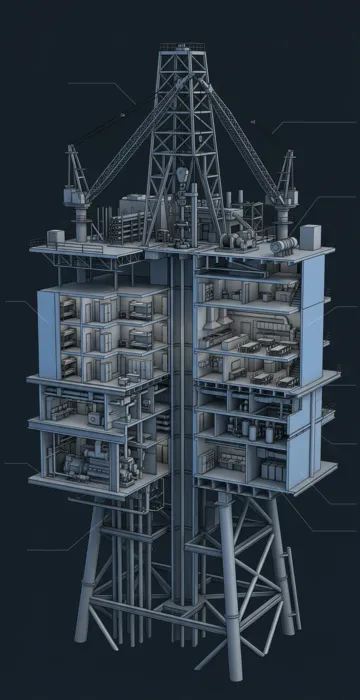
Offshore, everything is on the rig. You'll share a cabin, eat in a galley that serves food around the clock, and use the rig's laundry, gym and lounge. Offshore galleys have a reputation for feeding people well, and plenty of hands come home a few pounds heavier.
What Do Rig Workers Do Off Shift?
Off shift, most rig workers mainly rest, because twelve hours of physical work wears you out. But there's usually a little time between dinner and sleep to unwind.
Here's how people often spend it:
- Calling or video chatting with family
- Watching TV, movies or sports
- Playing video games or cards
- Working out in the camp or rig gym
- Reading, studying for certifications or taking online classes
- Fishing, on rigs and in places where it's allowed
- Just sleeping, which is honestly the most popular option
Alcohol and drugs are not allowed on location, and many camps ban them too. Rigs test for both. That rule exists for good reason when people's lives depend on everyone being sharp.
How Hard Is Life on an Oil Rig?
Life on an oil rig is hard in several ways at once. The work is physically demanding, the hours are long, and the weather doesn't care what you planned. Summer heat on a steel floor in Texas can be brutal, and winter in North Dakota is its own kind of test.
There's also real danger. Heavy pipe, high pressure and moving equipment mean mistakes can hurt or kill. OSHA's oil and gas extraction overview explains the main hazards and how the industry works to control them.
Fatigue is a quiet risk too. Long tours, night shifts and long drives home after a hitch all add up. Good companies watch for it, and good hands learn to respect it.
What Is the Hardest Part of Rig Life for Families?
For a lot of families, the hardest part isn't the danger. It's the absence. When you're gone for two weeks, you miss birthdays, ball games, holidays and the everyday small stuff.
The people at home carry a lot of weight. Spouses and partners handle everything solo for weeks at a time. Kids learn to count down the days until Mom or Dad gets back.
I think about those families a lot. Oil country is full of them, and they rarely get any credit. Every barrel that comes out of the ground has somebody's missed dinner behind it.
Many families find ways to make it work: a shared calendar, regular calls at the same time each night, and making the most of the days off. Two weeks home with no work can mean real, focused time together, which some regular jobs never allow.
What Do People Love About Life on an Oil Rig?
For all its hardships, plenty of people genuinely love rig life. Here's what keeps them coming back:
- The time off: Two full weeks at home is something most jobs can't offer.
- The pay: Rig work pays well, especially for people without a college degree.
- The crew: You live and work closely with the same people, and many become like family.
- The work itself: There's real pride in running heavy equipment and making hole.
- The skies: Night tours, sunrises over the rig and flares on the horizon stay with you.
Ask any hand about the best crew they ever worked with, and watch their face change. That bond is hard to find anywhere else. If the money side matters to you, our breakdown of oil rig worker pay shows what different positions typically earn.
Is Offshore Rig Life Different From Land?
Yes, offshore rig life is different in a few key ways. You live on the rig for your whole hitch, usually reaching it by helicopter or boat. You can't drive home at night, so the rig becomes your whole world for two or three weeks.
Offshore rigs also have more structure. There are strict safety rules, drills for emergencies like abandoning the rig, and limits on where you can go. Cabins are shared, and privacy is limited.
On the plus side, the food, gym and lounge are right there, and some people find the routine calming. It's not for everyone, though. Being surrounded by water with no way off except a helicopter takes some getting used to.
Life on an Oil Rig: Is the Hitch Worth It for You?
Life on an oil rig means long tours, hard work and time away from home, balanced by solid pay and real time off. A 14/14 hitch asks a lot of you and your family. It also gives back in money, skills and friendships that last.
If you're considering it, talk to people who've done it, and talk honestly with your family. Ask about the schedule, the housing and the travel before you sign on. The people who thrive out there usually go in with clear eyes and a crew they can count on.