How Do Semisubmersible Rigs Stay in Place?
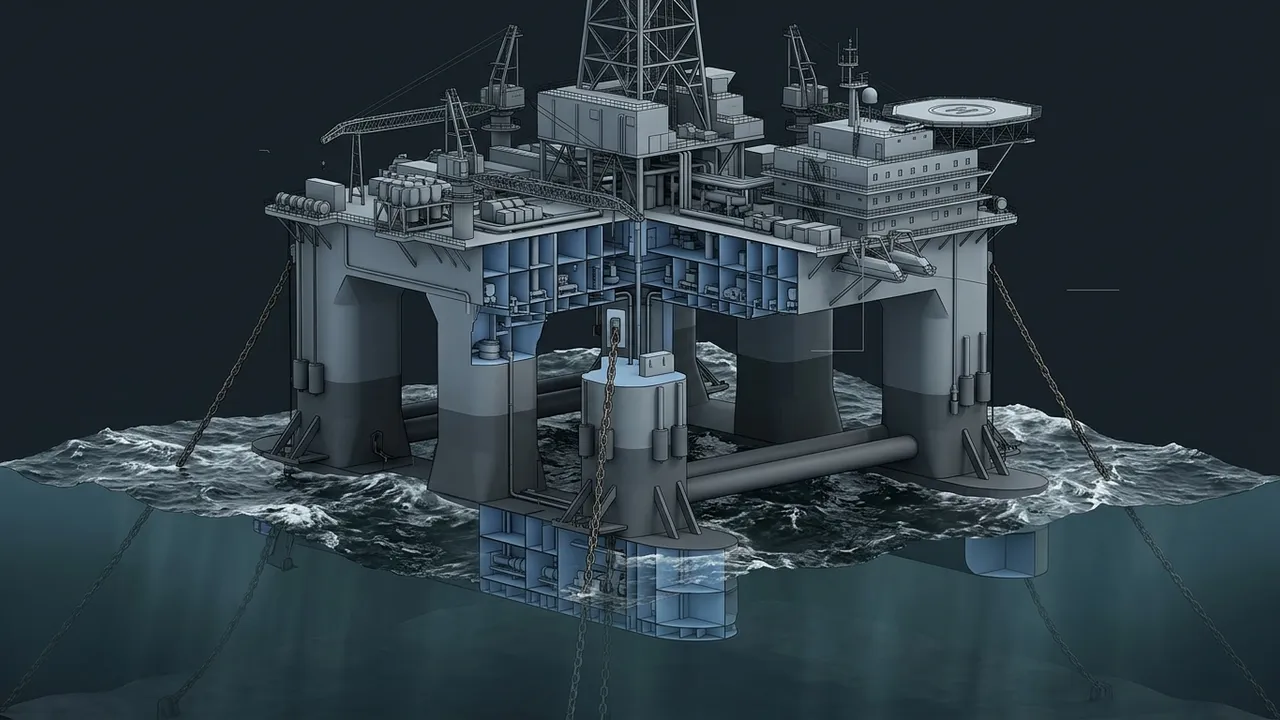
A semisubmersible drilling rig floats. It isn't standing on anything, and yet it has to stay almost perfectly still over a hole in the seafloor that may be a mile or more below. Wind pushes it, waves lift it, currents drag at it, and the drill string hanging beneath it doesn't tolerate much drift. It's a fair thing to wonder about. So how do semisubmersible rigs stay in place?
Semisubmersible rigs stay in place in one of two ways: a mooring system of anchors and lines, or dynamic positioning using computer-controlled thrusters. Moored semisubs spread a pattern of anchors, often eight or more, and tension the lines with winches to hold the rig over the well. Dynamically positioned semisubs use satellite and acoustic position references, plus sensors for wind and motion, to drive thrusters that constantly push the rig back on station. Some rigs combine both, using thrusters to assist the moorings. Either way, the rig's partly submerged hull keeps it unusually steady, which makes station keeping easier.
What Is a Semisubmersible Drilling Rig?
A semisubmersible drilling rig is a floating rig built on large pontoons connected by vertical columns, with the deck sitting high above on top of the columns. When it's working, the pontoons are ballasted down well below the surface.
That's the "semi" in semisubmersible. The rig is partly sunk on purpose. Only the slender columns cut through the waves, so there's much less hull for the sea to push around. The heavy pontoons sit deep where wave energy is weaker.
The result is a very stable floating platform, which is why semisubs have long been favored in rough waters like the North Sea. Rigzone has a good overview of how semisubmersibles work covering the hull design and history.
How Does a Semisub Mooring System Work?
A mooring system holds the rig with anchors spread out around it, like guy wires on a tent pole. Each anchor connects to the rig by chain, wire rope, synthetic rope, or a combination.
Here's the basic process for a conventionally moored semisub:
- The rig is towed or sails to location.
- Anchor handling vessels carry each anchor out to its planned position, often well over a thousand feet from the rig.
- The anchors are dropped and dragged until they bite into the seabed.
- Winches or windlasses on the rig tension each line to a set load.
- The crew adjusts line tensions during operations to keep the rig centered over the well.
In some locations, moorings are pre-laid before the rig arrives, sometimes using suction piles instead of drag anchors. That shortens rig time on location.
Where Moorings Work Best
Mooring is efficient in moderate water depths. It uses little fuel once set, and it holds well in bad weather.
The downside is depth and clutter. In very deep water, the mooring lines get long and heavy, and running them takes a lot of vessel time. Around busy fields, anchors and lines also have to avoid pipelines and subsea equipment already on the bottom.
How Does Dynamic Positioning Work?
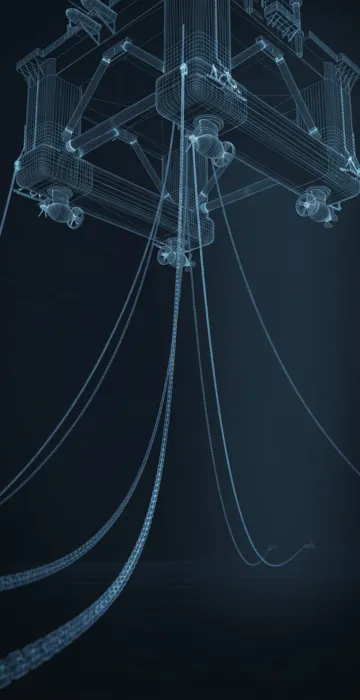
Dynamic positioning, usually just called DP, holds the rig in place with thrusters instead of anchors. A computer system figures out where the rig is, where it should be, and how hard each thruster needs to push.
A DP system has three main parts:
- Position references: satellite positioning plus acoustic beacons placed on the seafloor near the well.
- Sensors: gyrocompasses, wind sensors and motion reference units that track heading, wind and rig movement.
- Thrusters: azimuthing thrusters that can rotate to push in any direction, powered by the rig's diesel-electric plant.
The computers predict how wind and current will push the rig and correct before it drifts far. DP operators watch the system around the clock.
Redundancy is the big theme. DP rigs used for drilling typically carry multiple engine rooms, switchboards and control computers, so one failure doesn't put the rig off station. Classes such as DP2 and DP3 describe how much redundancy a vessel has.
Mooring System vs Dynamic Positioning: Which Is Better?
Neither is better everywhere. It depends on water depth, weather and how often the rig needs to move.
| Factor | Mooring | Dynamic positioning |
|---|---|---|
| Best water depth | Moderate | Deep to ultra-deep |
| Fuel use on location | Low | High |
| Time to set up | Longer (anchor handling) | Short |
| Main failure risk | Line or anchor failure | Power or control loss |
| Seafloor footprint | Wide anchor pattern | Almost none |
In my view, DP gets the headlines, but plenty of moored semisubs are still doing quiet, efficient work. In the right water depth, anchors are hard to beat.
What Happens If a Semisub Drifts Off Location?
The riser can only tolerate so much angle at the seafloor. So every floating rig works inside defined watch circles around the well.
If the rig drifts or is driven beyond a set limit, the crew moves through planned responses. At the extreme, they trigger an emergency disconnect sequence. That closes the well at the subsea BOP, shears the pipe if needed, and unlatches the riser from the stack so the rig can move away safely.
Two terms you'll hear are drift-off (losing thrust and drifting with the weather) and drive-off (thrusters pushing the rig the wrong way). Both are trained for regularly.
How Do Semisubs Deal With Waves While Drilling?
Staying over the well is only half the job. The rig still moves up and down with the swell, a motion called heave, and the drill string can't move with it.
A semisub's hull keeps heave small compared with most floating vessels, but small isn't zero. So the rig uses motion compensation. A heave compensator, either on the top drive or built into the drawworks control, lets the drill string stay steady relative to the seafloor while the rig rises and falls around it. That keeps a steady weight on the bit.
The marine riser needs its own help. Riser tensioners hold a near-constant upward pull on it, and a telescopic slip joint at the top lets the rig move vertically without stretching or compressing the riser.
When weather gets bad enough, drilling stops anyway. Crews may hang off the drill pipe in the BOP and wait it out, or in severe storms, disconnect and move off.
How Deep Can a Semisubmersible Drilling Rig Work?
It depends on the rig's generation and its station-keeping method. Older moored semisubs were built for moderate depths of a few thousand feet or less. The newest DP semisubs are rated for ultra-deep water, in the same general range as modern drillships, around 10,000 feet or more.
Deck load and riser storage matter as much as station keeping. A rig working in very deep water needs room and buoyancy to carry thousands of feet of riser, plus pipe, mud and cement.
Semisub vs Drillship: What's the Difference?
Both are floating rigs that drill in deep water with subsea BOPs and risers. The difference is mostly in the hull.
A semisub is generally more stable in rough seas because of its pontoons and columns. A drillship has a ship hull, so it can carry more supplies and sail between locations faster. Most modern drillships use DP, while semisubs come in both moored and DP versions. If you want the other half of the comparison, here's how drillships work, from DP to the moonpool.
How Do Semisubmersible Rigs Stay in Place? Anchors, Thrusters and a Very Steady Hull
Semisubmersible rigs stay in place with anchored mooring systems, dynamic positioning thrusters, or both. Their partly submerged pontoons and slim columns keep motion low, which makes either method easier.
Moorings work well and burn little fuel in moderate water. DP takes over in deeper water and where quick moves matter.
If you're comparing floating rigs, look at water depth, weather, and how often the rig will move. Those three factors usually decide between a moored semisub, a DP semisub and a drillship.