Drillships – How a Ship Drills a Well Miles Below the Sea
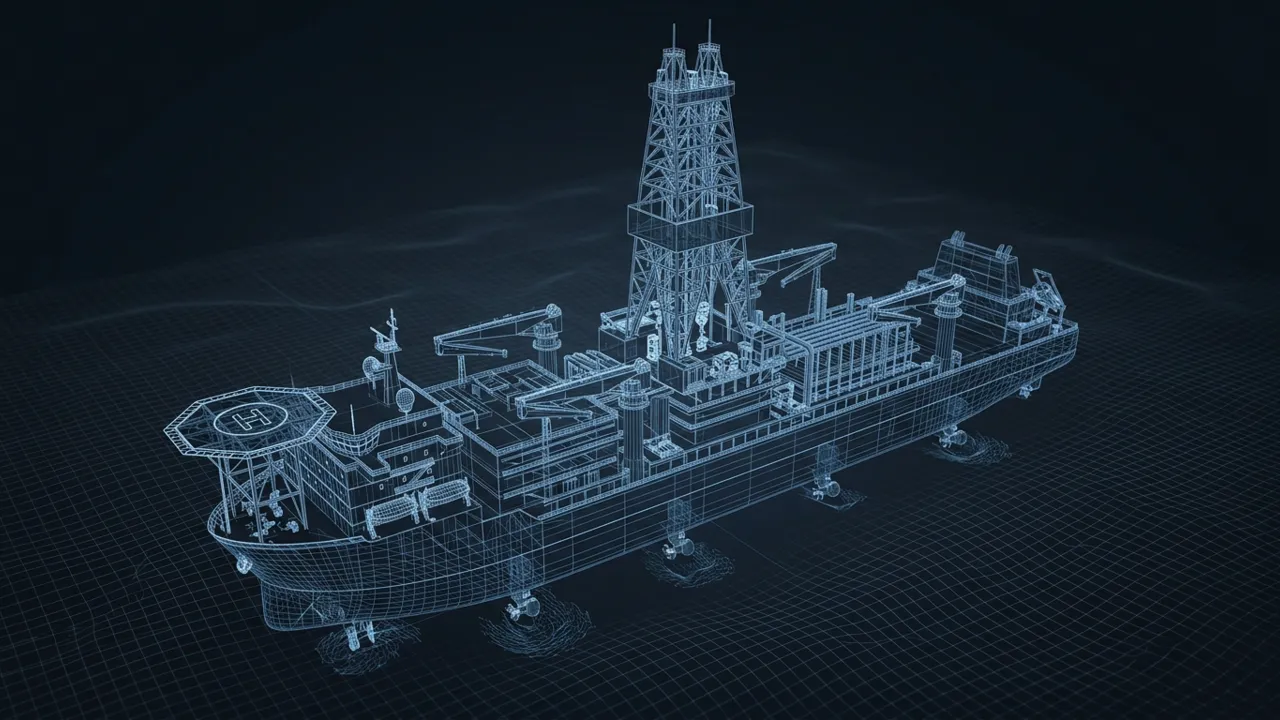
A drillship looks like a cargo ship that somebody bolted a derrick to. In a sense, that's what it is. But that ship can sit in two miles of water, hold its position within a few feet, and drill a well that reaches miles more into rock below the seabed. All without anchors in most cases. It raises a fair question. How does a ship drill a well miles below the sea?
A drillship drills by holding position over the well with dynamic positioning thrusters and lowering the drill string, riser and blowout preventer through an opening in its hull called the moonpool. The ship's computers use satellite and seafloor acoustic signals to keep it on station while thrusters push against wind, waves and current. After the top-hole sections are drilled and the wellhead is set, the crew lowers a subsea BOP on a marine riser and latches it to the wellhead. Drilling mud then circulates down the drill pipe and back up the riser to the ship. The rest of the well is drilled much like any other.
What Is a Drillship?
A drillship is a self-propelled ship designed to drill offshore wells, usually in deep and ultra-deep water. It has a full drilling package mounted amidships, sitting over a vertical shaft through the hull.
Compared with other floating rigs, a drillship's big strengths are speed and capacity. It can sail between locations under its own power, often across oceans, and its ship hull holds large amounts of pipe, riser, mud, fuel and supplies. That means fewer supply runs and more independence in remote areas.
The trade-off is motion. A ship hull responds to waves more than a semisubmersible's columns and pontoons. Drillships deal with that by pointing their bow into the weather and using motion compensation systems. Rigzone has a helpful explainer on how a drillship works for more background.
How Does a Drillship Drill a Well, Step by Step?
Here's the general sequence once a drillship reaches location.
- Set up dynamic positioning: acoustic beacons are placed on the seafloor and the DP system locks onto them and satellite references.
- Jet or drill in the conductor: the first large-diameter pipe goes into soft seabed sediments.
- Drill top-hole riserless: early sections are drilled with returns going to the seafloor, watched by an ROV.
- Run surface casing and the wellhead: this gives a pressure-rated base for the BOP.
- Run the BOP and riser: the BOP is lowered through the moonpool on riser joints, one joint at a time, and latched to the wellhead.
- Test the BOP: the stack is pressure tested before drilling ahead.
- Drill the deeper sections: returns come up the riser, and casing strings are set as needed.
- Evaluate and finish: the well is logged and then completed, suspended or plugged.
In deep water, running the riser alone can take days. That's one reason drillship time is planned so carefully.
What Is a Moonpool?
The moonpool is an opening through the center of the drillship's hull, open to the sea below. Everything that goes down to the well passes through it: drill pipe, casing, the riser and the BOP stack.
Putting the well center in the middle of the ship is no accident. That's where the ship moves the least as it pitches and rolls. It's also where the hull structure can best carry the weight of the derrick and the hanging loads below it.
Look down a moonpool and you see open water sloshing inside the ship. It's one of the stranger sights offshore, and the first time you see it, it doesn't feel like it should be allowed.
How Does Dynamic Positioning Keep a Drillship in Place?
Dynamic positioning keeps the ship over the well using thrusters and computers instead of anchors. That's essential in very deep water, where mooring lines would be impractically long.
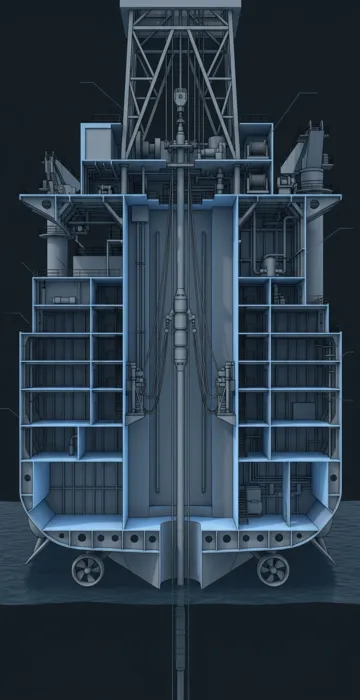
The DP system takes in position data from satellites and from acoustic beacons on the seafloor. It also reads the ship's heading, wind speed and motion. Then it continuously adjusts several azimuthing thrusters under the hull to hold position and heading.
Drillships usually turn their bow into the prevailing weather. A ship takes waves best head-on, and pointing into the weather also reduces how hard the thrusters have to work.
Redundancy is built in at every level. Drilling drillships typically carry multiple separate engine rooms and control systems, so a single failure doesn't push the ship off location. If station keeping is lost anyway, the crew can trigger an emergency disconnect that closes the well and frees the riser.
What Drillship Drilling Systems Are Different From a Land Rig?
The core drilling equipment is familiar: derrick, top drive, drawworks, mud pumps and solids control. The differences come from working on a moving ship over deep water.
- Heave compensation keeps weight on the bit steady while the ship rises and falls.
- Riser tensioners hold up the marine riser and keep it from buckling.
- A subsea BOP control system sends commands to the stack thousands of feet below.
- Pipe handling systems move pipe and riser joints with minimal hands-on work.
- Large riser and pipe storage holds enough equipment for ultra-deep wells.
Many modern drillships also have dual-activity derricks, meaning two well centers under one derrick. While one side drills, the other can build stands of pipe or run equipment toward the seafloor. That saves days on a deepwater well.
Why Does the Marine Riser Matter So Much?
The marine riser is the drillship's lifeline to the well. It carries mud and cuttings back up to the ship and guides tools down to the BOP.
In ultra-deep water, the riser can be miles long. It's made of heavy joints with buoyancy modules to cut its weight in water. It also carries choke and kill lines for well control. If anything defines drillship operations, it's handling that long, heavy, current-pushed column of pipe safely.
Drillship vs Semisub: Which Is Better?
It depends on the job. Drillships are faster to move and carry more supplies, which makes them attractive for remote and ultra-deep work. Semisubmersibles are steadier in rough seas, which helps in harsh environments.
Honestly, there's no universal winner. Operators pick based on water depth, weather, distance from shore, and which rigs are actually available at a sensible day rate.
How Does a Ship Drill a Well Miles Below the Sea? With Thrusters, a Hole and a Long Pipe
A drillship holds position with dynamic positioning, drills through the moonpool in the middle of its hull, and connects to the well with a subsea BOP and a marine riser. Mud circulates down the pipe and up the riser, just as it would on any rig.
What makes drillships special is mobility and capacity. They can sail to remote deepwater locations and carry enough equipment to work there with fewer supply runs.
If you want to understand the hardest piece of the puzzle, study the riser next. It's the part that turns a ship into a drilling rig.