Onshore vs. Offshore Drilling – Costs, Risks and Rigs
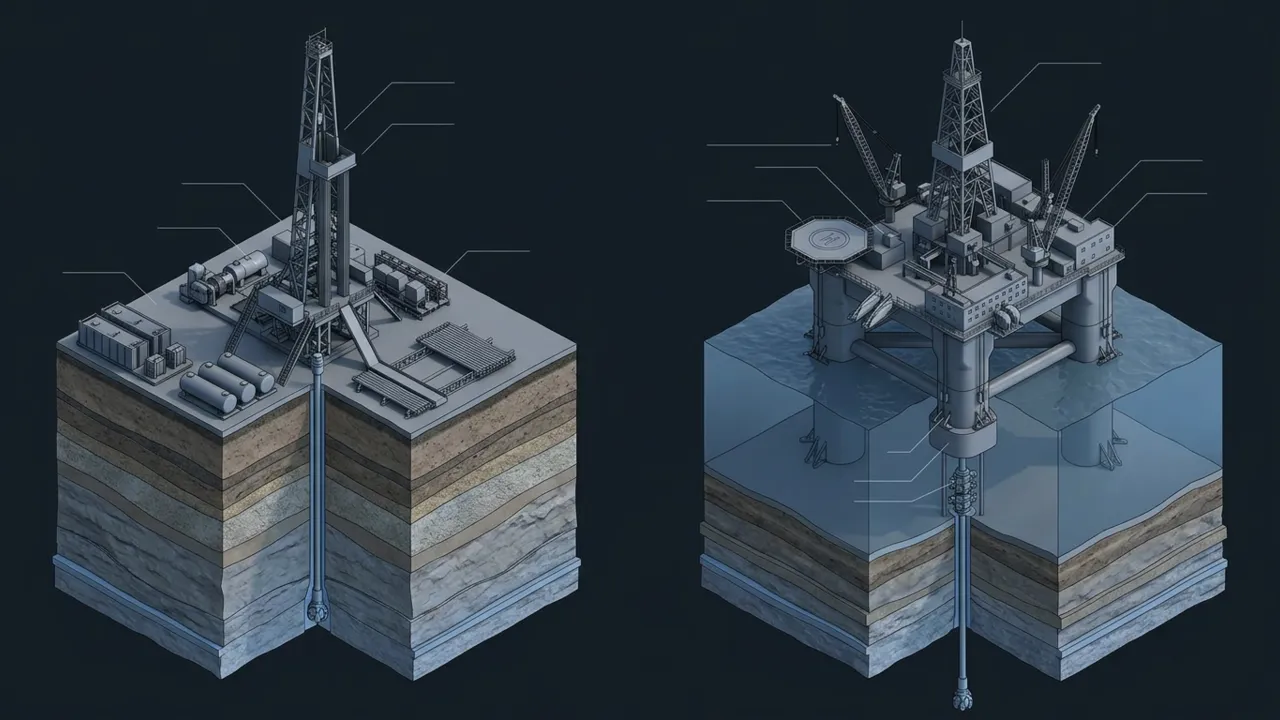
Onshore vs offshore drilling is one of those comparisons that gets flattened into a slogan. Offshore is expensive and risky, land is cheap and easy. There's some truth in that, but it leaves out why, and it misses where the lines blur. If you're trying to understand the business, a job choice, or just the headlines, the details matter. So what are the real differences between onshore and offshore drilling, and which costs more?
Offshore drilling costs far more per well than onshore drilling, mostly because of the rigs, the support fleet and the distance between the rig and the seafloor. The basic drilling process is the same in both places: a bit turns, mud circulates, and the well is cased and cemented in sections. Onshore drilling uses trucks and land rigs that can move between pads in days and drill many wells cheaply. Offshore drilling relies on jackups, semisubmersibles or drillships, supply boats and helicopters, and specialized subsea well control equipment. Offshore wells can be much more productive, though, which is why companies still pay the price.
Onshore vs Offshore Drilling at a Glance
Here's the short version in one table. Each row gets more detail below.
| Factor | Onshore | Offshore |
|---|---|---|
| Rig types | Land rigs, often walking or skidding pad rigs | Platform rigs, jackups, semisubmersibles, drillships |
| Cost per day | Lower | Much higher, especially in deep water |
| Typical well time | Days to weeks for many shale wells | Weeks to months |
| Well control | BOP at the surface, under the rig floor | BOP on deck (jackups) or on the seafloor (floaters) |
| Logistics | Roads and trucks | Boats, helicopters, cranes |
| Weather impact | Some delays | Can halt operations or force evacuation |
| Production per well | Often modest per well | Can be very large per well in deep water |
| Crew schedule | Rotations, often driving home | Rotations, living on the rig |
What Is Onshore Drilling?
Onshore drilling is drilling for oil and gas on land. The rig is trucked in, rigged up on a pad, and drills straight down or, more often today, down and then sideways through a target zone.
Modern land drilling is dominated by shale work. Rigs drill several wells from one pad, walking or skidding a few feet between each wellhead instead of rigging down. That repetition is what makes land drilling so efficient. Crews get very good at drilling the same type of well over and over.
Land rigs still vary a lot, from small workover units to big high-horsepower rigs built for long laterals. But almost all of them share one advantage: you can drive to them.
Land Drilling vs Offshore: Which Is More Expensive?
Offshore is more expensive, and usually by a wide margin. The exact numbers move with oil prices and rig demand, so I won't pin a dollar figure on it. What's stable is the list of cost drivers.
- Rig day rates: offshore units are bigger, more complex vessels with marine crews and certification requirements.
- Support fleet: supply boats, standby vessels and helicopters run every day the rig works.
- Well design: deeper wells and higher pressures need heavier casing, more strings and more engineering.
- Subsea equipment: subsea BOPs, risers and wellheads cost far more than their land counterparts.
- Time: offshore wells take longer, and on a high day rate, time is the biggest expense of all.
- Production facilities: offshore oil needs a platform, floating facility or subsea tieback to get to market.
So why bother? Because good offshore reservoirs can produce huge volumes from relatively few wells, and they can keep producing for many years. A land company drills many cheaper wells. An offshore company drills fewer, costlier ones and hopes each pays off big.
Is Offshore Drilling More Dangerous Than Onshore?
Both carry real hazards. The kind of danger is different, and so is the cost of a bad day.
Onshore crews face struck-by and caught-in injuries, falls, vehicle accidents on lease roads, and fires. Driving is a big, underrated risk in land work. Well control events happen too, and a land blowout can be deadly.
Offshore adds the sea. Crane lifts from moving boats, helicopter transport, evacuation planning, and the simple fact that you can't drive away from a fire. A major offshore well control failure can also cause pollution that's much harder to contain. That's why offshore regulators like the Bureau of Safety and Environmental Enforcement require detailed well control, BOP testing and safety management programs.
My take: neither is "the safe one." Offshore has tighter oversight and a heavier safety culture, partly because the consequences are bigger.
How Do the Rigs Differ?
A land rig and an offshore rig share the same drilling heart: a derrick or mast, a top drive, drawworks, mud pumps and solids control. Where they part ways is everything around that.
Offshore rigs carry their own power plant, living quarters, cranes, helideck and storage for pipe, mud and fuel. Floating rigs add motion compensation, a marine riser and a ballast or positioning system. Jackups add legs and jacking gear.
Water depth sets which offshore rig you use. Jackups work in shallow water. Semisubmersibles and drillships take over as the water gets deeper, and the jump to deepwater drilling is where costs and complexity really climb.
Which Takes Longer, Onshore or Offshore Drilling?
Offshore wells almost always take longer. Many land shale wells are drilled in a matter of days to a couple of weeks, though that depends heavily on depth and lateral length.
Offshore, even the setup takes time. Running a subsea BOP and riser in deep water can take days by itself. Add longer wells, more casing strings, weather downtime and slower tripping, and timelines stretch to weeks or months.
The planning gap is bigger still. Offshore projects can take years from discovery to first oil because they need production facilities built and installed. A land well can often be on production within months of spud.
What Is Life Like for Crews Onshore vs Offshore?
Land crews often work rotations like 14 on and 14 off, or shorter hitches, staying in a man camp or a nearby motel. Some drive a long way to get to the rig. You go home at the end of the hitch by truck.
Offshore crews live on the rig for the whole hitch. Meals, laundry and a bunk are provided, and you fly or boat out at crew change. It's an isolated life, but plenty of hands prefer it because the job and home are fully separated.
Pay varies by role and company more than by location, though offshore positions often carry a premium for the extra time away and training requirements.
How Much Drilling Happens Onshore vs Offshore?
In the United States, the large majority of active drilling rigs work on land. The weekly Baker Hughes rig count splits rigs into land, inland water and offshore, and offshore is consistently a small slice of the total.
That doesn't mean offshore is small in output. A handful of offshore rigs can support projects that produce a meaningful share of national supply. Rig counts measure activity, not barrels.
Where Do Onshore and Offshore Drilling Overlap?
The line between land and sea isn't as clean as the labels suggest. A few kinds of work sit right on the border.
- Inland water drilling: barge rigs work in marshes, bays and canals, especially along the Gulf Coast. They float, but the water is often only a few feet deep.
- Extended-reach wells from shore: some fields just offshore are drilled from land, with long directional wells reaching out under the water.
- Artificial islands and causeways: in some shallow or icy areas, operators build gravel pads to drill with land-style rigs.
- Platform rigs: a rig sitting on a fixed platform drills a lot like a land pad rig, moving from slot to slot.
These hybrids exist for one reason. Operators always try to use the cheapest rig that can safely reach the target. If a land rig can do it, nobody pays for a drillship.
Onshore vs Offshore Drilling: Same Hole, Very Different Bill
Onshore vs offshore drilling comes down to the same basic process under very different conditions. Land drilling is cheaper, faster and easier to repeat. Offshore drilling costs far more per well but can reach reservoirs that produce on a much larger scale.
The risks differ more in type than in seriousness. Land crews deal with roads and repetition. Offshore crews deal with the sea, the distance and higher stakes when something goes wrong.
If you're weighing the two, look past the slogans. Ask what the reservoir can deliver, what the rig and support will cost per day, and how long the well will take. Those three answers explain almost every decision in this business.