Jackup Rigs – How They Stand on the Seafloor
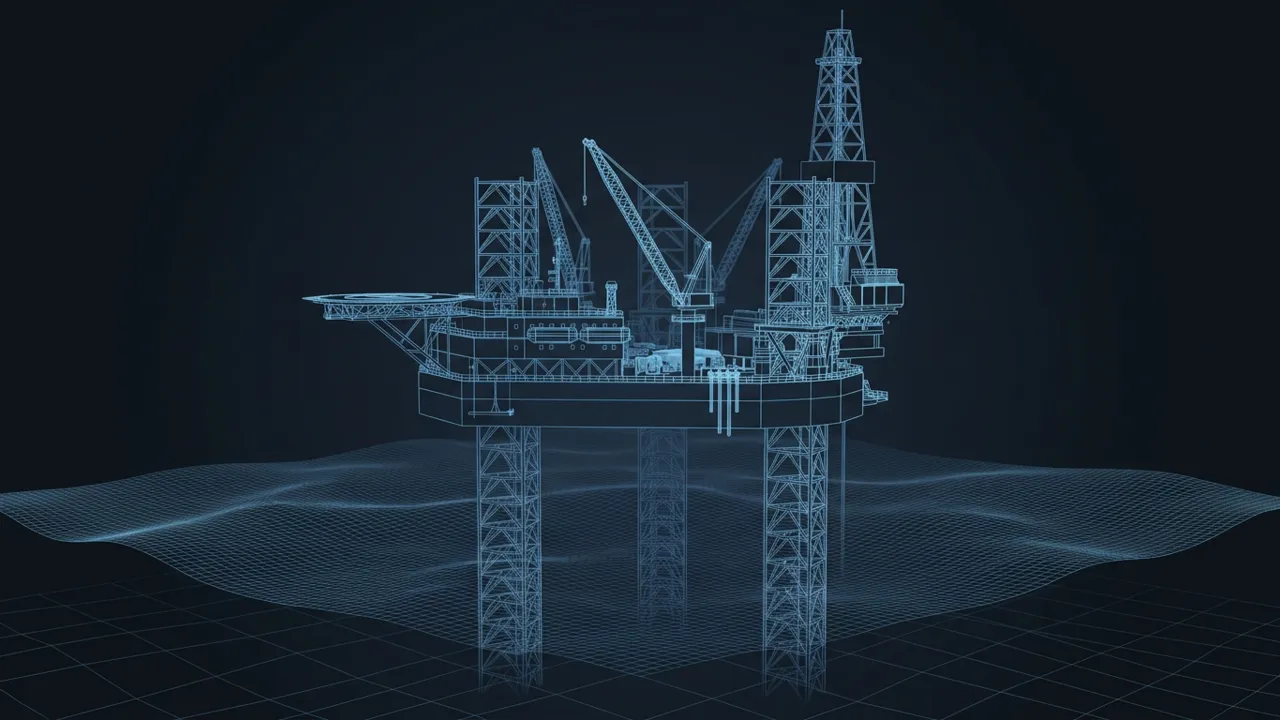
A jackup rig is one of the stranger-looking machines in the oil patch. Out of the water, it's a triangular barge with three giant towers sticking up into the sky. On location, the same barge hangs in the air above the waves, perched on those towers like a table on stilts. People reasonably wonder how something that heavy gets itself up there and stays put through storms. So how does a jackup rig actually stand on the seafloor?
A jackup rig stands on the seafloor by lowering its legs to the bottom and then jacking its hull up the legs until it sits above the waves. Most jackups have three or four legs, each ending in a large footing called a spudcan that pushes into the seabed. First, the crew preloads the legs with seawater ballast, pressing the spudcans deeper so the soil can handle storm loads later. Once the legs are set, the hull is raised to leave an air gap between the deck and the highest expected waves. The result is a steady platform that doesn't heave like a floater.
What Is a Jackup Drilling Rig?
A jackup drilling rig is a mobile offshore rig with a buoyant hull and movable legs. It floats when it's being moved, and it stands on the bottom when it's working.
That combination is the whole point. The rig can be towed from well to well like a barge, but once it's jacked up, it drills from a solid, motionless platform. No riser motion to compensate, no thrusters, no anchors. The BOP sits on deck, under the drill floor, much like on a land rig.
Jackups are the workhorses of shallow offshore water. You'll find them in the Gulf's shelf waters, the Middle East, the North Sea, Southeast Asia and West Africa. Rigzone has a solid plain-language explainer on how jackups work if you want a second take.
How Does a Jackup Rig Get Into Position, Step by Step?
Getting a jackup on location is a careful, slow process. Here's the general sequence.
- Site survey: the seabed soil is studied first. Engineers need to know how far the spudcans will sink and whether there are weak layers below.
- Tow: most jackups are towed by tugs with legs raised high. Some newer units are self-propelled, but tugs are still the norm.
- Lower the legs: on location, the legs are run down until the spudcans touch bottom.
- Preload: the hull is raised a short distance, and seawater is pumped into preload tanks. The extra weight drives the spudcans into the seabed.
- Hold and check: the preload is held while crews watch for leg settlement. If one leg sinks suddenly, the operation stops.
- Dump the preload: once the legs are stable, the water is dumped.
- Jack to working height: the hull climbs the legs to its planned air gap above the sea.
- Skid the cantilever: on most modern jackups, the drill floor slides out over the side, over the well or platform.
Moving off location reverses the steps. Pulling spudcans out of sticky clay can take time, and jetting systems on the spudcans help break the suction.
How Do Jackup Legs and Spudcans Work?
Jackup legs are long steel structures, usually open lattice trusses on modern rigs. A truss gives a lot of strength with less surface for waves and currents to push against.

Each leg has toothed racks running its length. Pinions driven by electric or hydraulic motors in a jacking house on the hull climb those racks, raising or lowering the hull. Think of it as a very heavy, very slow rack-and-pinion elevator.
At the bottom of each leg sits a spudcan. It's a large, roughly circular footing, shaped a bit like an inverted cone, that spreads the leg load into the soil. In soft clay it may sink a long way before stopping. In sand it may barely bite.
Some older or specialized designs use a mat instead of spudcans. A mat-supported jackup has one large flat foundation connecting all the legs. It works well on very soft seabeds where individual spudcans would sink too far.
Why Is Preloading So Important?
Preloading tests the foundation before the storm does. The idea is simple: push the legs into the soil with more force than they'll see in normal operations plus a severe storm.
If the soil is going to fail, you want it to fail now, with the hull low and the crew ready, not later with the rig at full height.
The danger is called punch-through. It happens when a spudcan is resting on a strong soil layer that sits over a weak one. The strong layer suddenly gives way and the leg plunges. Punch-through can tilt the rig badly and damage legs. That's why soil surveys and slow, monitored preloading are taken so seriously.
What Is the Maximum Jackup Water Depth?
Most jackups work in water up to roughly 300 to 400 feet. The biggest harsh-environment units can work somewhat deeper, around 500 feet in some cases.
The limit comes from the legs. Longer legs mean more weight, more steel exposed to waves and more bending under load. At some point it makes more sense to use a floating rig.
Leg length also has to cover more than water depth. It must allow for spudcan penetration into the seabed, the air gap above the waves, and some reserve. So a rig's leg length is always well beyond its rated water depth.
Jackup Rig vs Floating Rigs: When Does Each Make Sense?
A jackup is usually the cheaper choice in shallow water. It's stable, its BOP is on deck where crews can reach it, and its day rate is generally lower than a floater's.
Beyond jackup water depth, operators move to semisubmersible rigs or drillships. Those float, use subsea BOPs and marine risers, and hold position with anchors or thrusters.
| Feature | Jackup | Floating rig |
|---|---|---|
| Support | Legs on the seafloor | Buoyancy, held by anchors or DP |
| BOP location | On deck | On the seafloor |
| Motion | Essentially none once jacked up | Heave, pitch and roll |
| Water depth | Shallow | Moderate to ultra-deep |
Are Jackup Rigs Safe in Storms?
Jackups are designed for specific storm conditions at specific locations. The air gap keeps waves off the hull, and the legs are engineered for wind, wave and current loads.
Hurricanes are the hard case. In the Gulf, jackups are typically evacuated ahead of major storms, and site assessments account for local hurricane conditions. Rigs have been damaged or toppled in severe storms, which is one reason those assessments have become stricter over time.
How Does a Jackup Rig Stand on the Seafloor? Legs, Preload and Patience
A jackup rig stands on the seafloor by lowering its legs, pushing its spudcans into the seabed with preload, and then climbing its own legs to a safe height above the waves. Once it's up, it's a steady drilling platform with a surface BOP.
The trade-off is water depth. Jackups shine in shallow water and run out of leg somewhere around a few hundred feet.
If you're comparing offshore rigs, the next thing to understand is how floaters solve the problem jackups can't: staying in one place without touching bottom at all.