How Does Offshore Drilling Work?
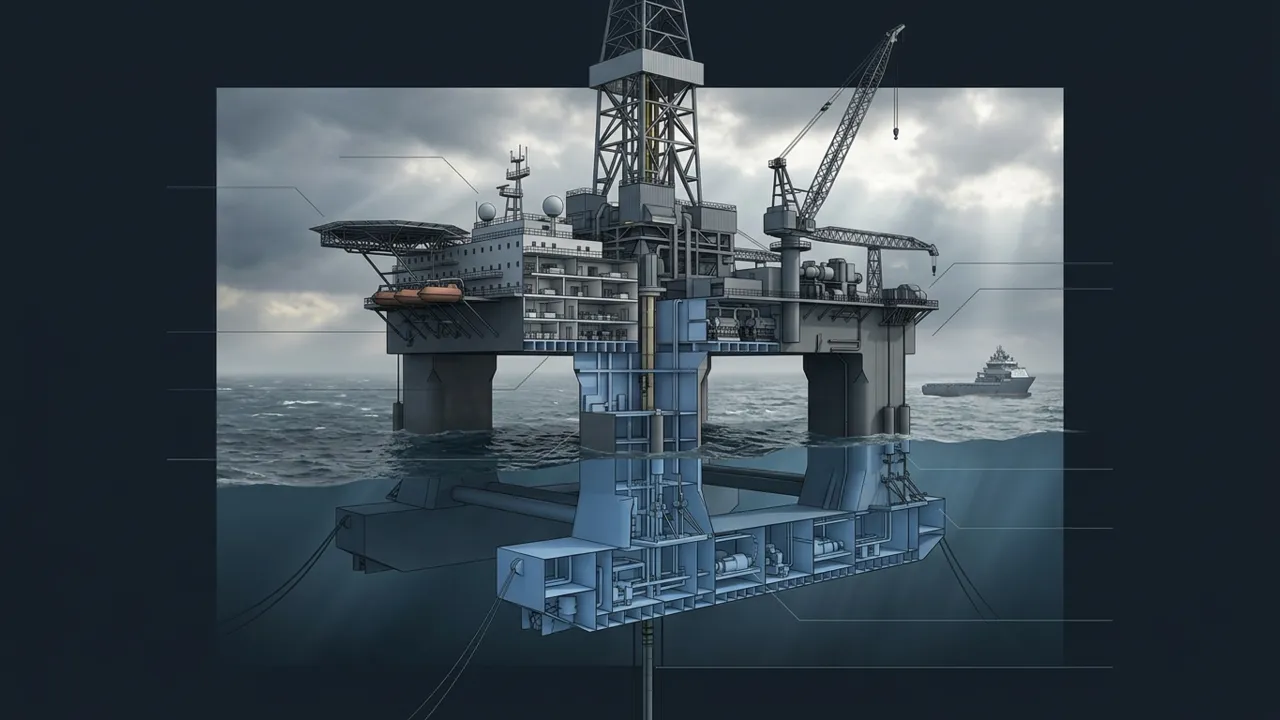
Offshore drilling looks impossible from a beach. A steel structure sits out on open water, and somehow a well gets drilled into rock that may lie miles beneath the waves. People ask me how that works more than almost anything else, usually with a little suspicion that the answer is magic. It isn't. It's a sequence of very deliberate steps, each one solving a specific problem the sea throws at you. So, how does offshore drilling actually work?
Offshore drilling works by putting a drilling rig over a seafloor location, either standing on the bottom or floating and held in place, and then drilling down through the seabed much as a land rig would. Shallow-water jackups stand on legs, while floating rigs (semisubmersibles and drillships) hold position with anchors or computer-controlled thrusters. After setting the first casing strings, the crew lands a subsea blowout preventer on the wellhead and connects it to the rig with a large pipe called a marine riser. From there, drilling mud circulates down the drill pipe and back up the riser, and the well is drilled, cased and evaluated section by section.
What Is Offshore Drilling, in Plain Terms?
Offshore drilling is the drilling of oil and gas wells beneath the seabed instead of beneath dry land. The rock, the drill bit and the basic physics are the same. What changes is everything between the rig floor and the top of the well.
On land, the wellhead sits a few feet below the rig. Offshore, there might be a few hundred feet of water in between, or several thousand. That water moves, the rig moves with it, and the weather can shut you down for days. Every piece of special offshore equipment exists to deal with that gap.
It's also a big part of the oil business. The U.S. Energy Information Administration keeps a good overview of offshore oil and natural gas production and leasing, including how federal waters are managed. Most U.S. offshore output comes from the Gulf, with smaller contributions from California and Alaska.
What Types of Offshore Oil Rigs Are There?
The type of offshore oil rig depends mainly on water depth. Shallow water favors rigs that stand on the bottom. Deep water needs rigs that float.
| Rig type | How it stays put | Typical water depth |
|---|---|---|
| Platform rig | Built onto a fixed production platform | Shallow to moderate |
| Jackup | Legs stand on the seafloor | Shallow, generally a few hundred feet or less |
| Semisubmersible | Floats on pontoons; anchors or thrusters | Moderate to very deep |
| Drillship | Ship hull; usually dynamic positioning | Deep and ultra-deep |
There are also tender-assisted rigs and small barge rigs for inland waters and marshes, but the four above cover most of what people picture. Water depth limits are approximate. Each rig has its own rated depth, and contractors watch those ratings closely.
How Does the Offshore Drilling Process Work, Step by Step?
Here's the offshore drilling process for a typical floating rig, from arrival to a finished well. A jackup follows much of the same order, but its BOP usually sits on deck instead of on the seafloor.
- Survey the site. Before any rig shows up, the seafloor is surveyed for hazards like shallow gas, unstable sediment, pipelines and debris.
- Move the rig on location. The rig is towed or sails to the site and is held in place by anchors or by dynamic positioning.
- Spud and jet or drill the conductor. The first large pipe goes into the soft seabed, often jetted in, to give the well a stable starting point.
- Drill the top-hole sections riserless. The first sections are drilled with returns going straight to the seafloor, because there's no riser connected yet.
- Run and cement surface casing with the wellhead housing. This gives a solid, pressure-rated base to land equipment on.
- Run the subsea BOP and riser. The blowout preventer stack is lowered on riser joints and latched onto the wellhead.
- Drill the deeper sections. Now mud returns come back up the riser to the rig, where solids are removed and the mud is reused.
- Log, test and case each section. The well is evaluated and cased in steps until it reaches total depth.
- Complete, suspend or plug. The well is either completed for production, temporarily suspended for later, or plugged and abandoned.
That list hides a lot of weeks. Deepwater wells routinely take months from spud to total depth, depending on depth, pressures and how cooperative the weather is.
How Do Offshore Rigs Drill Without Drifting Away?
Bottom-founded rigs don't drift at all. A jackup stands on its legs, and a platform rig is bolted to a structure pinned into the seabed. The tricky part is the floaters.
Floating rigs use one of two methods. Moored rigs spread out a pattern of anchors on chains or wire rope, usually eight or more, and winch them tight. Dynamically positioned rigs use satellite positioning, motion sensors and computer-controlled thrusters to hold station within a small circle over the well.
Neither is perfect. Mooring gets impractical in very deep water, and DP burns a lot of fuel and depends on power and control systems staying healthy. That's why DP rigs carry redundant engines, thrusters and computers, and why crews drill for what happens when one of them quits.
Why Is the Subsea BOP So Important Offshore?
The subsea blowout preventer is the main barrier between a well kick and a disaster. On a floating rig, it sits on the seafloor right on top of the wellhead, not up on the rig.
A BOP stack is a tall assembly of rams and annular preventers that can close around pipe, close on an open hole, or shear the drill pipe and seal the well. The SLB glossary has a clear definition of the blowout preventer if you want the technical version.
Why put it on the seafloor? Because if the rig ever has to disconnect in an emergency, the well stays shut in down at the wellhead. The rig can unlatch the riser and move off, leaving the BOP holding pressure. Offshore stacks are controlled through redundant control pods and have backup systems that can fire if communication is lost.
What Does the Marine Riser Do?
The marine riser is a large-diameter pipe that runs from the BOP on the seafloor up to the rig. It gives drilling mud a path back to the surface and guides the drill string down to the well.
Without it, returning mud and cuttings would simply spill onto the seafloor. That's acceptable for the top sections, which are drilled riserless with seawater or simple mud. It's not acceptable once you need weighted mud to control formation pressure.
The riser is built from heavy joints connected end to end, with buoyancy modules to reduce its weight in water. Tensioners on the rig hold it up, and a slip joint lets the rig heave up and down without yanking on the stack. It also carries choke and kill lines, which the crew uses to circulate out a kick through the BOP.
How Is Offshore Drilling Different From Drilling on Land?
The drilling itself is quite similar. Bits, mud, casing and cement all work on the same principles. The differences are logistics, cost and margin for error.
- Everything arrives by boat or helicopter. Pipe, mud, food, fuel and people all come across the water.
- The rig moves. Floaters heave, pitch and roll, so the equipment has to compensate for motion.
- Well control is more complex. Long choke lines and cold water at depth change how kicks behave and how you handle them.
- Costs are far higher per day. A deepwater rig and its support fleet cost many times what a land rig does.
If you want a side-by-side breakdown, I've laid that out in a separate article on onshore vs offshore drilling, including the honest cost drivers.
How Deep Can Offshore Drilling Go?
There are two depths to think about: water depth and total well depth. They get mixed up all the time.
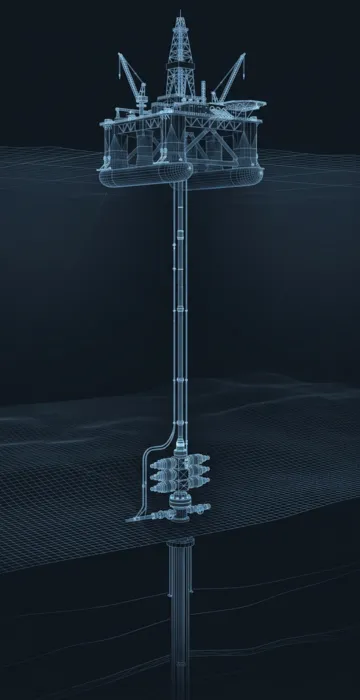
Water depth is the distance from the sea surface to the seafloor. The most capable floating rigs are rated for roughly 10,000 to 12,000 feet of water. Jackups top out far shallower, because their legs have to reach the bottom.
Well depth is how far the hole goes below the rig, and that includes the water column. Deepwater wells in the Gulf commonly reach total depths measured in tens of thousands of feet. Stack a few thousand feet of water on top of a well that goes another five miles into rock, and you see why these projects are expensive.
The industry also uses labels. U.S. regulators generally call water of 1,000 feet or more "deepwater" and water beyond about 5,000 feet "ultra-deepwater," though companies don't all use the same cutoffs. The label matters less than the rig rating and the pressures you expect to meet.
Who Works on an Offshore Drilling Rig?
An offshore rig carries a full drilling crew plus marine and support staff. The drilling side looks familiar: driller, assistant driller, derrickhand, floorhands, roustabouts, crane operators, mechanics and electricians, all under a toolpusher and rig manager.
Floaters add a marine crew. That usually means a captain or offshore installation manager, DP operators, ballast control staff and marine engineers. Then there's catering, a medic, and a rotating cast of service hands for cementing, logging, mud and directional work.
Crews typically work 12-hour shifts on a rotation, such as two weeks on and two weeks off. It's demanding. It's also one of the better-paying ways to work in the industry, which is why the schedules stay full.
Is Offshore Drilling Safe?
Offshore drilling is far safer than it was decades ago, but it's never risk-free. Fires, dropped objects, crane incidents and well control events are the hazards everyone trains for.
The industry learned hard lessons. Piper Alpha in 1988 reshaped offshore safety in the North Sea. The Macondo blowout and Deepwater Horizon explosion in 2010 killed eleven workers and led to tighter U.S. rules on BOPs, well design and safety management.
My take: the equipment today is better, and regulation is stricter. But safety offshore still comes down to people making good calls under pressure, and following procedures when it would be easier not to. That part never gets automated away.
How Does Offshore Drilling Work? It's Land Drilling With the Sea in the Way
So, how does offshore drilling work? A rig gets over the location, either standing on the bottom or floating in place. The crew drills the top-hole, sets casing and a wellhead, lands a subsea BOP and connects a riser. Then the well is drilled section by section, with mud circulating up the riser just as it would up the annulus on land.
The core idea is simple. The execution is not, because every foot of water adds motion, distance, cost and risk that has to be managed.
If you're trying to get your head around the trade-offs, the next useful step is comparing offshore work to land drilling directly. Costs, risk and rig choice all look very different once you see them side by side.