What Is Deepwater Drilling?
Deepwater drilling gets mentioned in news stories as if everyone knows what it means. Most people don't, and the industry doesn't help by using slightly different definitions. Is it about how deep the well goes? How deep the water is? The answer shapes which rigs can do the job, what it costs and how much can go wrong. So what is deepwater drilling, exactly?
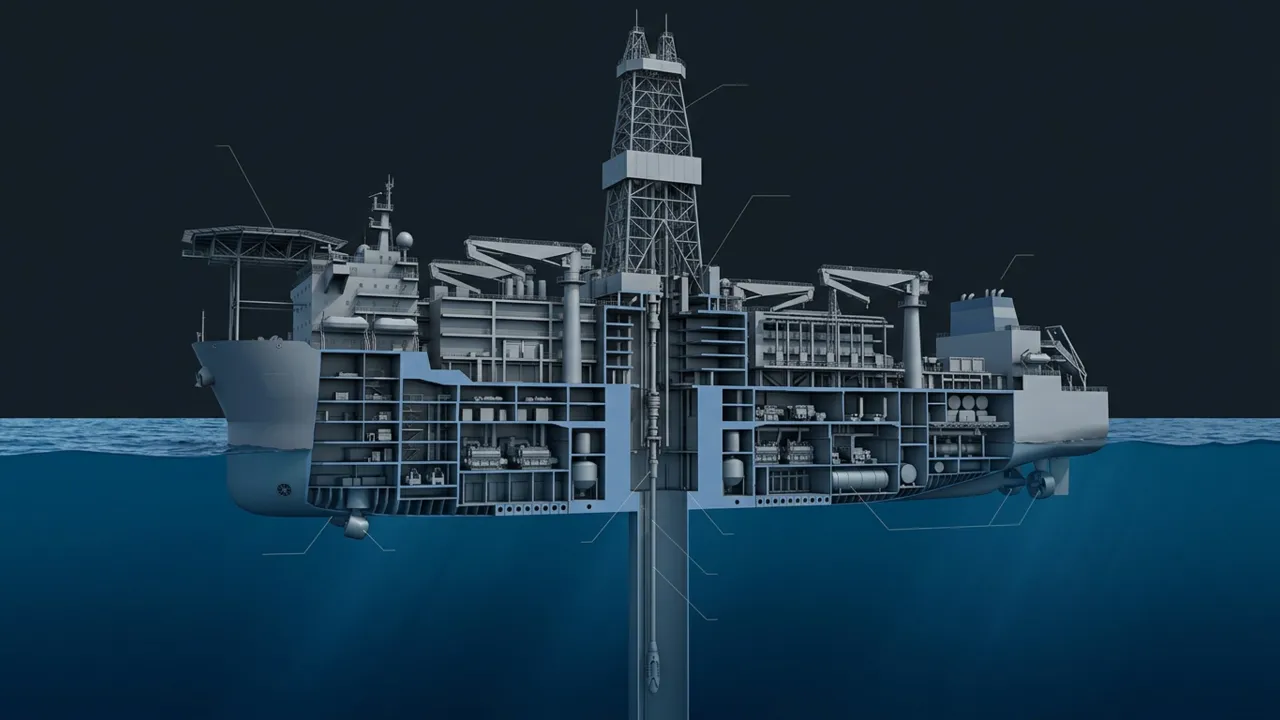
Deepwater drilling is drilling oil and gas wells in water deep enough that the rig must float instead of standing on the seafloor. U.S. regulators generally define deepwater as water depths of 1,000 feet or more, and ultra-deepwater as roughly 5,000 feet or more, although some companies set their cutoffs differently. The term refers to the water depth, not the depth of the well below the seabed. The work is done from semisubmersibles and drillships, with a seafloor blowout preventer and a marine riser. The payoff can be large reservoirs, but the cost, technical difficulty and consequences of failure are all higher than in shallow water.
How Deep Is Deepwater Drilling?
Deepwater starts at about 1,000 feet of water in most U.S. usage. That's the threshold used by federal agencies that manage offshore leasing in the Gulf. Ultra-deepwater generally starts around 5,000 feet.
You'll see other numbers. Some operators and analysts use 1,500 feet or more for deepwater and 7,500 feet for ultra-deepwater. None of these is wrong; they're conventions. When you read a report, check which definition it's using before comparing figures.
The most capable drillships and semisubmersibles today are rated for roughly 10,000 to 12,000 feet of water. Below the mudline, the wells themselves can go tens of thousands of feet more.
Water Depth vs Well Depth: Why the Difference Matters
This trips up a lot of people. A "deep well" and a "deepwater well" are not the same thing.
- Water depth: the distance from the sea surface to the seafloor (the mudline).
- Well depth: how far the hole extends, usually measured from the rig floor, through the water and into rock.
A shallow-water well can be very deep below the seabed. A deepwater well might sit in 7,000 feet of water and then go another 20,000 feet into rock. That combination is what makes the Gulf's deepwater wells some of the most demanding in the world.
What Rigs Are Used for Deepwater Drilling?
Deepwater rigs float. Bottom-supported rigs simply can't reach. A jackup rig, for example, needs its legs to stand on the seafloor, which limits it to relatively shallow water.
The two main deepwater rig types are:
- Semisubmersibles: rigs that float on submerged pontoons and columns. They're very stable in rough seas and can be held in place by anchors or by dynamic positioning.
- Drillships: ship-shaped rigs that drill through an opening in the hull called a moonpool. They carry a lot of supplies and move quickly between locations, and most use dynamic positioning.
Some deepwater production platforms, like tension leg platforms and spars, also carry drilling rigs. Those drill development wells from a facility that's already producing.
What Are the Biggest Deepwater Challenges?
Every extra foot of water adds a problem. Here are the deepwater challenges that matter most.
Pressure and the Narrow Mud Window
In deep water, the rock just below the seabed is weaker than rock at the same depth on land, because seawater weighs less than rock. That narrows the gap between the mud weight needed to hold back formation pressure and the weight that would fracture the rock. Drillers call this the mud window, and in deepwater it can be tight.
The result is more casing strings and very careful mud weight management. Lose returns on one side, take a kick on the other.
Cold Water and Hydrates
Seafloor water in the deep Gulf is just a few degrees above freezing. Combine cold temperatures with high pressure and gas, and you can form hydrates, an ice-like solid that can plug lines and equipment. Crews use chemicals and careful procedures to prevent them.
Riser and Station Keeping
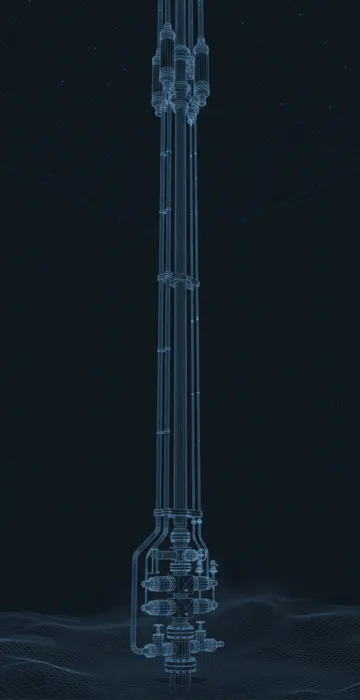
A long marine riser is heavy and gets pushed around by currents. Strong loop currents in the Gulf can stop operations. Meanwhile the rig has to hold position precisely over the well, often with thrusters alone.
Well Control at Depth
With the BOP on the seafloor and long choke lines running to the surface, handling a kick takes extra care. Gas expands fast as it rises up the riser, and the response window is short.
Why Do Companies Drill in Deep Water at All?
Because the reservoirs can be big. Some deepwater fields hold very large volumes, and individual wells can produce at high rates for years. That can justify the expense in a way that a small land well never could.
Deepwater production is a major part of U.S. offshore output, and most of it comes from the Gulf. The BOEM Gulf of America region page covers how federal leases there are offered and managed. (The Gulf of Mexico was officially renamed the Gulf of America in U.S. federal usage in 2025.)
Brazil, West Africa, the North Sea, Guyana and parts of Asia all have significant deepwater activity too. These projects take years from discovery to first oil, so companies plan around long-term prices, not today's.
How Is a Deepwater Well Drilled?
A deepwater well follows a set sequence. The order exists because you can't connect a riser and BOP until there's something solid to land them on.
- The rig arrives and holds position over the site, usually with dynamic positioning.
- A large conductor pipe is jetted or drilled into the soft seabed sediments.
- The top-hole sections are drilled riserless, with returns going to the seafloor. A remotely operated vehicle (ROV) watches for shallow water or gas flows.
- Surface casing is run with the high-pressure wellhead housing and cemented in place.
- The subsea BOP is lowered on riser joints, which can take days in very deep water, and latched to the wellhead.
- Drilling continues with returns up the riser, setting additional casing strings as pressures demand.
- At total depth, the well is logged and either completed, suspended for later, or plugged.
ROVs are the hands and eyes on the seafloor through all of this. They watch connections, turn valves and inspect equipment where no diver could work.
How Much Does Deepwater Drilling Cost?
A lot, and the number swings with the market. Deepwater rig day rates rise and fall with demand, and the rig is only part of the bill. Boats, helicopters, service crews, casing, mud and subsea equipment all add up.
A single deepwater well can easily cost many times what a typical onshore shale well does. That's why operators lean so hard on planning, and why a few days of weather or equipment trouble gets noticed at the head office.
Is Deepwater Drilling Riskier Than Shallow Water?
The consequences of a failure are generally larger in deep water. Access to the wellhead depends on remotely operated vehicles, and stopping a leak can take far longer than in shallow water.
The Macondo blowout in 2010 showed that clearly. The Chemical Safety Board's Macondo investigation looked at the BOP failure and the wider safety management issues behind it. Eleven workers died, and the well flowed for months before it was capped.
Since then, U.S. rules on BOP design, well barriers and containment have tightened, and companies keep capping stacks on standby. My take: deepwater is safer than it was in 2010, but it will always have less margin for error than shallow water. That's simply physics and distance.
What Is Deepwater Drilling, Really? Ordinary Drilling, Far From Home
Deepwater drilling means drilling in water deep enough that the rig has to float, usually defined as 1,000 feet or more, with ultra-deepwater starting around 5,000 feet. It uses semisubmersibles and drillships, a subsea BOP and a marine riser.
The process is familiar. The conditions are not: tight pressure windows, cold water, long risers, strong currents and higher stakes if things go wrong.
If you're sorting out offshore rigs, the next step is understanding why shallow-water rigs can't follow. That comes down to legs, water depth and how the rig stands on the bottom.