Types of Casing – Conductor, Surface, Intermediate and Production
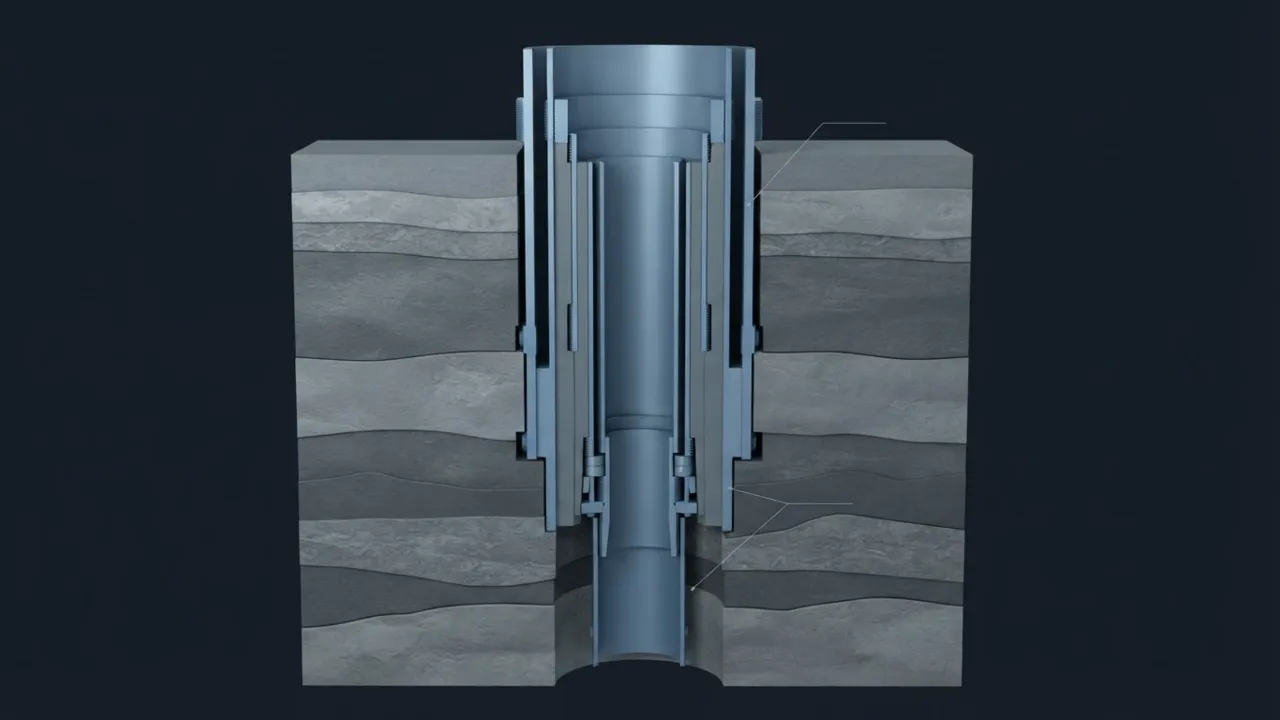
A finished oil well isn't just a hole in the ground. It's a set of steel pipes nested inside each other, each one cemented in place, each one there for a reason. New hands hear "we're running the intermediate" or "surface is set" and nod along without knowing what string does what. That's fine for a day or two. After that, you need to know. So what are the types of casing, and what does each one do?
The main types of casing are conductor, surface, intermediate and production casing, plus liners, which are casing strings that hang inside the last string instead of running back to surface. Conductor is the short, large pipe at the top that keeps loose soil from caving in. Surface casing seals off freshwater zones and holds up the wellhead and blowout preventer. Intermediate casing isolates trouble zones so the well can go deeper safely. Production casing is the last full string, running through or to the reservoir, and it's what the well produces through for its whole life.
Here are the types of casing from the top down:
- Conductor casing: shallow, largest diameter, keeps the top of the hole from caving.
- Surface casing: protects groundwater and supports the BOP.
- Intermediate casing: seals off problem zones between surface and the target.
- Production casing: isolates the reservoir and carries production.
- Liners: partial strings hung off the bottom of the casing above.
Why Does an Oil Well Need Several Casing Strings?
Because you can't drill the whole well in one go. As you go deeper, you run into formations that behave differently. Some are weak and would break down under heavy mud. Some hold high pressure and need heavy mud to keep them in check. Some are loose and want to cave in.
Casing lets you deal with them one section at a time. You drill a section, run casing, cement it, and that section is sealed off. Then you drill the next one with a smaller bit through the casing you just set. That's why every well is built like a telescope, biggest at the top and smallest at the bottom.
The SLB Energy Glossary defines casing simply as large-diameter pipe lowered into the open hole and cemented in place. Simple definition, big job.
What Is Conductor Casing?
Conductor casing is the first and biggest string. It's set at a shallow depth, often by driving it in or drilling a short hole before the main rig arrives.
Its job is basic but important. The top few dozen feet of ground are usually soft, loose soil, and drilling mud would wash it out fast. The conductor holds that ground back and gives the mud returns a path up into the flowline. Offshore, the conductor also provides structural support for the wellhead equipment.
What Is Surface Casing and How Deep Does It Go?
Surface casing is the first string run by the main rig, and in my opinion it's the most important string in the well for the people living nearby. It seals off the freshwater zones so drilling fluids, oil, gas and salt water can't reach them.
Surface casing depth is set by the well design and by regulators. In most places, it has to go below the deepest freshwater zone that needs protection, and it's cemented all the way back to the surface. State regulators set those depth and cement rules, and they vary by state and even by county, depending on the local groundwater.
Surface casing also has a mechanical job. The wellhead is attached to it, and the blowout preventer stack sits on top. Everything that keeps the well under control at the surface depends on that string and its cement holding.
What Is Intermediate Casing?
Intermediate casing, sometimes called protective casing, goes in between the surface casing and the production hole. Not every well needs one. Deeper and more complex wells may need more than one.
It's used to seal off trouble before going deeper. Common reasons include:
- Weak zones that would lose mud if the mud weight goes up.
- High-pressure zones that need heavy mud.
- Salt, swelling shale or other unstable formations.
- Lost circulation zones that keep eating mud.
Once intermediate casing is set and cemented, the crew can change the mud weight for the next section without worrying about those shallower zones. On many directional wells, the intermediate also gets set through the curve before drilling the lateral.
What Is Production Casing?
Production casing is the last full string, run from the surface to the bottom of the well or through the reservoir. It's the string the well produces through for its whole life.
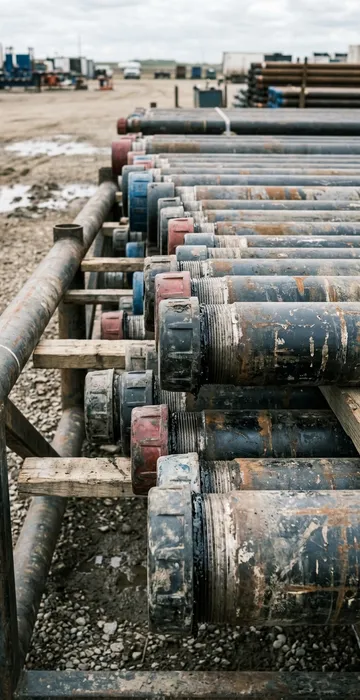
The completion crew perforates it to let oil and gas in, and in many shale wells, they fracture the rock through it at high pressure. That means production casing has to be strong enough to handle frac pressure, corrosion and years of production. The cement behind it isolates the reservoir from the zones above.
On a horizontal shale well, production casing often runs from surface all the way to the toe of the lateral, which can mean miles of pipe. Getting a string that long to bottom takes good hole cleaning, good centralizer placement and a little patience. Once it's cemented, the drilling rig's work on that well is finished.
A bad cement job or a leaking connection on production casing is a headache for years. Fixing it later often means bringing in a workover rig and spending money nobody budgeted for.
What Is a Liner, and How Is It Different From Casing?
A liner is a casing string that doesn't run all the way back to the surface. Instead, it hangs off the bottom of the previous casing string on a liner hanger, overlapping it by a few hundred feet or so.
Liners save steel, time and money, because you don't have to run pipe all the way from surface. Deep wells use them a lot. You'll hear a few kinds:
- Drilling liner: covers a trouble zone so drilling can continue.
- Production liner: covers the reservoir section in place of a full production string.
- Tieback: a string run later from the top of a liner back to surface, if the well needs it.
What Sizes Are the Different Casing Strings?
Casing sizes depend entirely on the well design, but there are some common patterns on land wells. Here's a simplified telescoping layout, top to bottom:
| String | Common size range | Depth |
|---|---|---|
| Conductor | Around 16 to 30 inches or more | Shallow, often less than a hundred feet |
| Surface | Often 9-5/8 to 13-3/8 inches | Below the deepest protected freshwater |
| Intermediate | Often 7 to 9-5/8 inches | Below trouble zones or through the curve |
| Production | Often 4-1/2 to 7 inches | To TD or through the reservoir |
Don't take those as a rule. Deep and offshore wells start bigger and may use many more strings. The point is the pattern: each string has to fit through the one above it.
What Are the Casing Design Basics?
Casing design is the engineer's job, but every hand should know the basics. Each string is designed to handle three main loads:
- Burst: pressure inside the pipe pushing out.
- Collapse: pressure outside the pipe pushing in.
- Tension: the weight of the string hanging from the top.
Engineers pick the pipe's wall thickness, steel grade and connection type to handle those loads with a safety margin. Casing is made to API specifications, and the grade is stamped and painted on each joint. Rigzone has a plain-language explainer on how casing works if you want more background.
Getting the right pipe in the hole matters just as much as picking it. A wrong joint in the string can be a weak spot for the life of the well. That's why crews check the tally and the grades as they go. If you want to see how the pipe actually gets to bottom, read about running casing on the rig floor.
So, What Are the Types of Casing? Five Strings, Five Jobs
The types of casing are conductor, surface, intermediate, production and liners. Conductor holds the top of the hole, surface protects groundwater and carries the BOP, intermediate seals off trouble, production carries the well's output, and liners do the same work without running back to surface.
Next time you hear the crew talk about a casing point, you'll know what's coming: a trip out, a casing crew, a cement job and a smaller bit. Learn what each string protects, and you'll understand why nobody cuts corners on casing day.