Abnormal Formation Pressure – Causes and How Drillers Predict It
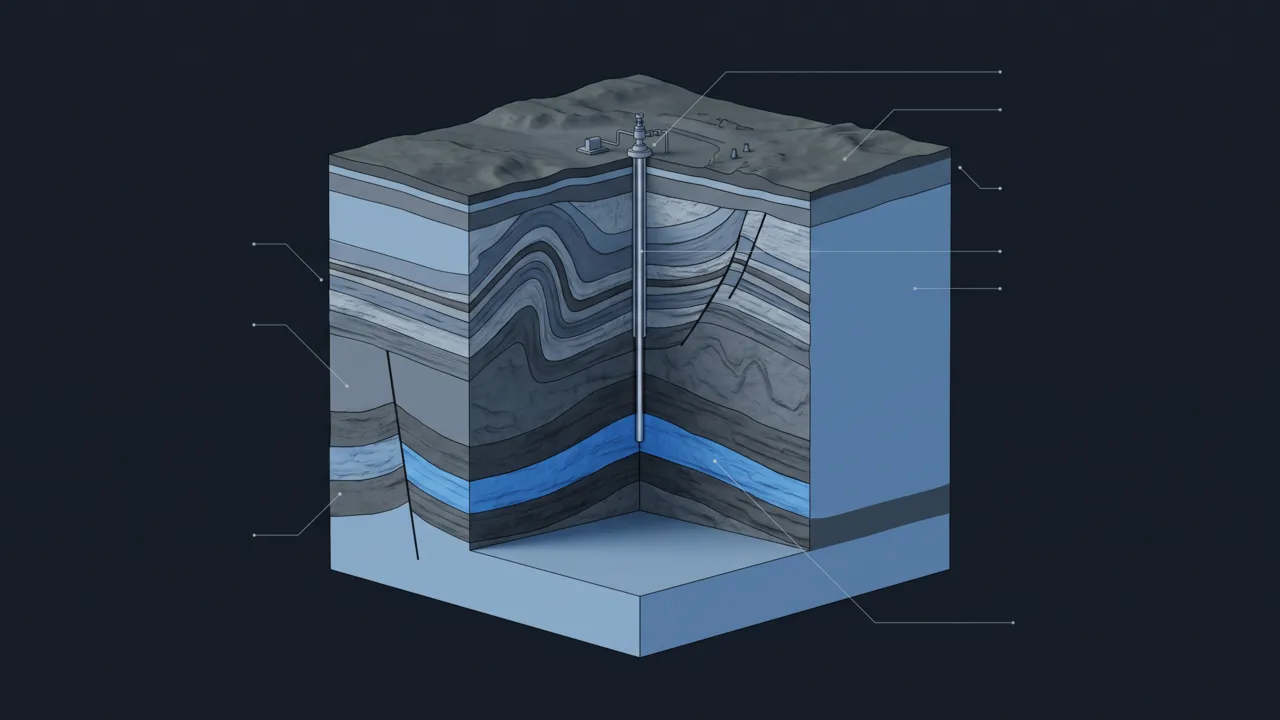
Most of the time, the pressure in underground rock follows a predictable rule: the deeper you go, the higher it gets, at about the rate of a column of salty water. Then a well drills into a zone that breaks the rule. Suddenly the mud weight that worked fine a few hundred feet up isn't enough, and gas starts showing up at the shakers. Engineers spend a lot of effort making sure that surprise never happens. So what causes abnormal formation pressure, and how do drillers predict it?
Abnormal formation pressure is any pore pressure that differs from the normal hydrostatic pressure of formation water at that depth, and it usually means overpressure, where fluids in the rock are pushing harder than expected. The most common cause is undercompaction, where sediments were buried so quickly that water couldn't escape and the trapped fluid now carries part of the rock's weight. Fluid expansion, tectonic squeezing and uplift can also cause it. Drillers predict it before drilling with seismic velocities and offset well data, then confirm it while drilling by watching trends in drilling rate, gas, cuttings and log data.
What Is Normal Formation Pressure?
Normal formation pressure is the pressure you'd expect from a continuous column of formation water from the surface down to that depth. Fresh water exerts about 0.433 psi per foot. Formation water is usually saltier and a bit heavier, so normal pressure gradients typically fall somewhere around 0.433 to 0.465 psi per foot, depending on the basin.
In mud-weight terms, that works out to roughly 8.3 to 9.0 pounds per gallon. A zone that needs much more than that to balance is overpressured. A zone that needs less is underpressured.
Put simply, normal pressure means the pore water is connected, at least over geologic time, to the surface. Abnormal pressure means something has sealed the fluid in or added energy to it.
What Causes Overpressure?
Geologists group the causes into a few families. Most real overpressured zones have more than one at work.
1. Undercompaction (Disequilibrium Compaction)
This is the big one in young, fast-filling basins such as many river deltas. As mud and clay are buried, the weight of new sediment above squeezes water out of them. If burial is slow, the water has time to leave and the shale compacts normally. If burial is fast and the shale is tight, the water can't escape fast enough.
Think of a sponge under a stack of books. Press slowly and the water runs out. Press fast while blocking the edges and the water pushes back, holding up part of the weight. In the ground, that trapped water is overpressured, and the shale stays more porous and less dense than it "should" be at that depth.
2. Fluid Expansion
Fluid expansion happens when the volume of fluid in a sealed rock grows. The main sources are:
- Hydrocarbon generation: as organic matter matures into oil and especially gas, the fluid volume increases.
- Clay transformation: certain clays release bound water as they change with heat and depth.
- Heating: fluids expand as temperature rises with burial, though this effect alone is usually considered minor.
3. Tectonic Compression
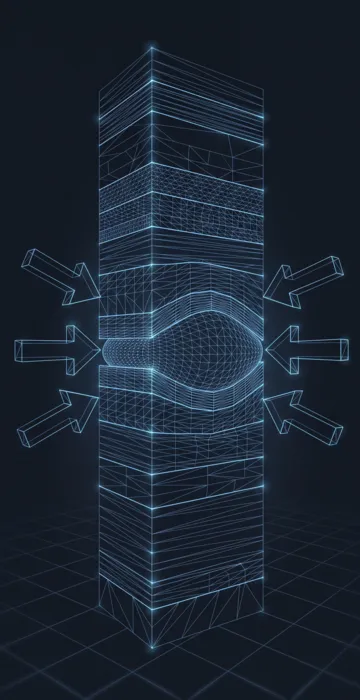
In mountain belts and areas of active faulting, sideways compression squeezes rocks. If fluids can't escape, pressure rises, much as it does with rapid burial but driven by horizontal stress.
4. Uplift and Erosion
When a sealed reservoir is lifted closer to the surface by uplift and erosion, it can keep the pressure it had at its old, deeper position. Now the pressure is high for its current depth.
5. Hydrocarbon Column Buoyancy
Gas and oil are lighter than water. In a tall reservoir, the light column transmits pressure upward with less loss than water would, so the top of a gas column can be noticeably overpressured compared with the water beneath it.
6. Other Causes
Artesian conditions (where a reservoir connects to a recharge area much higher than the rig) and sealing by salt or faults can also create abnormal pressure. Underpressure, the opposite case, is common in depleted fields where production has drained the reservoir.
How Does Pore Pressure Prediction Work Before Drilling?
Pore pressure prediction before drilling builds an expected pressure profile so the well can be designed safely. Engineers and geoscientists typically use:
- Offset well data: mud weights used, kicks or losses taken, pressure tests and logs from nearby wells.
- Seismic velocities: overpressured shale is usually slower (less compacted) than normal shale, so a drop in interval velocity can flag a pressure zone.
- Normal compaction trends: plotting how a property like velocity or density should change with depth, then measuring how far the expected values depart from that trend.
- Basin and geologic models: burial history, sealing layers and source rocks.
Methods such as Eaton's method turn the gap between a measured trend and the normal trend into a pressure estimate. The result guides mud weight, casing points and the kick tolerance for each section.
How Do Drillers Detect Geopressure While Drilling?
Geopressure (another name for overpressure) usually announces itself through a transition zone where pressure climbs over some depth. The warning signs often show up together:
- Rate of penetration increases in shale. Less compacted, overpressured shale drills faster, and the overbalance on bottom shrinks.
- Normalized drilling trend shifts. Tools like the corrected d-exponent remove the effect of weight and rotary speed so a real change in the rock shows up as a shift away from the normal trend.
- Gas readings rise. Background gas climbs, and connection and trip gas show up or get larger.
- Cuttings change. Shale density drops instead of rising, and large, splintery cavings appear.
- Hole conditions worsen. Torque, drag and fill on bottom after connections increase.
- Log trends depart from normal. Resistivity and sonic or density readings from LWD drift away from the normal compaction trend.
- Flowline temperature may change, since overpressured zones can disturb the normal heat profile.
No single sign proves overpressure. A trained crew looks for several moving together, and when in doubt, does a flow check.
Where Is Abnormal Pressure Most Common?
Overpressure shows up in basins all over the world, but it's most familiar in thick, young sedimentary sequences with lots of shale, such as the U.S. Gulf Coast and many deltas and deepwater basins. Those settings combine fast burial with tight shale, which is the recipe for undercompaction.
It also shows up in older basins for different reasons, like gas generation in deep source rocks or sealing by salt. That's why offset well history matters so much. The best predictor of what a new well will see is usually what the wells around it already saw.
What Happens if Overpressure Is Missed?
If the bit enters an overpressured permeable zone with too little mud weight, formation fluids flow into the well. That's a kick. A properly handled kick is shut in and circulated out, but it costs time and carries real risk. A mishandled one can escalate toward a blowout.
There's also the reverse problem. Raising mud weight too much to "be safe" can fracture weaker rock higher up and cause losses. That's why casing is often set at the top of a transition zone, protecting the shallower formations before heavier mud is used.
Is Every Flow on Connections a Sign of Overpressure?
No, and this is where experience matters. Some formations take in mud when the pumps run and give it back when they stop. That behavior, called wellbore breathing, can look a lot like a kick on the pit monitor. Treating it as overpressure leads to raising mud weight, which can make losses worse.
The safe rule is to treat any unexplained flow as a kick until proven otherwise. Shut in, read pressures and let the well-site leadership decide. OSHA's well control eTool lays out why early kick detection and response matter so much.
Abnormal Formation Pressure: Why Predicting It Is Half the Battle
Abnormal formation pressure is pore pressure that departs from the normal hydrostatic gradient, usually on the high side. Undercompaction, fluid expansion, tectonics, uplift and hydrocarbon buoyancy are the main causes.
The defense comes in two layers: predict it before drilling from seismic and offset wells, then confirm it while drilling by watching ROP, gas, cuttings and log trends for a departure from normal. If you're learning this topic, practice plotting a normal compaction trend and spotting where the data peels away from it. That single skill sits at the center of pore pressure work.