BOP Accumulator Unit – Stored Power to Close the Well
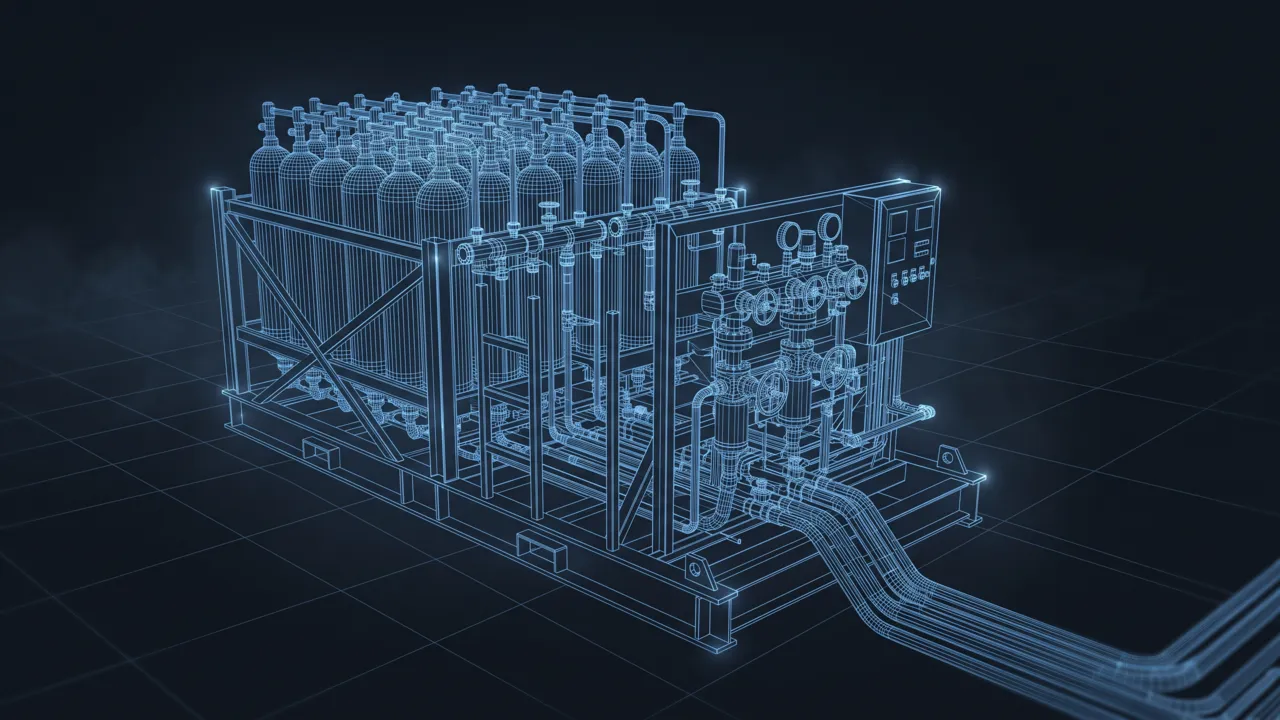
A blowout preventer is only as good as the force behind it. Those huge rams and the annular packer need a lot of hydraulic fluid at high pressure, delivered fast, and they need it at the worst possible moment, maybe while the rig has lost power. So where does that power come from? Every rig keeps it stored and ready in a bank of steel bottles, usually tucked away from the rig floor. What is a BOP accumulator unit, and how does it close the well when everything else fails?
A BOP accumulator unit is a bank of nitrogen-charged bottles filled with pressurized hydraulic fluid that provides the stored energy to open and close the blowout preventer. Pumps charge the bottles ahead of time, typically to a working pressure of around 3,000 psi on many surface systems, so the energy is waiting before anyone needs it. When the driller hits a close function, control valves send that stored fluid to the BOP and the preventer closes in seconds, without waiting for pumps. Because the energy is already stored, the BOP can still be closed if rig power is lost. Many hands call it a Koomey unit, after an early maker.
How Does a BOP Accumulator Unit Work?
The working principle is a lot like a stretched spring. Each accumulator bottle contains a rubber bladder (or a float) separating two sides. One side holds nitrogen gas, which is charged in advance to a set precharge pressure. The other side receives hydraulic fluid.
Here's what happens in order:
- Charging pumps push hydraulic fluid into the bottles.
- The fluid squeezes the nitrogen into a smaller space, raising its pressure.
- When the system reaches operating pressure, the pumps shut off automatically.
- When a BOP function is activated, the compressed nitrogen pushes the fluid out of the bottles and through the control manifold to the preventer.
- As pressure drops, the pumps kick back on to recharge the system.
Think of it this way: nitrogen is the spring and hydraulic fluid is what does the work. The gas never goes to the BOP. It just provides the push.
What Are the Main Parts of a Koomey Unit?
A typical surface accumulator unit, or Koomey unit, includes:
- Accumulator bottles: the storage vessels, mounted in racks.
- Hydraulic fluid reservoir: holds the fluid at atmospheric pressure until the pumps draw it.
- Electric pump: usually the main charging pump.
- Air-driven pumps: a backup that runs on rig air, so charging doesn't depend on a single power source.
- Pressure regulators: reduce bottle pressure to the right level for the ram manifold and the annular preventer.
- Four-way control valves: direct fluid to the open or close side of each BOP function.
- Gauges: show accumulator, manifold and annular pressures.
- Remote panels: let the driller operate the BOP from the rig floor and from a second, safer location.
Some units also carry a backup bank of high-pressure nitrogen bottles that can be used to close the BOP if the accumulator fluid is spent.
Why Are There Different Pressures in a BOP Control System?
The bottles store fluid at full system pressure, but not every part of the BOP wants that much. The BOP control system steps the pressure down for each job:
| Circuit | Purpose | Pressure setting |
|---|---|---|
| Accumulator | Stored energy | Full system pressure |
| Manifold | Operates ram preventers and hydraulic valves | Regulated, commonly lower than accumulator pressure |
| Annular | Operates the annular preventer | Regulated separately and adjusted for conditions |
The annular gets its own regulator because the closing pressure affects how the rubber packer seals and how long it lasts. When stripping pipe through a closed annular, operators often adjust that pressure. The exact settings come from the BOP manufacturer and the rig's procedures.
How Much Fluid Does an Accumulator Need?
An accumulator has to hold enough usable fluid to operate the BOP functions it's designed for and still have pressure left over. "Usable" is the important word. As fluid leaves, the nitrogen expands and pressure falls. Once pressure drops close to the precharge, the bottles can't push any more useful fluid out.
Industry standards, mainly API Standard 53 in the U.S., set how accumulator volume is calculated and what pressure must remain after the required functions are operated. They also set maximum closing times for each preventer, measured in seconds. Offshore operations in U.S. federal waters also fall under BSEE's well control rule, which addresses BOP system requirements.
How Is a BOP Accumulator Tested?
Accumulators are tested regularly because a failure would only show up when it matters most. Common checks include:
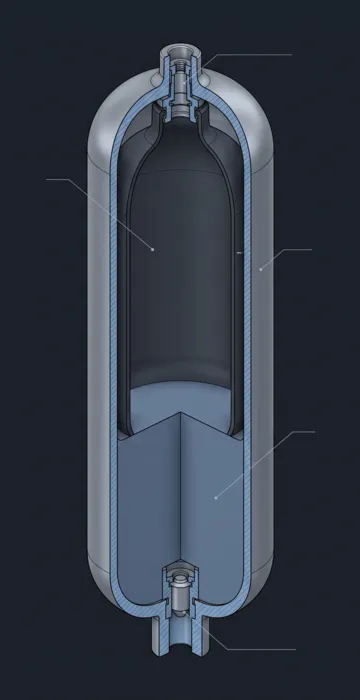
- Precharge check: confirming nitrogen precharge in the bottles is within its range.
- Accumulator drawdown test: shutting off the pumps and operating specified functions on stored fluid alone, then checking remaining pressure.
- Pump capacity test: timing how long the pumps take to recharge the system.
- Function tests: operating each preventer from each control panel and recording closing times.
Leaks, slow closing times or low precharge get fixed before drilling continues. The SLB glossary definition of an accumulator is a handy short reference if you're new to the terms.
How Does the Accumulator Fit Into Well Control?
The accumulator closes the BOP, and the BOP shuts in the well. But a shut-in well still has to be killed safely, and that work happens through the choke line and the choke manifold, where the crew controls back pressure while circulating out the kick. Hydraulically operated valves on the choke line are often powered from the same accumulator.
So the accumulator is the first link in a chain. If it can't close the BOP quickly, nothing downstream matters. That is why rigs place it away from the wellhead, protect it and test it on a schedule.
BOP Accumulator Unit: Stored Power for the Worst Day
A BOP accumulator unit stores hydraulic energy in nitrogen-charged bottles so the blowout preventer can close in seconds, even with rig power gone. Pumps charge it, regulators step the pressure down for each function, and control panels let the crew operate it from more than one place.
If you're learning the system, start by reading the three gauges on the unit and knowing what each one controls. Then sit in on a drawdown test. Watching the pressure fall and recover is the fastest way to understand why the unit is sized the way it is.