Casing Cementing – How a Primary Cement Job Works
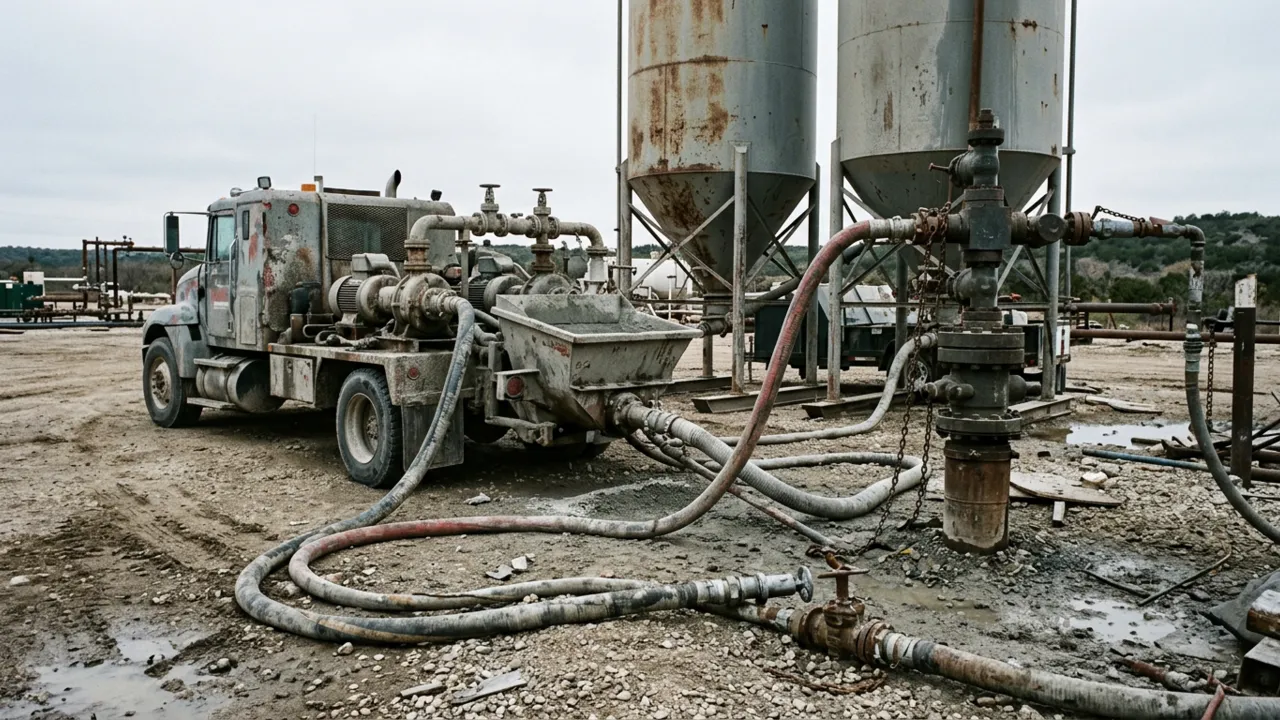
Running casing gets the pipe to bottom. Cementing is what makes it worth anything. Steel hanging loose in a hole doesn't seal off a thing. The cement is what locks the pipe in place and keeps oil, gas and salt water where they belong. And you only get one good shot at a primary job. So how does casing cementing work, and what happens during a primary cement job?
Casing cementing is pumping cement slurry down the inside of the casing and out the bottom, so it flows up and fills the space between the casing and the rock, then letting it harden into a seal. On a primary cement job, most crews use a two-plug method. A bottom plug goes ahead of the cement to wipe the casing clean, and a top plug follows it so mud can push the cement into place without mixing. When the top plug lands on the float collar, pressure jumps, and the crew knows the cement is where it should be. Then the well waits on cement.
Why Is Casing Cementing So Important?
Cement does three big jobs, and every one of them matters for the life of the well.
- Zonal isolation. It seals off one formation from another so fluids can't travel up the outside of the casing.
- Support. It holds the casing in place and carries part of its weight.
- Protection. It shields the casing from corrosive formation fluids.
The first one is the big deal. A bad seal can let gas migrate to the surface, let salt water into freshwater zones, or let one zone bleed into another. Fixing a bad primary job later with a squeeze job is slow, costly and not always successful. That's why the cementing crew and the rig take this job so seriously.
How Does a Primary Cement Job Work?
A primary cement job is the first cement job on a casing string, done right after it's run. Here's the usual sequence with the two-plug method:
- Circulate the hole. With casing on bottom, the crew pumps mud around to clean out cuttings and get the mud thin and moving.
- Rig up the cement head. A cementing head with the plugs loaded goes on top of the casing, and the cement unit hooks up.
- Pump spacer. A spacer or flush goes first to separate the mud from the cement and clean the hole wall.
- Drop the bottom plug. It wipes mud off the inside of the casing ahead of the cement.
- Pump cement. A lead slurry often goes first, followed by a heavier, stronger tail slurry for the bottom of the hole.
- Drop the top plug. This solid plug separates the cement from the fluid used to push it.
- Displace. Mud or water pumps the top plug down, pushing the cement ahead of it.
- Bump the plug. The top plug lands on the bottom plug at the float collar, and pressure rises sharply.
- Check floats. Bleed off the pressure and make sure the float valves hold and nothing flows back.
- Wait on cement. The cement sets before any more work happens.
What Is Two-Plug Cementing?
Two-plug cementing uses a bottom plug and a top plug to keep the cement clean and in the right place.
The bottom plug has a thin diaphragm in it. When it lands on the float collar, pump pressure ruptures that diaphragm, and the cement flows through the plug, out the float shoe and up the annulus. The top plug is solid. When it lands on the bottom plug, nothing gets past it, and that's the bump.
Why bother with plugs at all? Mud and cement don't mix well. Mud contaminates cement and keeps it from setting strong. The plugs keep the cement from mixing with fluid on either side as it travels down thousands of feet of pipe.
The displacement volume is calculated ahead of time from the casing size and length. The crew counts strokes or barrels on the way down. If the plug bumps right on the calculated number, that's a good sign. If it doesn't bump, or bumps early, something's off, and the cementer and company man have to figure out why before deciding what to do.
What Is a Well Centralizer?
A well centralizer is a device clamped or fixed onto the outside of the casing to keep it near the center of the hole. Without them, casing lies against the low side of the hole, especially in deviated and horizontal wells.
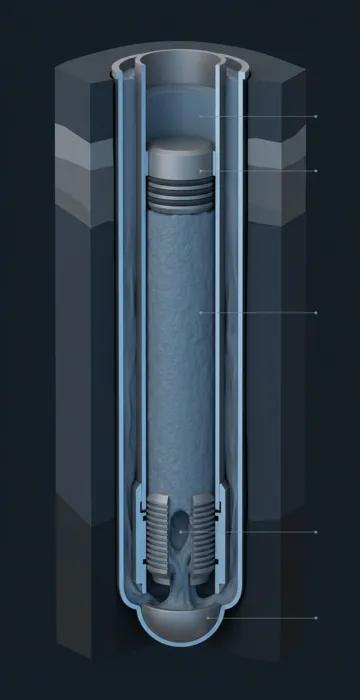
That matters for cement. When the casing sits against the wall, the gap on the narrow side is tiny. Mud gets stuck there, and the cement flows past on the wide side instead. That leaves a mud channel, a path along the casing with no cement seal. One channel can ruin zonal isolation.
Types of Centralizers
- Bow-spring centralizers: flexible steel bows that flex to pass tight spots and spring back to push the pipe off the wall.
- Rigid or solid centralizers: fixed blades that hold standoff firmly, often used in deviated holes and cased sections.
- Semi-rigid designs that fall somewhere in between.
Engineers run software models to decide how many centralizers to use and where. The goal is enough standoff for the cement to fill all the way around, without so many that the casing won't run to bottom. In horizontal wells, where gravity pulls the pipe down hard, centralizer placement is especially important.
What Makes a Good Cement Job?
A lot of the job's success is decided before the first barrel of cement gets pumped. Here's what helps:
- A clean, well-conditioned hole with no cuttings beds.
- Mud thinned out so it's easier for cement to push it out of the way.
- Good centralization for even standoff.
- A spacer designed to clean the hole wall and keep mud and cement apart.
- Moving the pipe, by rotating or reciprocating, which helps break up mud channels.
- A cement slurry designed for the hole's temperature, pressure and timing.
Here's what surprises new hands. Cement isn't just poured, it's engineered. Lab tests check how long the slurry stays pumpable at downhole temperature and how strong it gets. A slurry that sets too early can leave cement in the pipe, and one that sets too slow can let gas move through it.
How Do You Know the Cement Job Worked?
There are a few ways crews check:
- Plug bump at the expected volume and floats that hold.
- Cement returns at surface, when the job is supposed to circulate cement all the way up, as is common on surface casing.
- Pressure tests on the casing after the cement sets.
- A formation integrity test or leak-off test after drilling out the shoe.
- Cement evaluation logs, like a cement bond log, run on wireline to look at the bond behind the pipe.
If something looks wrong, the fix is usually remedial cementing, often a squeeze job, where cement is forced into the gap through perforations or the shoe. It works, but it's never as good as getting it right the first time.
What Can Go Wrong During Casing Cementing?
The most common problems include:
- Lost circulation. Cement is heavy, and weak formations can break down and take it.
- Channeling. Poor centralization or thick mud leaves gaps with no cement.
- Gas migration. Gas moves into the cement while it's setting and leaves a path behind.
- Equipment trouble. A failed float, a plug that won't release or a pump problem mid-job.
Most of these come back to planning and hole prep. A rushed cement job is a gamble with the whole well.
What Is Stage Cementing?
Sometimes one cement job can't cover the whole length of the casing. The column of cement would be so heavy it could break down a weak zone and get lost. In those cases, crews use stage cementing.
A stage tool, also called a DV tool, is placed in the casing string partway up. The first stage cements the bottom section through the shoe like a normal job. Then the stage tool is opened, and a second stage of cement is pumped out through it to cover the upper section. It takes longer, but it keeps the pressure on the weak zones down.
Does Cementing Change for Directional Wells?
Yes. In deviated and horizontal holes, casing wants to lie on the low side, cuttings settle into beds, and getting even cement all the way around is harder. Centralizers, hole cleaning and pipe movement all matter more. If you want to understand why wells bend and turn in the first place, read about directional drilling and how crews steer the bit.
So, How Does Casing Cementing Work? Seal It Right the First Time
Casing cementing pumps cement down the casing, out the shoe and up the annulus, using a bottom plug and a top plug to keep it clean and in place. When the top plug bumps, the cement's where it belongs, and the well waits for it to set.
Centralizers, a clean hole and a well-designed slurry make the difference between a seal that lasts decades and one that leaks. If you're on the floor during a cement job, pay attention to the volumes, the pressures and the bump. That's the moment the casing starts doing its job.