Choke Line vs. Kill Line – What's the Difference?
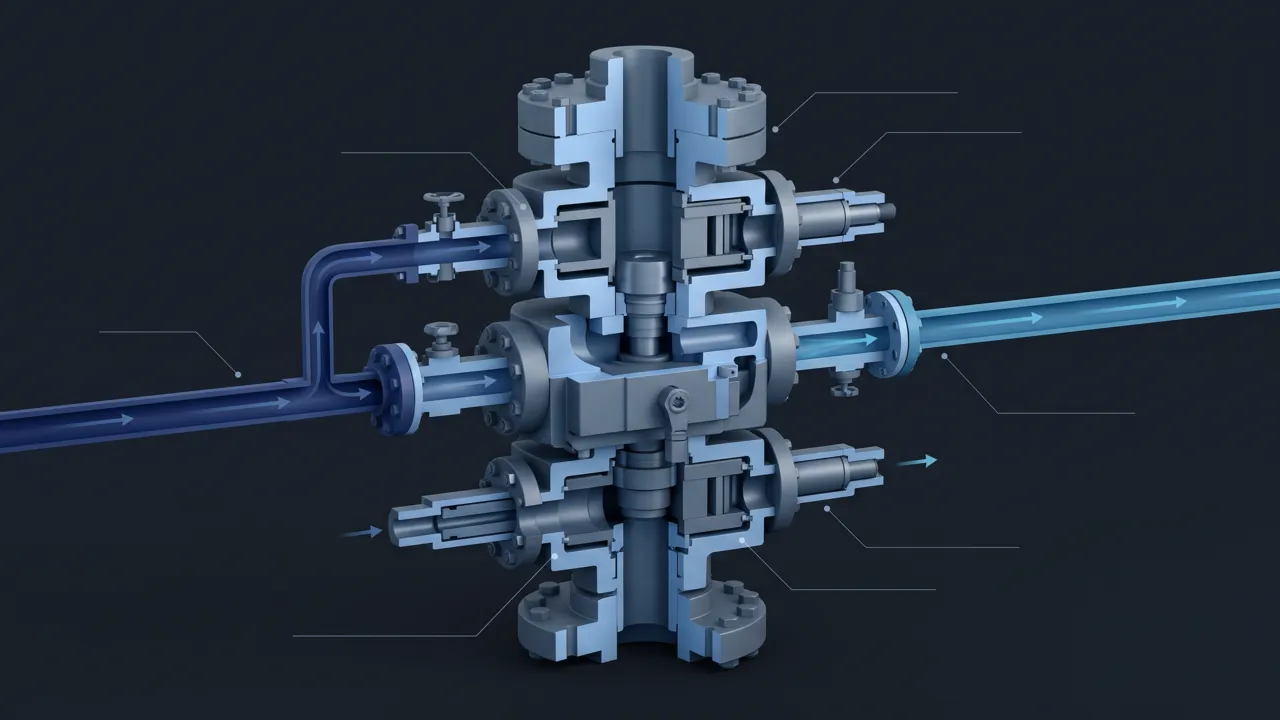
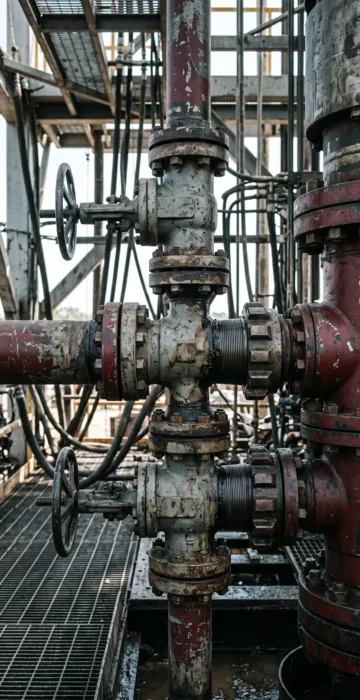
Look closely at a blowout preventer stack and you'll see heavy pipes coming off its sides, each with a pair of big valves. When the well is shut in, those pipes become the only way in or out. One is the choke line and the other is the kill line. They look almost identical, and the names don't help much if you're new. So what's the difference between a choke line and a kill line?
The choke line carries fluid out of the well from below the closed BOP to the choke manifold, while the kill line carries fluid into the well from the pumps to below the closed BOP. In other words, the choke line is the exit and the kill line is the entrance. Both connect to side outlets on the BOP stack, and both are rated for the full working pressure of the stack. The choke line is used to circulate out a kick while holding back pressure with an adjustable choke. The kill line pumps into the annulus when the drill string can't be used.
What Is the Kill Line Meaning in Drilling?
The kill line is a high-pressure line that lets the crew pump fluid into the wellbore below the closed preventers. "Kill" refers to killing the well, which means restoring enough hydrostatic pressure to stop formation fluid from flowing in.
Most of the time, a kick is killed by pumping heavy mud down the drill string, not the kill line. The kill line earns its keep in special cases:
- Bullheading: pumping fluid straight down the annulus to push influx back into the formation.
- No pipe in the hole, or the string is plugged, so you can't pump down it.
- Pumping into the annulus to fill the hole or balance pressures in certain well control methods.
- Serving as an alternate line to monitor or bleed pressure if the choke line has a problem.
The kill line is usually connected to the rig's mud pumps through the standpipe manifold, and often to a cementing unit or a dedicated high-pressure pump as a backup.
What Does the Choke Line Do?
The choke line carries returns from the annulus, below the closed BOP, to the choke manifold. There, an adjustable choke restricts the flow. By opening or closing the choke, the operator controls the back pressure on the well, which keeps bottom-hole pressure steady while the kick is pumped out.
A good way to picture it: during a kill, the choke is the steering wheel for bottom-hole pressure. The choke line is the road that gets the fluid there.
From the choke manifold, returns go to the mud gas separator, where gas is vented away from the rig, and the mud goes back to the pits.
How Are the Choke and Kill Lines Routed?
Here's the basic routing for a surface BOP stack, traced as flow during a well control operation:
- Pumps send fluid through the standpipe manifold to the kill line (when the kill line is used).
- The kill line enters a BOP side outlet below at least one closed preventer.
- Well fluids leave through a side outlet on the opposite side into the choke line.
- The choke line runs to the choke manifold.
- Returns pass through the adjustable choke to the mud gas separator.
- Gas goes to the vent or flare; mud returns to the pits.
The side outlets are either on a drilling spool (a short spool with flanged outlets placed in the stack) or on the body of a ram preventer. Each line usually has two valves right at the stack: an inner manual valve and an outer valve. On the choke line, the outer valve is commonly hydraulically operated (often called the HCR valve), so the crew can open it remotely during a shut-in. The kill line usually has a check valve as well, which keeps well pressure from flowing back toward the pumps.
Choke Line vs Kill Line Side by Side
| Feature | Choke line | Kill line |
|---|---|---|
| Flow direction | Out of the well | Into the well |
| Connects to | Choke manifold | Pumps, via standpipe manifold or cement unit |
| Main job | Circulate out kicks under back pressure | Pump into the annulus when the string can't be used |
| Typical outer valve | Hydraulically operated | Often manual, with a check valve |
| Pressure rating | Matches the BOP stack | Matches the BOP stack |
Are Choke and Kill Lines Different Offshore?
On floating rigs with a subsea BOP, the choke and kill lines run from the stack on the seabed up to the rig, attached to the outside of the riser. They're long, so friction in them affects well control calculations, especially in deep water.
Subsea systems are often built so the choke and kill lines can swap roles. Either line can carry returns to the choke manifold, and either can be pumped into. That redundancy matters when you're working through thousands of feet of water.
Why Do These Lines Matter So Much?
When the BOP is closed, the choke and kill lines are the only controlled paths in and out of the well. A leak, plugged line or valve in the wrong position can turn a routine shut-in into a serious incident. Uncontrolled gas reaching the surface is one of the main causes of oil rig explosions, and these lines are part of the system built to stop that from happening.
That's why both lines are pressure tested with the rest of the blowout preventer system, and why valve line-ups are checked and posted on the rig floor.
Choke Line vs Kill Line: The Way Out and the Way In
The simplest way to remember it: the choke line takes fluid out of the well to the choke, and the kill line puts fluid into the well from the pumps. Both tie into the BOP below the closed rams, both are rated to full stack pressure, and both are protected by valves at the stack.
If you're learning well control, trace both lines on your own rig, from the BOP to where they end. Knowing exactly which valve opens which path is one of the most practical things you can learn before you ever need it.