What Is Drilling Mud? – What It Does and Why Rigs Need It
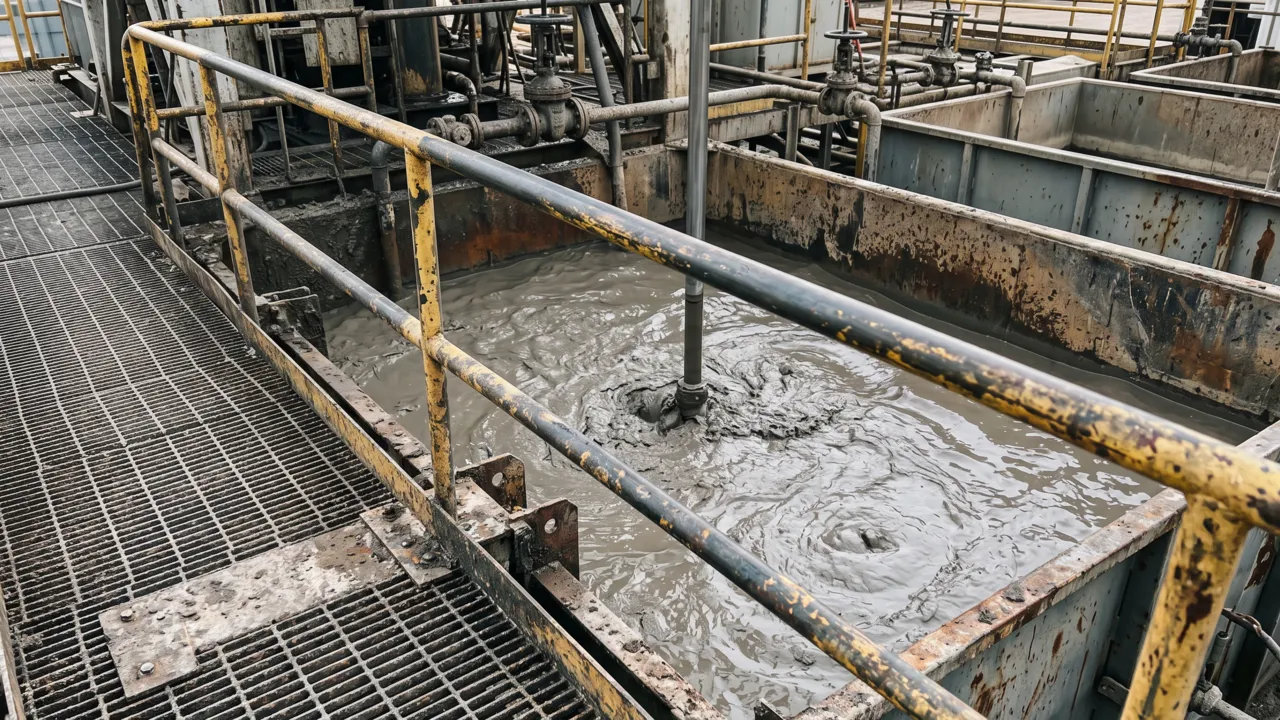
Stand next to a working rig and you will see a lot of steel, but the thing doing the most work is a liquid you mostly never see. It goes down the pipe, out the bit and back up the hole, over and over, for the whole life of the well. People outside the industry usually call it "the mud" and assume it is just dirty water. It is a lot smarter than that. So what is drilling mud, and why can't a rig drill without it?
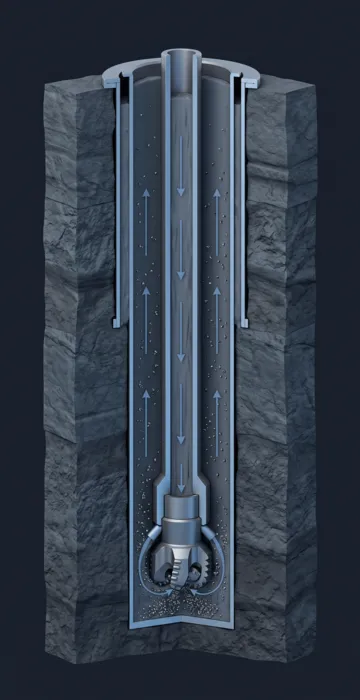
Drilling mud is the engineered fluid that a rig pumps down the drill string, out through the bit and back up the annulus to the surface while a well is drilled. Its main jobs are to carry rock cuttings out of the hole, hold back formation pressure, keep the hole wall stable, and cool and lubricate the bit. It also seals porous rock, suspends cuttings when the pumps stop, and carries power and data to tools near the bit. Most mud is water-based, but oil-based and synthetic-based muds are used in tougher wells. Without it, the hole would pack off with cuttings, collapse, or take a kick within hours.
What Are the Main Functions of Drilling Fluid?
I like to teach mud as a worker with a long job description. Here are the jobs, roughly in order of how much trouble you get when the mud fails at them:
- Remove cuttings from the hole. The bit makes rock chips nonstop, and the mud carries them up the annulus to the shale shakers.
- Control formation pressure. The weight of the mud column pushes back on the oil, gas and water in the rock so they stay put.
- Keep the wellbore stable. Mud supports the hole wall mechanically and chemically, so shale does not swell, slough or cave in.
- Seal permeable formations. Mud builds a thin, low-permeability filter cake on porous rock, which limits fluid loss into the formation.
- Suspend cuttings when circulation stops. A good mud gels up when it sits still, so cuttings hang in place instead of settling onto the bit.
- Cool and lubricate the bit and drill string. Friction downhole makes a lot of heat, and the mud carries it away.
- Transmit hydraulic energy and data. Mud flow drives mud motors, powers jet nozzles at the bit and carries measurement-while-drilling pulses to the surface.
Here's the key idea: all of these jobs happen at the same time, and many of them pull in opposite directions. A thicker mud carries cuttings better, but it also takes more pump pressure. A heavier mud controls pressure better, but too much weight can fracture the rock. Mud engineering is the art of finding the balance.
Why Is Drilling Mud Important?
Drilling mud is important because it is the first line of defense in well control and the main reason a hole stays open long enough to finish it. Think of it as the bloodstream of the well. The mud pump is the heart, the drill string is the artery going down, and the annulus is the vein coming back. If the blood stops moving or turns bad, everything downstream gets sick fast.
The well control part is the one we take most seriously. When the pressure of the mud column is lower than the pressure in a formation, fluids from that rock can flow into the wellbore. That event is called a kick, and an uncontrolled kick can become a blowout. The blowout preventer is the backup. The mud is the primary barrier.
The hole cleaning part is the everyday grind. If cuttings pile up in the annulus, the pipe can get stuck, the bit can grind the same chips over and over, and pump pressure climbs. A lot of expensive drilling problems start with mud that was not doing its basic cleaning job.
What Is Drilling Mud Made Of?
Every drilling mud has a base fluid, plus solids and chemicals added to give it the right properties. The base fluid is called the continuous phase. Everything else is either dissolved in it or suspended in it.
Common ingredients include:
- Base fluid: fresh water, brine, diesel, mineral oil or a synthetic oil.
- Bentonite: a clay that swells in water and gives viscosity and gel strength.
- Barite: a heavy mineral (barium sulfate) used to raise mud density.
- Polymers: long-chain additives that build viscosity or cut fluid loss.
- Salts: potassium chloride or calcium chloride, used to calm reactive shale or adjust density.
- Thinners and deflocculants: chemicals that keep clay from clumping and thickening the mud.
- pH and alkalinity control: caustic soda or lime.
- Lost circulation material: fibers, flakes or ground nut shells used to plug fractures that are stealing mud.
Oil-based systems add emulsifiers and wetting agents so that water droplets stay suspended in the oil and solids stay oil-wet. The exact recipe changes from well to well, and often from one hole section to the next.
Water-Based vs Oil-Based Mud: What's the Difference?
The big split in mud types is the base fluid. Water-based mud (WBM) uses water or brine as the continuous phase. Oil-based mud (OBM) uses diesel or mineral oil, with brine droplets emulsified inside it. Synthetic-based mud (SBM) works like oil-based mud but uses a synthetic base fluid designed to be less toxic, which matters a lot offshore.
| Feature | Water-based mud | Oil- or synthetic-based mud |
|---|---|---|
| Cost per barrel | Lower | Higher |
| Shale stability | Good with inhibitors, but shale can still swell | Excellent, since water does not touch the shale directly |
| Lubricity | Moderate | High, helpful in long horizontal wells |
| High temperature | Polymers can break down | Generally more stable |
| Environmental handling | Simpler disposal | Cuttings need more careful handling |
| Kick detection | Gas mostly stays as bubbles | Gas can dissolve in the oil and hide until it nears the surface |
So which is better? Neither, in general. Water-based mud is the default for many shallow and simple wells. Oil-based or synthetic mud earns its higher cost in reactive shale, high-temperature wells and long laterals where torque and drag become the limiting problem.
There is also a third family: air, mist and foam. These "pneumatic" fluids are used in hard rock or in formations that cannot hold a full column of liquid. They drill fast, but they give up the pressure control that a liquid column provides.
What Properties Do Mud Engineers Control?
A mud engineer (sometimes called a mud man or fluids engineer) tests the mud on location, usually several times a day, and adjusts it with additives. The main properties are:
- Density (mud weight): measured in pounds per gallon (ppg) and the main tool for pressure control.
- Viscosity: how thick the mud is. Engineers track funnel viscosity, plastic viscosity and yield point.
- Gel strength: how well the mud builds structure at rest, which keeps cuttings suspended.
- Fluid loss (filtration): how much liquid the mud leaks into a filter under pressure, and how thick the filter cake gets.
- Solids content: how much drilled rock and barite is in the system.
- pH and chemistry: alkalinity, chlorides and hardness for water-based mud; electrical stability and oil-water ratio for oil-based mud.
Of these, density gets the most attention because it ties directly to well safety. If you want the full picture of how drillers pick the right number, our article on mud weight walks through the hydrostatic pressure formula with a worked example.
Viscosity is the property newcomers tend to misunderstand. Drilling mud is a "shear-thinning" fluid. It gets thinner when it moves fast (like through bit nozzles) and thicker when it moves slowly (like in a wide annulus). Ketchup does the same thing. That behavior is exactly what you want: easy to pump, but good at carrying chips where flow is lazy.
How Does Drilling Mud Carry Cuttings to the Surface?
Mud carries cuttings by flowing up the annulus faster than the cuttings sink. Each chip of rock wants to fall because it is denser than the mud. The upward flow and the mud's viscosity drag it up anyway. Engineers call the fall rate "slip velocity," and the goal is to keep annular velocity comfortably above it.
Vertical wells are the easy case. In high-angle and horizontal wells, cuttings only have to fall an inch or two to land on the low side of the hole and form a bed. That bed is a classic cause of stuck pipe. Crews fight it with higher flow rates, pipe rotation, carefully tuned mud rheology and extra circulating time before trips.
Once the cuttings reach the surface, the job flips. Now we want them out of the mud as fast as possible, before they get ground into fine particles that are hard to remove. That is the job of the shale shakers and the rest of the solids control equipment.
How Is Drilling Mud Mixed and Maintained on a Rig?
Mud is mixed in steel tanks called mud pits. Dry products like bentonite and barite are added through a hopper, where a jet of mud pulls the powder in and mixes it. Liquid additives go in through chemical barrels or directly into the pits. Agitators and mud guns keep everything stirred so solids do not settle in the corners.
Mud is not mixed once and forgotten. As the well gets deeper, the system grows in volume, picks up drilled solids and changes temperature. The mud engineer and the derrickhand (who often runs the pits) keep testing and treating it. A typical routine looks like this:
- Check mud weight and funnel viscosity at the pits on a regular schedule.
- Run a fuller test set (rheology, fluid loss, solids, chemistry) at set intervals.
- Compare results with the mud program for that hole section.
- Add products, dilute with base fluid, or adjust solids control equipment to correct the trend.
- Record everything in the daily mud report so the next tour knows what changed.
What Happens When Drilling Mud Goes Wrong?
When the mud is off, the well tells you, usually through a handful of familiar problems. Here are the common ones and the mud property usually behind them:
- Kick: mud weight too low for the formation pressure.
- Lost circulation: mud weight too high, or the formation is naturally fractured, so mud flows into the rock.
- Stuck pipe: poor hole cleaning, a thick filter cake causing differential sticking, or unstable shale.
- Tight hole and swelling shale: the wrong chemistry for a reactive formation.
- High pump pressure: mud too thick or loaded with fine solids.
- Bit balling: sticky clay packing onto the bit, often in water-based mud.
The upside is that mud is adjustable. You cannot change the rock you are drilling, but you can change the fluid in hours. That is why good rigs treat the mud program as a living plan, not a document written once in the office.
For a plain-language second view on mud types and functions, Rigzone has a helpful explainer on how drilling fluids work.
What Is Drilling Mud, Really? The Liquid Engineer in the Hole
Drilling mud is the fluid that makes rotary drilling possible. It carries cuttings out, holds formation pressure back, keeps the hole stable, cools the bit, and carries power and data downhole. It is designed, tested and adjusted all day long, because every hole section asks something different of it.
If you remember just one thing, make it this: the mud is the primary well control barrier and the main hole cleaning tool at the same time. Most of the properties engineers fuss over (weight, viscosity, gels, fluid loss) exist to keep those two jobs in balance.
A good next step is learning how mud weight is calculated, because once you understand hydrostatic pressure, the rest of mud engineering starts to click.