Electric Submersible Pumps – How ESPs Lift Oil
Some wells make a little oil and a lot of patience. Others can deliver a flood of fluid, mostly water with oil mixed in, and a pump jack nodding away at surface just can't keep up. For those wells, the pump goes all the way downhole, motor and all, and runs on electricity sent down a cable. What is an electric submersible pump, and how does an ESP lift oil?
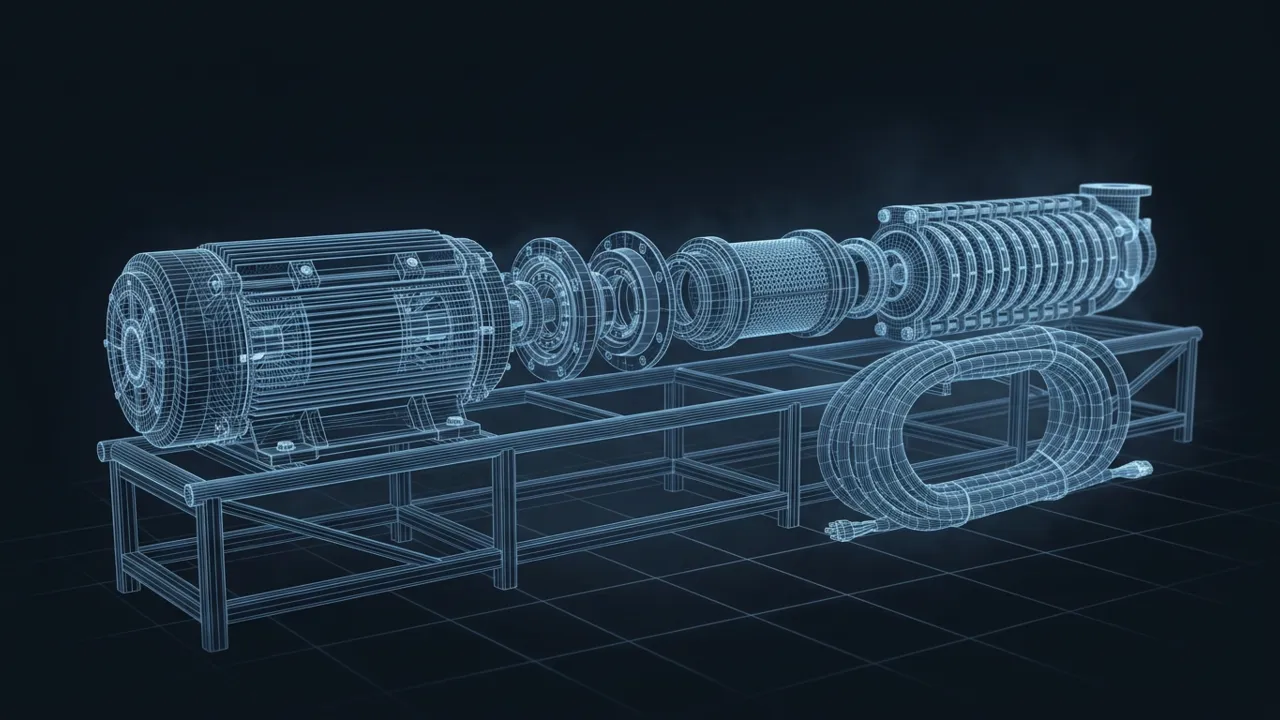
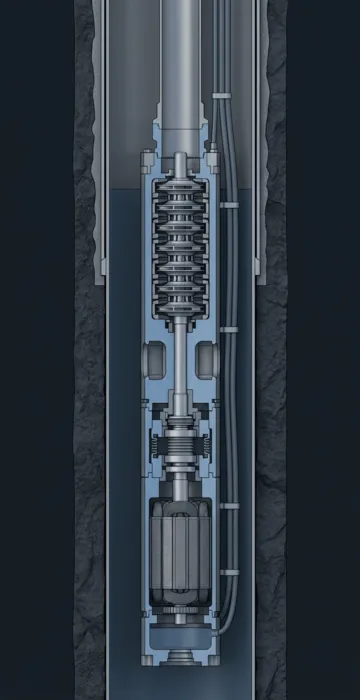
An electric submersible pump (ESP) is an artificial lift system that puts an electric motor and a multistage centrifugal pump deep in the well, below the fluid level, to push oil and water up the tubing. Power comes from surface through a heavy armored cable strapped to the tubing. The motor spins a shaft that turns dozens or even hundreds of stacked impellers, and each stage adds a little pressure until the fluid has enough push to reach surface.
ESPs are known for moving large volumes and handling deep wells. Their weak spots are free gas, sand and heat, and a failed ESP usually means pulling the whole string with a rig.
What Are the ESP Components?
An ESP string has a downhole section and a surface section. Downhole, from the bottom up:
- Downhole sensor (gauge). Reads intake pressure, temperature and vibration, and sends data up the power cable.
- Motor. A long, slim electric motor filled with oil. It's cooled by well fluid flowing past it on the way to the pump.
- Seal section (protector). Keeps well fluid out of the motor, balances pressure and carries the pump's thrust load.
- Intake or gas separator. Where fluid enters the pump. A gas separator spins or diverts free gas away so the pump gets mostly liquid.
- Multistage centrifugal pump. Stacked impeller and diffuser stages that build pressure.
- Discharge head. Connects the pump to the production tubing.
- Power cable. Runs from surface down the outside of the tubing, with a flat motor lead extension past the pump.
At surface you'll find the wellhead penetrator (where the cable passes through the wellhead seal), a junction box that lets gas escape from the cable before it reaches the electrical equipment, a transformer, and a switchboard or variable speed drive (VSD) that controls the motor.
The SLB glossary entry on the electric submersible pump has the formal definition.
How Does an ESP Actually Lift Oil?
Each pump stage has a spinning impeller and a fixed diffuser. The impeller flings fluid outward and speeds it up. The diffuser slows it down again and turns that speed into pressure, then guides it into the next impeller. Stack enough stages and you get enough pressure to lift a long fluid column to surface and into the flowline.
The number of stages is designed for each well, based on how deep the pump sits, how much fluid you need to move, and the pressure at the wellhead. A VSD lets operators speed the pump up or slow it down to match what the well can deliver.
How Is an ESP Installed in a Well?
An ESP goes in on the bottom of the production tubing, run by a workover rig or pulling unit. The crew makes up the downhole units on the rig floor, from the sensor and motor up to the pump, and fills the motor and seal section with oil per the vendor's procedure.
Then the tubing goes in the hole with the power cable spooled off a reel beside the rig. The cable is banded or clamped to the tubing every joint or so. Run speed matters here. Banging the cable on the wellhead or dragging it past tight spots is a quick way to damage insulation and set up an early failure.
At surface, the cable passes through the wellhead penetrator, the tree goes on, and the electrical crew hooks up the junction box and drive. The first start is watched closely, with amps, intake pressure and flow checked against the design.
ESP vs Rod Pump: Which Is Better?
It depends on the well. Here's the honest comparison.
| ESP | Rod pump | |
|---|---|---|
| Rate | High volume | Low to moderate |
| Depth | Deep wells are fine | Rods limit very deep wells |
| Deviated wells | Handles them well (no rods) | Rod and tubing wear |
| Gas and sand | Sensitive to both | Gas causes trouble; tolerates some sand |
| Surface footprint | Small; electrical gear only | Large pumping unit |
| Repair | Rig needed to pull pump and cable | Pulling unit; simpler repairs |
| Pump-down ability | Good, but needs fluid flow to cool the motor | Can pump wells down very low |
Many wells use both over their life. An ESP handles the high early rates, then a rod pump takes over once the well settles down.
What Makes an ESP Fail?
ESPs don't like surprises. Each of these has a usual suspect and a good place to start. Your production engineer and the ESP vendor own the fix, but these patterns show up again and again.
- Gas locking. Amps drop and swing, and flow falls off. Free gas fills the pump stages. Check intake pressure, consider a gas separator or handler, and look at setting depth.
- Pump-off. Intake pressure falls toward zero and the motor runs hot. The pump is outrunning the well. Slow it down with the VSD.
- Sand and solids. Rising vibration, falling efficiency. Sand erodes stages and bearings. Check for sand production after frac jobs.
- Electrical failures. Ground faults or tripping. Heat, gas and age attack cable insulation and penetrators.
- Scale and corrosion. Gradual loss of flow and higher amps. Chemical treatment programs help.
- Overheating. Not enough fluid moving past the motor to cool it. A shroud or proper setting depth fixes this.
The mistake that kills ESPs: restarting an ESP over and over after it trips without finding out why. Each hard start stresses the motor and cable. Check the data and talk to the engineer before you push the button again.
How Long Does an ESP Last?
Run life varies a lot. A well-designed ESP in a clean, stable well can run for years. The same pump in a gassy, sandy well right after a frac job might fail in weeks. That's why ESP design and monitoring get so much attention.
The biggest factors are accurate well data, the right pump size, good gas and sand handling, and how carefully the unit is started and run. Downhole sensors and VSDs have helped operators catch problems early and stretch run life.
When Should You Look at Something Other Than an ESP?
If a well makes a lot of gas, a lot of sand, or simply doesn't make enough fluid to keep an ESP cool, other lift methods may fit better. Gas lift is a common alternative in gassy or sandy wells, especially where a gas supply and compression already exist. Rod pumps take over in many lower-rate wells.
Is an Electric Submersible Pump the Right Lift for Your Well?
An electric submersible pump puts a motor and a multistage centrifugal pump downhole to move large volumes of fluid. The main ESP components are the sensor, motor, seal section, intake or gas separator, pump, cable and surface drive.
ESPs shine in high-rate, deep and deviated wells. Gas, sand and heat are their enemies, and repairs need a rig.
If you're considering one, start with good well data and an honest look at gas and sand. Get those right and an ESP can be one of the hardest-working pieces of equipment in the field.