What Is Well Completion? – From Drilled Hole to Producing Well
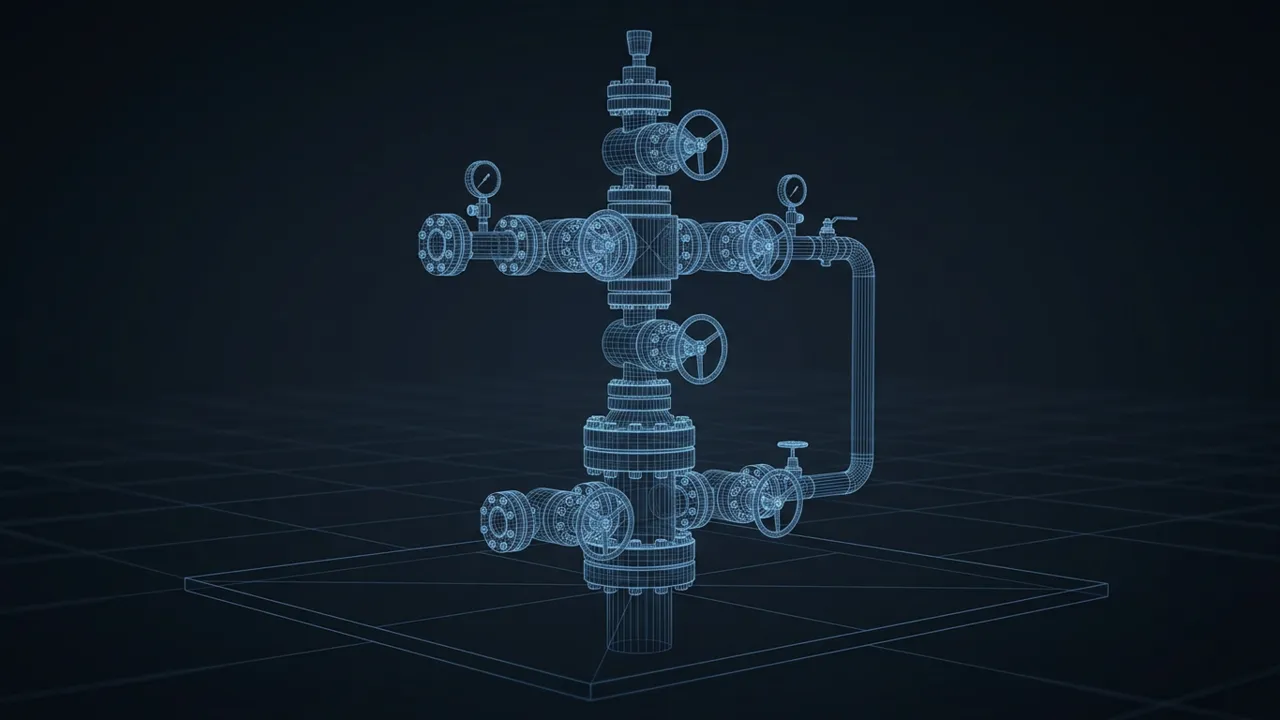
The drilling rig just moved off location. The hole is drilled, the casing is cemented, and on paper the well looks great. But not a single barrel has come out of it yet, and it won't until a whole new crew shows up and finishes the job. That job has a name, and it covers a lot more than most people think. What is well completion, and what actually happens between a drilled hole and a producing well?
Well completion is the set of operations that turns a drilled, cased wellbore into a well that can safely produce oil or gas (or inject fluids). It usually includes running and cementing the production casing, connecting the well to the reservoir by perforating or leaving an open hole, stimulating the rock if needed (often by hydraulic fracturing), running production tubing and packers, and installing the wellhead and Christmas tree.
The goal is a well that flows at a good rate, keeps sand and water under control, and can be shut in or worked on safely for years. The exact steps depend on the rock, the pressure, the fluids and whether the well is vertical or horizontal. When the work is done, the operator files a well completion report with the regulator.
What Are the Steps of Well Completion?
Every field has its own playbook, but most well completion jobs follow this general order:
- Run and cement the production casing (or liner) across the target zone.
- Check the cement job, often with a cement bond log run on wireline.
- Clean out the casing and displace the well to completion fluid.
- Perforate the casing and cement to open a path to the reservoir.
- Stimulate the formation if needed, by acid treatment or hydraulic fracturing.
- Clean out the well and flow back treatment fluids and debris.
- Run production tubing, packers and any downhole equipment like safety valves or lift gear.
- Nipple up the wellhead and Christmas tree and pressure test everything.
- Flow test the well and connect it to production facilities.
- File the completion report with the state or federal regulator.
Some steps swap order. On many shale wells, for example, the frac happens in stages, with plugs and perf guns run between each one, before any tubing goes in. On an open-hole completion, there's no perforating at all.
Why Can't a Well Just Produce After It's Drilled?
Because a freshly drilled hole is built for drilling, not producing. The casing that holds the hole open also seals off the reservoir, and the drilling mud has packed the rock face with filter cake and fines.
Here's what you'd see if you tried to flow it raw: little or no flow, unstable pressures, maybe sand and water coming with whatever fluid does show up. There's no tubing to carry the fluid efficiently, no packer to protect the casing, and no tree to control it at surface.
Completion fixes all of that. It opens the reservoir in a controlled way, gives the fluid a clean path to surface, and puts pressure barriers in place so the well can be managed safely.
What Are the Main Well Completion Types?
Completion types are usually sorted by how the wellbore meets the reservoir. Here are the big ones you'll hear about.
Open-hole completion
The casing is set just above the producing zone, and the zone itself is left uncased. It's simple and gives the most open flow area, but it only works in hard, stable rock that won't collapse or make sand. You also give up control over which part of the zone produces.
Cased-hole (perforated) completion
This is the most common type on land. Casing is run and cemented through the reservoir, then perforating guns shoot holes through the casing and cement into the rock. You can choose exactly which intervals to open and isolate water or gas zones later.
Liner completion
Instead of running casing all the way to surface, a liner hangs from the bottom of the previous casing string. It saves steel and can be cemented and perforated, or left uncemented with slots or screens.
Sand control completions
Weak sandstones can fail and send sand into the well, which erodes equipment and plugs flow. Gravel packs, frac packs and standalone screens hold the sand back while letting fluid through. These are common offshore and in younger, softer formations.
Single, multiple and multilateral completions
A single completion produces one zone. A dual or multiple completion produces two or more zones separately, using multiple tubing strings or packers. Multilateral wells have more than one branch off the main bore, each completed into the reservoir.
What Equipment Goes Into a Completed Well?
A finished well is a stack of hardware from the reservoir to the sales line. The main pieces are:
- Production casing or liner: the steel pipe cemented across the zone.
- Perforations: the holes that connect the well to the rock.
- Production tubing: the smaller pipe the oil or gas actually flows up.
- Packer: a seal between tubing and casing that isolates the annulus.
- Landing nipples and sliding sleeves: profiles for setting plugs or opening and closing zones.
- Subsurface safety valve: common offshore, closes automatically if surface control is lost.
- Wellhead: the casing and tubing heads that hang the strings and seal them at surface.
- Christmas tree: the valve assembly on top that controls and directs flow.
If you're trying to picture how all of that fits together, an oil well completion diagram is the fastest way to see it. Once you can read one, you can look at any well and know what's down there.
Where Does Fracking Fit Into Completion?
Hydraulic fracturing is a stimulation step inside the completion process. It's not a separate thing that happens after. On most shale and tight-rock wells, fracking is the biggest and most expensive part of the completion.
In a typical plug-and-perf horizontal completion, crews work from the toe of the lateral back toward the heel. They perforate a stage, pump fluid and proppant to crack the rock and prop the cracks open, then set a plug to isolate that stage and move up to the next one. After the last stage, a coiled tubing or workover unit drills out the plugs so the whole lateral can flow.
Not every well needs fracking. High-permeability conventional reservoirs can flow just fine after perforating, sometimes with a light acid job to clean up near-wellbore damage.
Who Does Completion Work on a Well?
Completion is a team sport, and the cast changes from step to step. You'll usually see:
- A completion rig or workover rig, or on many shale pads, coiled tubing and snubbing units instead of a rig.
- Cementing crews for the production casing.
- Wireline crews for logging and perforating.
- Frac crews with pumps, blenders and sand handling equipment.
- Flowback and well testing crews.
- The completion engineer and a company representative overseeing the job.
With that many crews and that much pressure on location, the hazards stack up fast. The OSHA eTool on well completion walks through the main ones. On any location, your site's procedures and the company man's call come first.
What Goes Wrong During Completion?
Here's where the troubleshooter in me gets interested. These are the problems I'd keep an eye on, along with the usual first response. Your engineer's plan and well-site procedures always override a general list like this.

- Bad cement bond. Symptoms: poor bond log, pressure on the annulus, communication between zones. First move: evaluate before perforating; squeeze cementing may be needed.
- Screen-out during a frac. Symptoms: treating pressure climbs fast and the pumps can't place sand. First move: stop pumping per the frac plan and flush or flow back as directed.
- Perforations not flowing. Symptoms: low rates after perforating. Causes include shallow penetration, debris or formation damage. First move: review the gun data and consider a cleanup or acid treatment.
- Packer won't set or won't test. Symptoms: annulus pressure follows tubing pressure. First move: confirm setting depth and procedure, then retest before moving on.
- Sand production. Symptoms: sand at surface, eroded chokes. First move: cut back the rate and evaluate sand control.
Don't make this mistake: rushing the pressure tests on the tree and packer to get the well online a day sooner. A leak found during testing is cheap. A leak found after the well is flowing is not.
What Is a Well Completion Report?
A well completion report is the official record the operator files with the regulator after a well is completed. It documents what was done and what the well looks like, so the state or federal agency has accurate records for permitting, production tracking and future plugging.
The exact form depends on where the well is. On federal and Indian lands in the U.S., operators file a Well Completion or Recompletion Report and Log with the Bureau of Land Management. In Texas, the Railroad Commission uses separate completion forms for oil wells and gas wells. Other states have their own versions.
Most completion reports include:
- Well name, location, API number and operator.
- Total depth and plug-back depth.
- Casing sizes, setting depths and cement volumes.
- Producing interval and perforation depths.
- Stimulation details, such as frac fluid and proppant volumes.
- Initial production test results: oil, gas and water rates and pressures.
- A list of logs run on the well.
Many states make these reports public, so they're a gold mine for anyone researching wells in an area.
What's the Difference Between a Completion and a Workover?
A completion is the first time the well is set up to produce. A workover is any major job done later to repair, change or restore that completion.
Workovers happen for all kinds of reasons. The tubing corrodes, a packer leaks, the lift pump fails, or water starts coming in from a zone that used to be dry. Sometimes the operator wants to open a new zone higher up the hole, which is called a recompletion. That counts as completion work too, and it usually needs its own report.
The equipment overlaps a lot. The same workover rig, wireline truck or coiled tubing unit that helped complete the well may come back years later to fix it. That's one more reason a clean, accurate record of the original completion pays off.
How Long Does a Well Completion Take?
It ranges from a few days to several weeks. A simple vertical well with a single perforated zone might be completed in a handful of days. A long horizontal shale well with dozens of frac stages takes longer, though pad operations with several wells in a row have sped things up a lot.
Weather, equipment availability and problems downhole all stretch the schedule. So does waiting on pipeline hookup, which can leave a completed well sitting idle.
What Is Well Completion? Turning a Drilled Hole Into a Producer
Well completion is everything that happens after drilling to turn a cased hole into a safe, producing well: casing and cement, perforating, stimulation, tubing and packers, and the wellhead and tree on top.
The type of completion depends on the rock and the well, from simple open-hole jobs to multi-stage fracked laterals. Every step is a chance for something to go sideways, which is why pressure testing and careful planning matter so much.
If you're new to completion work, learn the order of operations first, then learn the hardware. Once you understand why each piece is there, the troubleshooting starts to make sense.