How Does Gas Lift Work?
The well still has pressure. It's just not enough to push a heavy column of oil and water all the way to surface anymore. You could drop a pump in the hole, but the well makes sand and gas, and it's crooked enough to chew up rods. There's another way, and it uses the same stuff the well already produces. How does gas lift work?
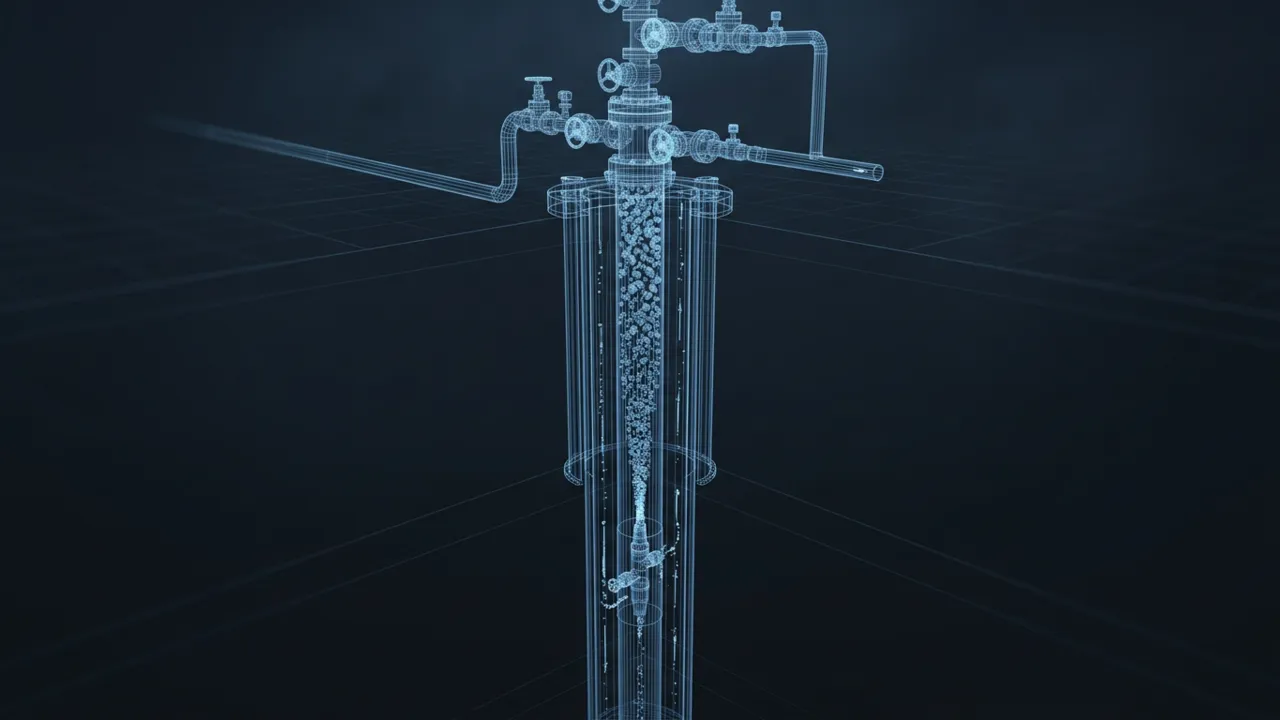
Gas lift works by injecting high-pressure gas into the production tubing deep in the well, which mixes with the oil and water and makes the fluid column lighter. A lighter column puts less pressure on the bottom of the well, so the reservoir's own pressure can push fluid up and out. The gas usually goes down the casing annulus and enters the tubing through gas lift valves set in side-pocket mandrels. At surface, the gas comes back with the produced fluid, gets separated, compressed and sent back down. It's a closed loop with very few moving parts downhole.
Why Does Lightening the Fluid Make a Well Flow?
Think of the tubing as a tall column of liquid. That column has weight, and its weight pushes down on the bottom of the well. If that pressure is higher than what the reservoir can push back with, nothing flows.
Now bubble gas into that column. Gas weighs far less than oil or water, so the mix gets lighter and the pressure at the bottom drops. Once the bottom pressure falls below the reservoir pressure, fluid starts moving in and up. The expanding gas bubbles also help carry liquid as they rise.
That's the key idea: gas lift doesn't pump. It cuts the backpressure so the reservoir can do the work.
What Does a Gas Lift Valve Do?
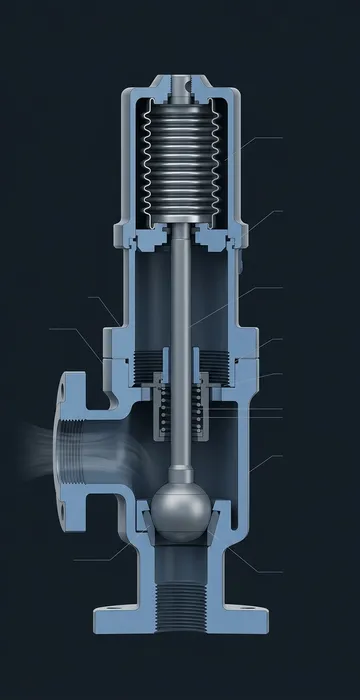
A gas lift valve is a one-way valve that lets injection gas pass from the annulus into the tubing at a set depth and pressure. Valves sit in side pockets of special tubing joints called side-pocket mandrels, so they don't block the tubing bore.
Most wells have several valves spaced down the tubing. The common types are:
- Unloading valves. Pressure-operated valves with a charged bellows or spring that open and close at set pressures. They're used to get the well started.
- Orifice valve. A simple fixed opening at the operating depth, with a check valve to stop backflow. This is often where the gas enters during normal production.
- Dummy valves. Blank plugs installed in mandrels that aren't in use yet.
Because the valves sit in side pockets, a slickline crew can pull and replace them without a rig. That's one of gas lift's biggest advantages. The SLB glossary entry on gas lift gives the formal definition.
How Does a Gas Lift Well Unload?
A well that's been killed or shut in has a tubing and annulus full of liquid. Injection pressure alone usually can't push gas all the way to the bottom valve at once. So the well unloads in steps:
- Gas is injected into the annulus, pushing liquid down the annulus and up through the open valves into the tubing.
- When the liquid level drops below the top valve, gas enters the tubing there and lightens the column above it.
- The lighter column lets the annulus liquid level drop further, uncovering the next valve.
- Gas starts entering at the next valve, and the valve above closes as pressure changes.
- The process repeats until gas reaches the operating valve, the deepest point it can reach.
The deeper the injection point, the more fluid you can lift. Valve spacing and pressure settings are designed by an engineer to get the gas as deep as possible with the pressure available.
Watch out for this one: slamming high injection rates into a liquid-filled well to speed up unloading. Fast unloading can erode or damage the upper valves. Follow the unloading schedule, even when it feels slow.
Continuous vs Intermittent Gas Lift: What's the Difference?
Continuous gas lift injects gas steadily, all the time. It's used on wells with decent reservoir pressure and productivity, where a steady flow of gas keeps a steady flow of fluid coming.
Intermittent gas lift injects gas in timed bursts. Liquid builds up in the tubing above the valve, then a big slug of gas fires in and pushes that liquid to surface. It's used on wells with low pressure or low productivity that can't support continuous flow. It's less efficient, but it keeps weak wells producing.
| Continuous | Intermittent | |
|---|---|---|
| Injection | Steady | Timed cycles |
| Best for | Higher-productivity wells | Low-pressure, low-rate wells |
| Flow at surface | Steady stream | Slugs |
| Control | Rate set by choke or controller | Timer or pressure controller |
Where Does the Lift Gas Come From?
Usually from the field itself. Produced gas from the wells is separated, compressed and sent back down as lift gas. Only a small share may need to come from an outside supply.
That's why gas lift fits so well in fields that already have natural gas production infrastructure: separators, gathering lines and compressors. Without a gas supply and compression, gas lift is hard to justify.
What Goes Wrong With Gas Lift?
Here's what to look for, and where to start. Your production engineer owns the redesign, but these are the usual suspects.
- Multipointing. Gas enters at more than one valve at once, wasting gas. Often a sign of wrong valve settings or a leaking valve.
- Heading. Flow and pressures surge in cycles. Can be caused by too little gas or unstable injection.
- Over-injection. More gas doesn't always mean more oil. Past a point, extra gas adds friction and cuts production.
- Leaking valves or tubing. Gas short-circuits into the tubing high in the well. A survey or pressure analysis can find it.
- Hydrates and freezing. Gas expanding through chokes and valves can cool enough to form hydrates in cold weather or high-pressure systems.
How Does Gas Lift Work? Lighten the Column and Let the Well Flow
Gas lift injects gas into the tubing through valves in side-pocket mandrels. The gas lightens the fluid column, lowers the pressure at the bottom of the well, and lets the reservoir push oil and water up.
Continuous gas lift suits stronger wells, and intermittent gas lift keeps weaker wells going. The method handles sand, gas and deviated wells well, and slickline can swap valves without a rig.
If you're looking at gas lift for a field, start with the gas supply and compression. Get those right, and the downhole side is simple.