How Is Natural Gas Produced? – From Wellhead to Pipeline
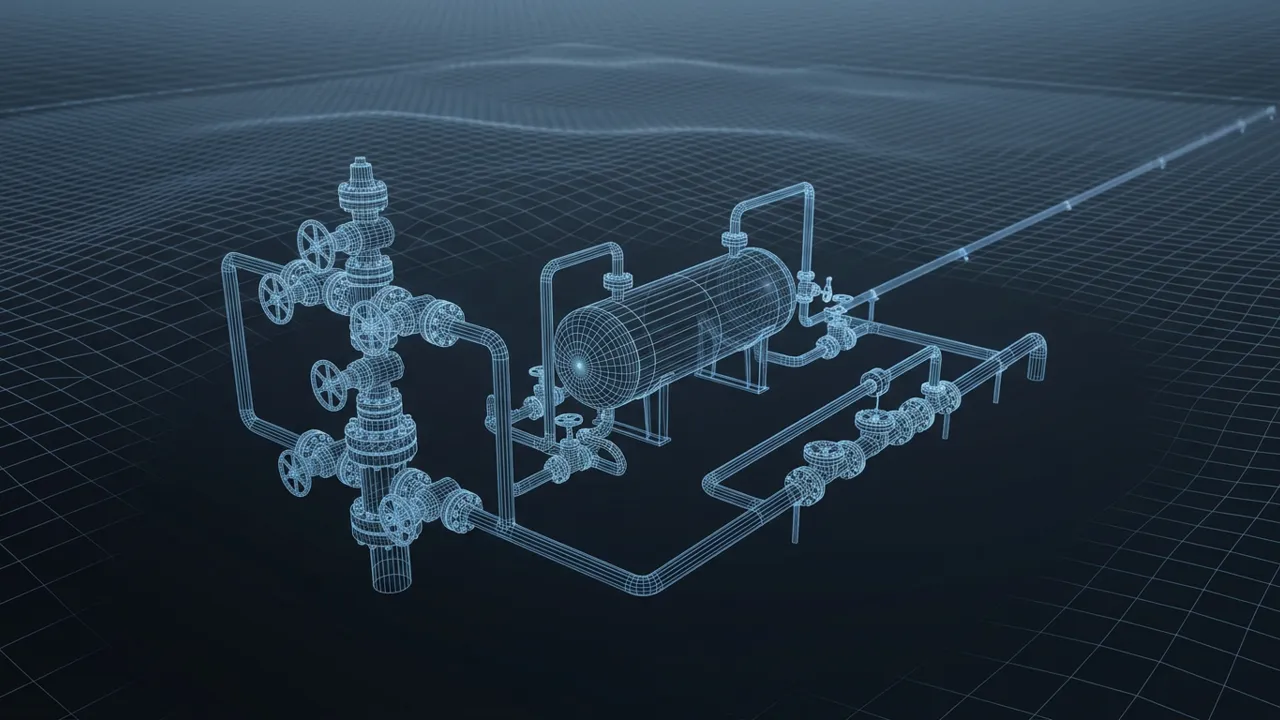
Natural gas doesn't come out of the ground ready for your stove. It comes up hot or cold, wet, under high pressure, mixed with water, liquids and sometimes nasty stuff like hydrogen sulfide. A lot happens between the bottom of a gas well and the pipeline that carries it to town, and most of it happens on equipment people drive past without a second look. How is natural gas produced, from the wellhead to the pipeline?
Natural gas production starts with gas flowing from a reservoir rock into a well, up the tubing and through a choke at the wellhead, then into surface equipment that cleans it up and moves it along. At the well site, separators remove water, oil and condensate, heaters prevent ice-like hydrates, and dehydration units pull out water vapor. The gas is metered and sent through gathering lines, often boosted by compressors, to a processing plant that strips out natural gas liquids and impurities. The finished, pipeline-quality gas then enters a transmission pipeline toward storage and customers.
What Are the Steps From Reservoir to Sales Line?
Here's the whole path in order. Every field is a little different, but the sequence holds up in most places.
- Reservoir. Gas sits in the pores of rock, under pressure, sometimes with oil and water.
- Wellbore and completion. Gas enters the well through perforations or open hole and flows up the tubing.
- Wellhead and choke. The Christmas tree and choke control the rate and drop the pressure.
- Line heater. Warms the gas so pressure drops don't freeze it up with hydrates.
- Separator. Splits gas from water, oil and condensate.
- Dehydration. A glycol unit or similar removes water vapor from the gas.
- Measurement. A meter run records volumes for sales and royalties.
- Gathering system. Small pipelines collect gas from many wells.
- Compression. Compressors boost pressure to keep gas moving.
- Processing plant. Removes natural gas liquids (NGLs), carbon dioxide, hydrogen sulfide, nitrogen and other impurities.
- Transmission pipeline. Carries pipeline-quality gas long distances to storage and local distribution.
The U.S. Energy Information Administration has a clear overview of natural gas delivery and storage if you want to follow the gas past the plant and into the pipeline grid.
How Does Gas Get Into the Well in the First Place?
Gas moves from high pressure to low pressure. The reservoir is at high pressure, and once a well is completed, the wellbore becomes the low-pressure spot. Gas flows through the tiny connected pores of the rock toward the well.
How easily it flows depends on the rock. In conventional reservoirs, like many sandstones and carbonates, the pores connect well and gas moves without much help. In shale and tight sandstone, the pores are so poorly connected that gas barely moves at all.
That's where horizontal drilling and hydraulic fracturing come in. A long lateral puts more of the well in contact with the rock, and the frac creates cracks propped open with sand so gas has an easier path in. Most U.S. gas today comes from wells completed this way.
What Makes a Gas Well Different From an Oil Well?
A gas well is a well that produces mostly gas, with smaller amounts of liquid. The drilling and completion steps look a lot like an oil well's, but the production side is different.
Gas expands as pressure drops, so a gas well can flow on its own for a long time. The main concerns are controlling high pressure at surface, handling liquids that come with the gas, and keeping hydrates and corrosion in check. Oil wells, by contrast, often need pumps fairly early.
Gas also comes from oil wells. That's called associated gas, and it's separated from the oil at the lease. Gas from gas-only reservoirs is called non-associated gas.
Why Does Gas Need to Be Separated and Dried at the Well?
Because water and liquids cause trouble downstream. Liquids in a gas line take up space, cause slugging and can damage compressors. Water vapor can condense, freeze into hydrates and plug lines and valves. Water plus CO2 or H2S also corrodes steel.
That's why the first big stop for most gas is a production separator. It uses gravity and time to drop out water, oil and condensate. After that, a glycol dehydrator usually contacts the gas with a liquid that soaks up water vapor, then cooks the water back out of the glycol so it can be reused.
Hydrates deserve their own warning. They look like dirty ice, but they can form well above freezing at high pressure. Line heaters, insulation and chemical injection (like methanol) keep them away.
What Is Gas Gathering?
Gas gathering is the network of smaller pipelines that collects gas from individual wells and carries it to a central point, like a compressor station or a processing plant. Think of it as the farm-to-market roads of the gas business.
Gathering lines run at lower pressures than big transmission lines. Pipeline pigs are often run through them to clear out liquids and debris. In big shale plays, gathering systems connect hundreds or thousands of wells.
Because well pressures fall over time, gathering systems often include field compression to keep older, weaker wells flowing into the line.
What Happens at a Natural Gas Processing Plant?
Natural gas processing turns raw field gas into a consistent product that pipelines will accept. Pipeline companies have quality specs, and gas that's too wet, too rich in heavy hydrocarbons or too sour gets turned away.
The main steps at a plant usually include:
- Removing any remaining water and liquids.
- Sweetening: stripping out hydrogen sulfide and carbon dioxide, often with amine units.
- Recovering natural gas liquids like ethane, propane and butane, usually by cooling the gas so they condense.
- Removing nitrogen if there's too much of it.
The NGLs are valuable on their own and get sold separately. What's left is mostly methane: the dry gas that heats homes and fuels power plants.
How Is Natural Gas Measured and Sold?
Gas is measured at a meter run, usually right on the lease or at a central point in the gathering system. Orifice meters have been the field standard for a long time, and newer sites often use ultrasonic or Coriolis meters.
The meter records volume, pressure and temperature so the gas can be corrected to standard conditions. Gas is often sold by energy content, not just volume, so samples are taken to check its makeup and heating value.
Those numbers matter to a lot of people. The operator gets paid on them, royalty owners get paid on them, and regulators track production with them. A meter that's out of calibration costs somebody money, so meters are checked and tested on a schedule.
What Problems Show Up in Natural Gas Production?
Gas wells have their own list of headaches. Below are the common ones, with the likely cause and a first step. As always, the lease operator, foreman and company procedures decide the actual response.
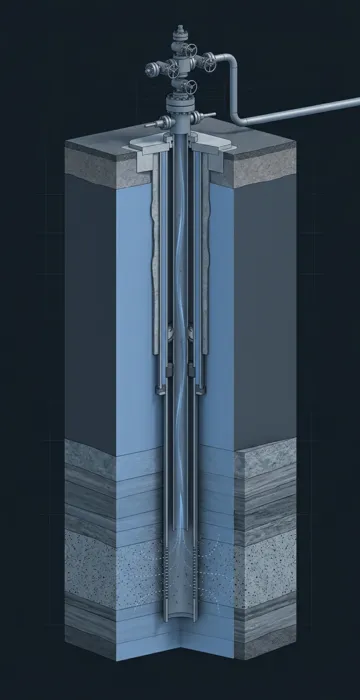
- Liquid loading. Rates drop and the well heads up or dies. Liquid is building in the tubing because gas velocity is too low to carry it out. Options include plunger lift, smaller tubing, foam sticks or compression.
- Hydrates. Pressure readings jump, flow stops, frost on the choke. Check heaters and chemical injection.
- Sand. Eroded chokes and valves, sand in separators. Cut back rate and evaluate sand control.
- Corrosion. Leaks, pitting, rising iron counts. Review inhibitor programs and materials.
- High line pressure. Wells can't flow into the gathering system. Compression or system changes may be needed.
- H2S. A sour gas field needs monitors, training and strict procedures. Never take it lightly.
Don't get impatient here: opening a choke wide to "blow a well clean" without checking the plan. Sudden high rates can bring sand, erode equipment and trip safety systems. Bring wells on slowly.
How Long Does a Gas Well Produce?
It varies a lot. Conventional gas wells in good reservoirs can produce for decades. Shale gas wells typically start strong and decline quickly in the first year or two, then flatten out into a long, slow tail.
Over a well's life, operators add compression, change tubing or install lift to keep gas flowing as pressure drops. When production no longer pays for operating costs, the well is plugged and abandoned.
How Is Natural Gas Produced From Wellhead to Pipeline?
Natural gas production moves gas from the reservoir up the well, through the choke, then through heaters, separators and dehydrators at the lease. Gathering lines and compressors carry it to a processing plant, which removes liquids and impurities and sends clean gas into transmission pipelines.
Each step solves a specific problem: pressure, water, hydrates, liquids, corrosion or quality specs. Miss one, and the trouble shows up somewhere downstream.
If you're new to gas production, walk a lease from the wellhead to the sales meter and name each piece of equipment. Then ask what would happen if it weren't there. That's the fastest way to learn the system.