Frac Pumps – Fluid Ends, Power Ends and Electric Fleets
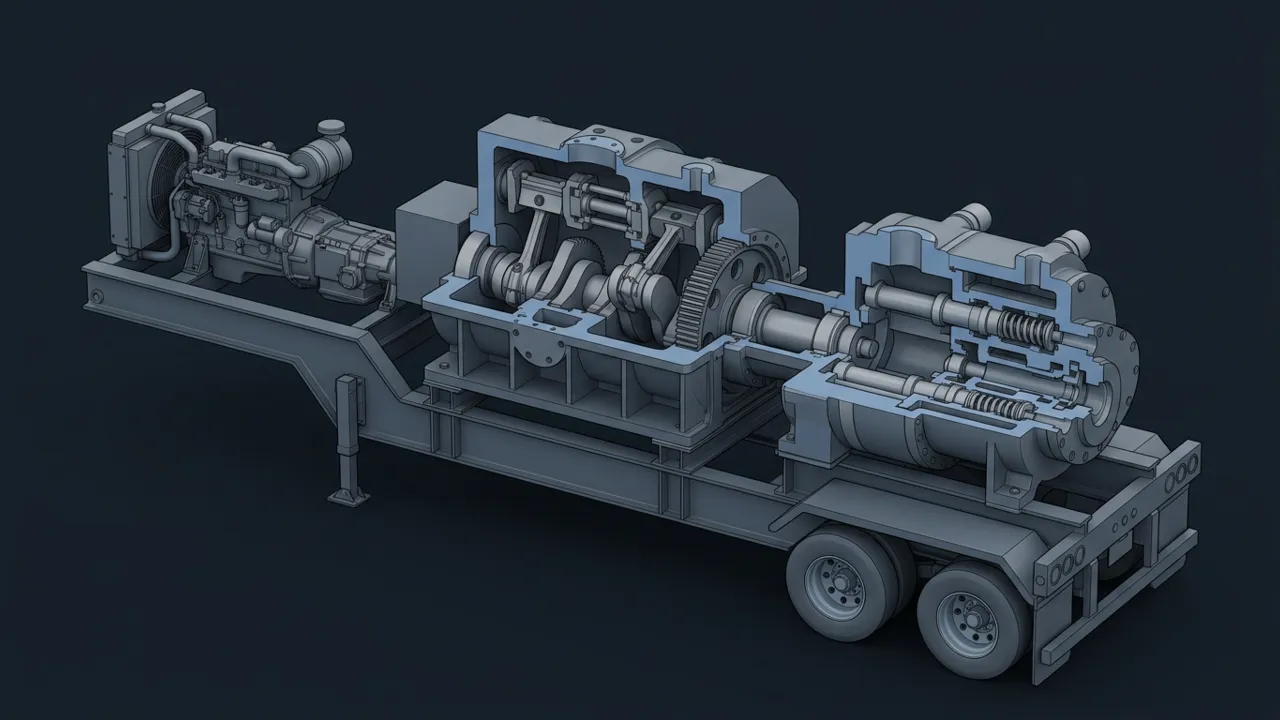
Every frac spread has a lot of trailers, but only one kind does the heavy lifting. The frac pump is the machine that turns a tub of sandy water into a fluid strong enough to split rock thousands of feet down. People hear "2,500 horsepower" and "15,000 psi" and assume it is magic. It is not. It is a very large, very tough piston pump. So what does a frac pump actually do, and how is it built?
A frac pump is a positive-displacement plunger pump that takes low-pressure slurry from the blender and discharges it at the high pressure needed to fracture rock. It has two main halves: a power end, which converts rotation into back-and-forth motion, and a fluid end, where plungers and valves move the slurry. Most are triplex (three plungers) or quintuplex (five plungers) designs mounted on a trailer with their own engine or electric motor. Many fluid ends on location are rated for 15,000 psi working pressure, and pump horsepower is commonly in the thousands per unit. Several pumps work together through a manifold to reach the rate a job needs.
How Does a Frac Pump Work?
A frac pump works like a bicycle pump on a massive scale. A plunger pulls back, slurry flows in through a suction valve, the plunger pushes forward, and the slurry is forced out through a discharge valve. Repeat that hundreds of times a minute across several plungers and you get a steady, high-pressure stream.
Because it is positive displacement, each stroke moves a fixed volume. The pump does not care much how hard the well pushes back, up to the limits of its parts. That is exactly what fracturing requires: a pump that keeps delivering volume while pressure climbs.
On location, the pumps draw slurry from the manifold trailer, which is fed by the blender. They discharge back into the high-pressure side of that same manifold, and from there the fluid goes to the wellhead. The pumped slurry itself is mostly water and sand with a small amount of additives, and our article on hydraulic fracturing fluids breaks down what is in it.
What Is in the Power End?
The power end is the drivetrain half of the pump. It takes the rotation from the engine or motor and turns it into the straight-line motion that drives the plungers.
- Crankshaft: turned through a gear reduction, it is the backbone of the power end.
- Connecting rods: link the crankshaft to the crossheads.
- Crossheads: slide in guides and keep the motion straight, so side loads don't reach the plungers.
- Bearings and lubrication system: keep it all alive under heavy, constant load.
Power ends are built to last a long time with good maintenance. They do fail, but they are not the part crews swap most often.
What Is a Frac Pump Fluid End?
The frac pump fluid end is the block where the plungers, valves and seats live, and where the slurry actually gets pressurized. It is usually a single heavy forging of alloy steel or stainless steel, machined with bores for each plunger.
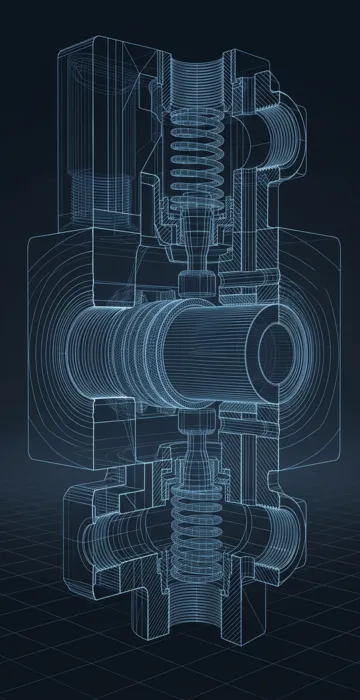
Inside each bore there are a plunger, packing to seal around it, a suction valve and a discharge valve with their seats. Abrasive sand passes through these parts on every stroke. Pressure cycles from low to very high on every stroke too. That combination is brutal.
Why Do Fluid Ends Wear Out So Fast?
Fluid ends crack and wash out because of fatigue and erosion. Each stroke flexes the metal a little, and millions of strokes add up. Sand cuts at valve seats and packing. Corrosive fluids can speed things along.
Valves, seats and packing are routine consumables that crews replace often, sometimes between stages. A whole fluid end lasts much longer but is still treated as a wear item. That is why fluid end design and materials get so much attention. Stainless fluid ends tend to cost more and last longer, and plenty of operators judge that a fair trade.
How Much Horsepower Does a Frac Pump Have?
Frac pump horsepower varies by design. For years, a common standard was around 2,000 to 2,500 hydraulic horsepower per diesel-driven trailer. Newer units, especially electric ones, have pushed ratings higher, and some manufacturers now advertise pumps well above that range.
The total horsepower for a job is a design question. Engineers calculate it from the planned rate and expected treating pressure, then add spare capacity in case pumps go down. A big multi-stage horizontal job can need tens of thousands of horsepower on location across many units.
My take: horsepower numbers in marketing material are a starting point, not a promise. What matters is how many hours a pump runs at the rate and pressure you need before something has to be fixed.
What Is an Electric Frac Fleet?
An electric frac fleet replaces the diesel engine and transmission on each pump with an electric motor. Power usually comes from natural gas fired turbines or reciprocating generators on location, sometimes from the grid when it is close enough. Often the gas comes from the field itself.
The pitch for e-fleets is straightforward:
- Lower fuel cost, since field gas is usually cheaper than diesel.
- Lower emissions and noise than a row of diesel engines.
- Fewer moving parts per pump, which can mean less maintenance.
- Better control, since electric motors respond quickly and precisely.
The trade-offs are real too. E-fleets cost a lot up front. Power generation becomes a single point of failure if it is not built with redundancy. And they need a reliable gas supply. Dual-fuel diesel engines, which burn a mix of diesel and natural gas, sit between the two options and are common in fleets that are not ready to go fully electric.
How Are Frac Pumps Kept Safe?
Frac pumps operate at pressures that can kill, so safety systems are built in. Each pump has pressure relief or kickout settings that shut it down before pressure exceeds a set limit. The high-pressure iron is tested before the job. And crews keep people out of the area around the pumps and iron while pumping.
The OSHA well completion eTool covers the main hazards, including high-pressure lines and silica. Well-site procedures always set the specifics.
What Does a Frac Pump Do? Pressure, Rate and a Lot of Wear Parts
A frac pump takes slurry from the blender and forces it into the well at fracturing pressure, one plunger stroke at a time. The power end turns rotation into push. The fluid end does the dirty work and wears out accordingly. Electric fleets change what drives the pump, not what the pump does.
If you are comparing pumps or fleets, look past the headline horsepower. Ask about fluid end life, maintenance intervals and how much spare capacity you will have on location.