What Are Hydraulic Fracturing Fluids Made Of?
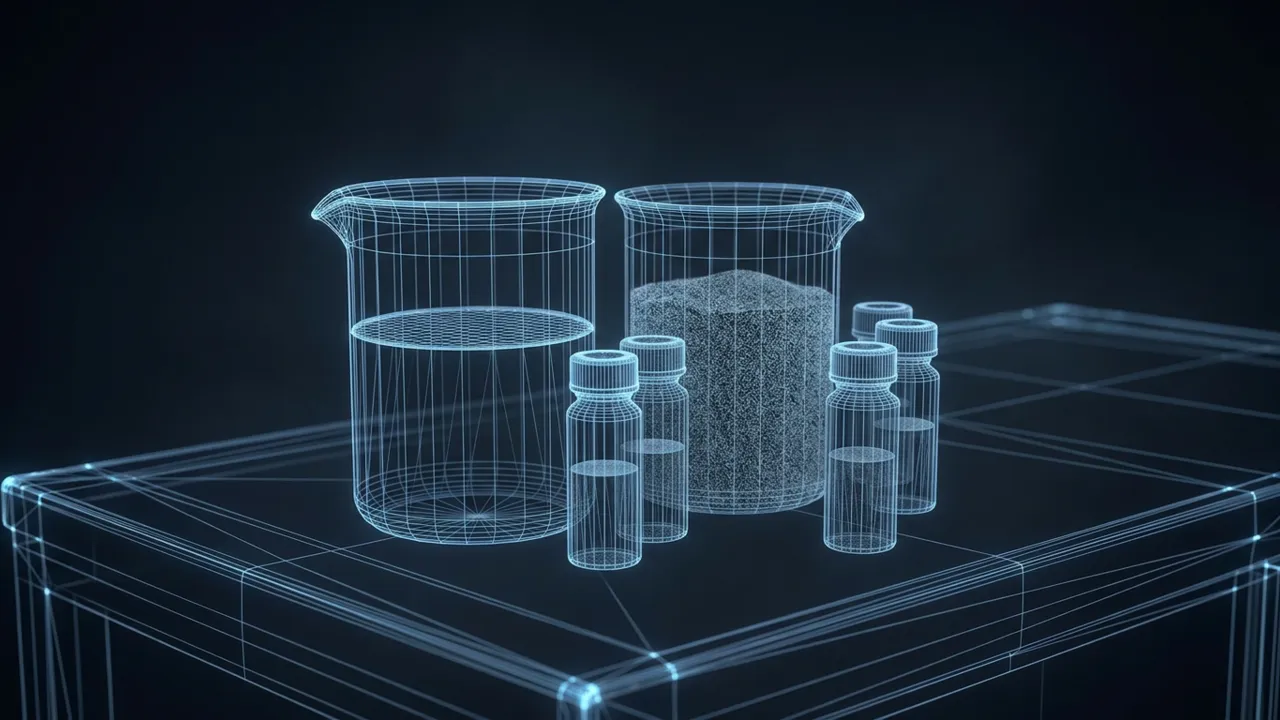
Ask ten people what goes down a well during a frac job and you will get ten answers, some of them scary. "Thousands of secret chemicals" is a popular one. "Just water and sand" is another. Both miss the mark, and the truth is easier to follow than either side tends to admit. So, what are hydraulic fracturing fluids made of?
Hydraulic fracturing fluids are mostly water, followed by proppant (usually sand), with a small percentage of chemical additives. A commonly cited breakdown from public disclosure data is roughly 90 percent water, around 9 to 10 percent proppant, and well under 2 percent additives, though every job is different. The additives do specific jobs: reducing friction, killing bacteria, preventing scale, thickening the fluid or breaking it down later. The exact recipe depends on the rock, the well design and the type of frac. In the United States, many operators report their additives to the FracFocus registry, which is the easiest public place to see what went into a specific well.
What Is the Typical Frac Fluid Composition?
Frac fluid composition comes down to three buckets: base fluid, proppant and additives. Water is the base fluid in the vast majority of jobs. Proppant rides along to keep the fractures open. Additives tune how the fluid behaves.
| Component | Typical share (approximate) | Main purpose |
|---|---|---|
| Water | About 90% | Carries proppant and transmits pressure to the rock |
| Proppant (sand or ceramic) | About 9 to 10% | Props fractures open after pumping stops |
| Chemical additives | Commonly under 2%, often well under 1% | Friction reduction, bacteria control, scale control, viscosity and more |
Treat those numbers as a ballpark. Proppant share by weight can be higher on sand-heavy modern jobs. Gel fracs usually carry more additives than slickwater fracs. The useful takeaway is the order of magnitude: water and sand make up almost everything.
A small percentage still adds up. On a big multi-stage horizontal job that pumps millions of gallons, even a fraction of a percent of additives means a meaningful volume of chemicals on location. That is why handling and disclosure matter, and why "it's only 0.5 percent" is not the whole story.
Why Is Water the Main Ingredient?
Water is cheap, available, incompressible and easy to pump. It carries sand reasonably well when it is moving fast or thickened, and it transmits the pump pressure down to the rock.
The water can be fresh, brackish or recycled produced water. Over the years, many operators have increased their use of recycled and brackish water, especially in dry basins where fresh water is scarce and disposal costs money. Using produced water can complicate the chemistry, because salts and minerals affect how friction reducers and gels perform. That is a solvable problem, but it does change the recipe.
A few jobs use other base fluids. Foam fracs use nitrogen or carbon dioxide mixed with liquid. Some experiments have used liquefied petroleum gas. These are niche next to water-based jobs.
What Is Proppant and Why Does It Matter?
Proppant is the granular material that holds fractures open once the pumps shut down. Without it, the rock would squeeze the fractures closed and most of the benefit would be lost. The SLB Energy Glossary defines it simply as sized particles mixed with frac fluid to hold fractures open.
Most proppant is quartz sand, sorted by grain size. Common choices include:
- Northern white sand, a high-quality silica sand known for strength and roundness.
- In-basin or regional sand, mined close to the wells to cut trucking costs.
- Resin-coated sand, which helps hold grains together and resist crushing.
- Ceramic proppant, manufactured for strength in deep, high-stress wells.
The trend in many shale basins has been toward local sand. It is often a little weaker than the premium stuff, but it is much cheaper to deliver. Whether that trade works depends on the depth and stress of the formation.
What Chemicals Are in Fracking Fluid, and What Do They Do?
The additive list looks long, but each item has a narrow job. Not every frac uses every additive.

- Friction reducer: usually a polyacrylamide polymer. It lets water flow down the pipe at high rate with much less pressure loss. This is the star of slickwater jobs.
- Biocide: kills bacteria that can sour the well (produce hydrogen sulfide) or corrode equipment.
- Scale inhibitor: keeps mineral scale from depositing in the formation and tubulars.
- Acid: dilute hydrochloric acid is often pumped ahead of the frac to clean perforations and dissolve some minerals near the wellbore.
- Corrosion inhibitor: protects the steel when acid is in use.
- Gelling agent: guar or similar polymers that thicken the fluid so it carries more sand.
- Crosslinker: links gel molecules together for much higher viscosity in crosslinked gel jobs.
- Breaker: breaks the gel back down after pumping, so the fluid can flow back out.
- Clay stabilizer: keeps certain clays from swelling or migrating.
- Surfactant: helps with fluid recovery and how fluids interact with the rock.
- Iron control and pH adjusters: keep the chemistry stable.
Some of these ingredients show up in everyday products. Guar is a food thickener, for example. That does not make every additive harmless, and some, like concentrated biocides and acids, need careful handling. My take: "it's in ice cream" and "it's toxic" are both incomplete answers. Concentration, handling and containment are what matter.
Does Frac Fluid Composition Change by Frac Type?
Yes, quite a bit. A slickwater job leans heavily on water and friction reducer and uses a high volume of fluid with relatively fine sand. A crosslinked gel job uses less water but more additives, because it needs gel, crosslinker and breaker. Hybrid designs mix the two in different stages.
Foam and energized fracs swap part of the liquid for nitrogen or CO2. Acid fracs in carbonate rock rely on acid to etch the fracture faces rather than mainly on sand. If you want to see how these designs differ and when each is used, read our breakdown of the types of hydraulic fracturing.
What Is FracFocus Disclosure?
FracFocus is a public online registry where operators disclose the chemicals used in hydraulic fracturing. It is managed by the Ground Water Protection Council and the Interstate Oil and Gas Compact Commission, and it went live in 2011. Several states require operators to report through it, while others have their own systems.
You can search it by state, county, operator or well. Each disclosure lists the total water volume, the ingredients, their purpose and their maximum concentration in the fluid.
What About Trade Secrets?
Some ingredients are withheld as trade secrets. Disclosures usually still list the chemical family and purpose, and state rules often require the information to be given to regulators or medical professionals when needed. Critics argue that trade secret claims leave gaps in public knowledge. Industry argues the formulas are real competitive property. Both points have some merit, and the rules vary by state.
What Happens to Frac Fluid After the Job?
Only part of the pumped fluid comes back. Some returns during flowback, the period right after the frac when the well is opened up and cleaned out. More comes back over time mixed with the formation's own salty water, and at that point most people call it produced water.
The rest stays in the rock, held in the fractures and pore spaces. How much returns varies a lot by formation, and nobody should quote you a single universal number.
Returned water gets stored in tanks, then recycled for future fracs, injected into permitted disposal wells or, less often, treated for other uses. Disposal is its own topic, and it is the part of the process most linked to induced earthquakes in some regions. That link runs through the disposal wells, not the frac fluid recipe.
Is Frac Fluid a Risk to Drinking Water?
The fair answer is that risk depends on what happens at the surface and in the wellbore, not just on the recipe. Most of the documented problems come from spills, poor well integrity or improper wastewater handling, rather than fractures reaching an aquifer through thousands of feet of rock.
The EPA's 2016 assessment concluded that hydraulic fracturing activities can impact drinking water resources under some circumstances, and it identified those circumstances. Its questions and answers page is a balanced place to start. The circumstances it lists, like spills and inadequate casing or cement, are exactly where good practice and regulation focus.
What Are Hydraulic Fracturing Fluids Made Of, Really?
Hydraulic fracturing fluids are mostly water and sand, with a small but purposeful set of additives. Friction reducers, biocides, scale inhibitors, gels and breakers each do one job. The recipe shifts with the frac type, the rock and the water source.
If you want to know what went into a specific well, look it up on FracFocus or your state's disclosure system. That beats any rumor, from either side.