Types of Hydraulic Fracturing – Slickwater, Gel and Hybrid Fracs
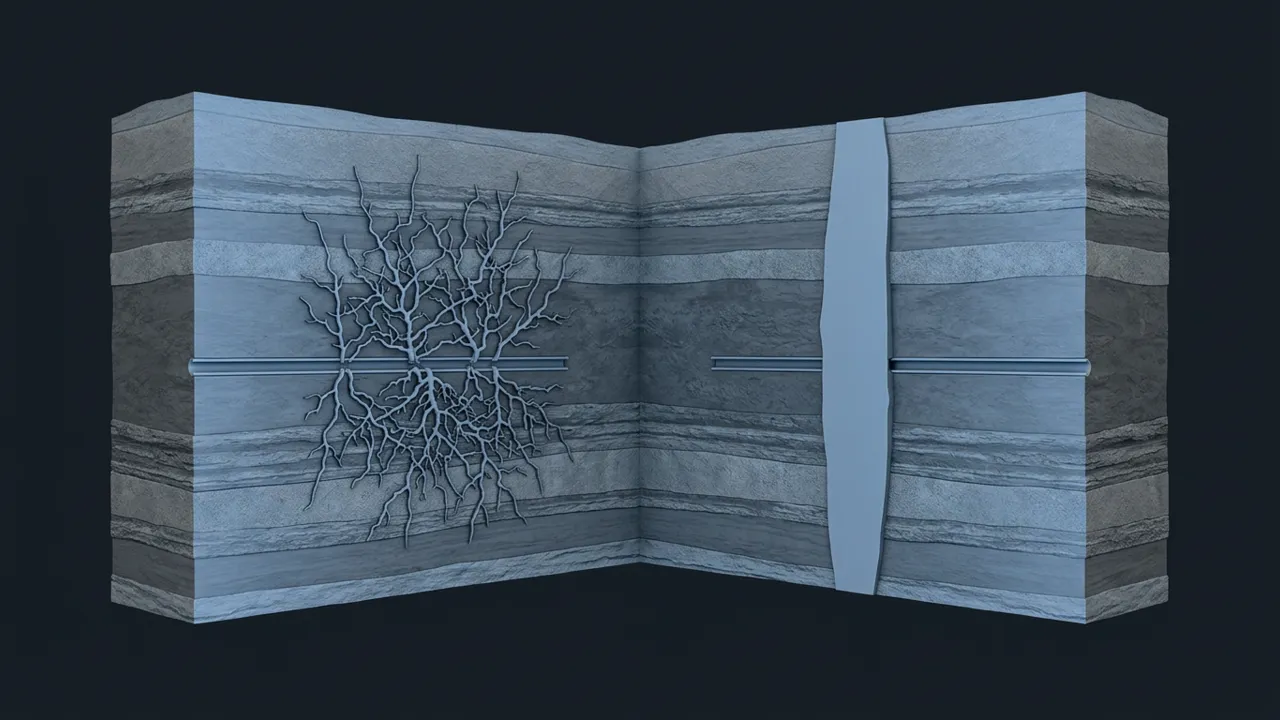
"Frac" sounds like one thing, but it is really a family of designs. Engineers choose between them based on the rock, the depth, the water supply and, yes, the budget. Pick the wrong one and you either waste money or leave oil and gas in the ground. So what are the main types of hydraulic fracturing, and when is each one used?
The main types of hydraulic fracturing are slickwater fracs, linear gel fracs, crosslinked gel fracs, hybrid fracs, foam or energized fracs and acid fracs. Slickwater uses large volumes of thin, fast-moving water with friction reducer and is the workhorse of shale plays. Gel fracs thicken the fluid so it can carry more and larger proppant into wider fractures, which suits many conventional and higher-permeability reservoirs. Hybrids combine the two, often starting with slickwater and finishing with gel. Foam fracs replace much of the water with nitrogen or CO2 for water-sensitive rock, and acid fracs use acid instead of sand to create conductive channels in carbonates.
How Do the Types of Hydraulic Fracturing Differ?
The types of hydraulic fracturing differ mainly in the fluid they use, and the fluid controls two things: how the fracture grows and how much proppant can be carried into it. Thin fluids tend to make long, narrow, complex fractures. Thick fluids tend to make wider, simpler fractures that hold more sand.
Here is a quick comparison.
| Type | Fluid | Typical use |
|---|---|---|
| Slickwater | Water plus friction reducer | Shale and very tight rock |
| Linear gel | Water thickened with guar or similar | Moderate-permeability rock, also as a stage in hybrids |
| Crosslinked gel | Gel linked into a high-viscosity fluid | Higher-permeability or conventional reservoirs needing wide, well-propped fractures |
| Hybrid | Slickwater and gel in sequence | Tight rock where both length and conductivity matter |
| Foam / energized | Liquid mixed with nitrogen or CO2 | Water-sensitive or low-pressure formations |
| Acid frac | Hydrochloric acid systems | Carbonate rock like limestone and dolomite |
The SLB Energy Glossary definition of hydraulic fracturing covers the basic process all these share: pump fluid above fracture pressure, create a fracture, keep it conductive.
What Is a Slickwater Frac?
A slickwater frac is a treatment that uses mostly water with a friction reducer, pumped at high rates. The friction reducer is the key. It lets operators move huge volumes down long laterals without the pressure losses that plain water would cause.
Slickwater has low viscosity, so it does not carry sand well at rest. The fix is speed and volume: high pump rates keep the sand moving, and designs often use smaller mesh sand that settles more slowly. In very tight shale, the thin fluid also tends to open complex fracture networks that touch more rock.
The trade-offs:
- Pros: cheaper chemistry, less gel residue left in the fracture, good for contacting a lot of low-permeability rock.
- Cons: needs a lot of water and horsepower, carries less proppant per gallon and can leave fractures narrower.
Slickwater became the go-to in shale after operators in the Barnett showed it could work at lower cost than gel. It has dominated many U.S. shale plays ever since.
What Is a Crosslinked Gel Frac?
A crosslinked gel frac uses a gelling agent, often guar, whose molecules are chemically linked together by a crosslinker such as borate or zirconium. The result is a thick, almost jelly-like fluid that can suspend a lot of proppant, even large grains.
Because it is thick, a crosslinked fluid tends to create wider fractures and place sand at high concentrations. That is valuable in reservoirs where flow along the fracture matters more than raw contact area. It is common in conventional sandstone, in some deeper or higher-permeability formations and in many vertical well completions.
The catch is cleanup. The gel has to be broken down after the job, so a breaker is added. If the gel does not fully break, residue can plug the proppant pack and cut conductivity. Gel jobs also use more chemicals per gallon. Linear gel, which is thickened but not crosslinked, sits in between: more viscous than slickwater, easier to clean up than crosslinked gel.
What Is a Hybrid Frac?
A hybrid frac blends slickwater and gel in one treatment. A common design starts with slickwater to create fracture length and complexity, then switches to linear or crosslinked gel to carry higher sand concentrations into the near-wellbore part of the fracture.
The logic is to get the best of both. Slickwater reaches far. Gel props the fracture wide near the well, where all the flow eventually converges. Many operators tune hybrid designs well by well, and the exact sequence varies widely.
If you ask me, hybrid is less a fixed recipe than a philosophy. If someone says they pumped a hybrid, ask what the stages were before drawing any conclusions.
What Are Foam and Energized Fracs?
Foam fracs replace much of the liquid with gas, usually nitrogen or carbon dioxide. A true foam is mostly gas by volume at downhole conditions. An energized frac uses a smaller fraction of gas mixed into the fluid.
These designs make sense in a few situations:
- Water-sensitive formations, where clays swell or migrate when exposed to water.
- Low-pressure reservoirs, where the gas helps push fluid back out during flowback.
- Places where water is scarce or expensive.
The downsides are cost and logistics. Hauling and pumping nitrogen or CO2 adds equipment, and foam can be harder to carry high proppant loads in. Foam fracs are a niche tool, but in the right rock they can beat water-based jobs.
What Is an Acid Frac?
An acid frac pumps acid, usually hydrochloric acid based, above fracture pressure in carbonate rock. Instead of relying on proppant, the acid etches the fracture faces unevenly. When the fracture closes, those uneven surfaces do not line up perfectly, which leaves open channels for flow.
Acid fracs only make sense in rock the acid can dissolve, such as limestone and dolomite. In sandstone or shale, acid will not etch the faces the same way. Results also depend on how fast the acid reacts and how far it travels before it is spent, so engineers sometimes use gelled or emulsified acids to slow it down.
Do not confuse an acid frac with matrix acidizing. Matrix acidizing pumps acid below fracture pressure to clean up damage near the wellbore. It does not create a fracture at all.
Are There Waterless Fracs?
Yes, though they are rare. Some operators have tested liquefied petroleum gas (mostly propane) as a base fluid, and pure CO2 or nitrogen jobs exist in certain formations. The appeal is obvious in dry country or in rock that reacts badly to water.
The trouble is handling. Pumping large volumes of a flammable or cryogenic fluid adds safety and equipment demands that water does not. That is why waterless designs remain a specialty rather than a trend, and why water-based fracs still make up the bulk of the work.
The same goes for newer ideas like high-viscosity friction reducers, which sit somewhere between slickwater and linear gel. The labels blur at the edges, and that is fine. The physics underneath does not change.
How Do Engineers Choose a Frac Type?
The rock usually makes the first cut. Very low permeability favors slickwater or hybrids, because contact area matters most. Higher permeability favors gel, because conductivity matters most. Carbonates open the door to acid. Water-sensitive or depleted zones push toward foam.

After that, practical factors weigh in:
- Depth and closure stress, which affect what proppant and fluid can do.
- Water availability and disposal costs.
- Equipment and horsepower available in the area.
- Results from offset wells in the same formation.
- Cost per stage and expected return.
A lot of frac design is empirical. Operators try a design, watch production and adjust. That is not a flaw. Rock is variable, and field results are often the best data available. The underlying physics of why fractures help in the first place is covered in our article on fracking and permeability.
Which of the Types of Hydraulic Fracturing Wins?
None of them wins everywhere. Slickwater rules shale because it is cheap and contacts a lot of tight rock. Crosslinked gel still earns its place where wide, well-propped fractures matter. Hybrids try to split the difference, foam handles water-sensitive rock and acid fracs work in carbonates.
If you are reading a completion report, look at the fluid type first. It tells you what the engineer was trying to achieve, and that is the best clue to whether the design fit the rock.