Does Hydraulic Fracturing Increase Permeability? – The Rock Mechanics
You will hear it said a hundred ways: fracking "makes the rock permeable," "cracks the shale open," "frees the gas." That is close enough for a bar conversation. It is not close enough if you are trying to understand why some fracs pay out and others don't. The honest answer has a twist in it. So, does hydraulic fracturing increase permeability?
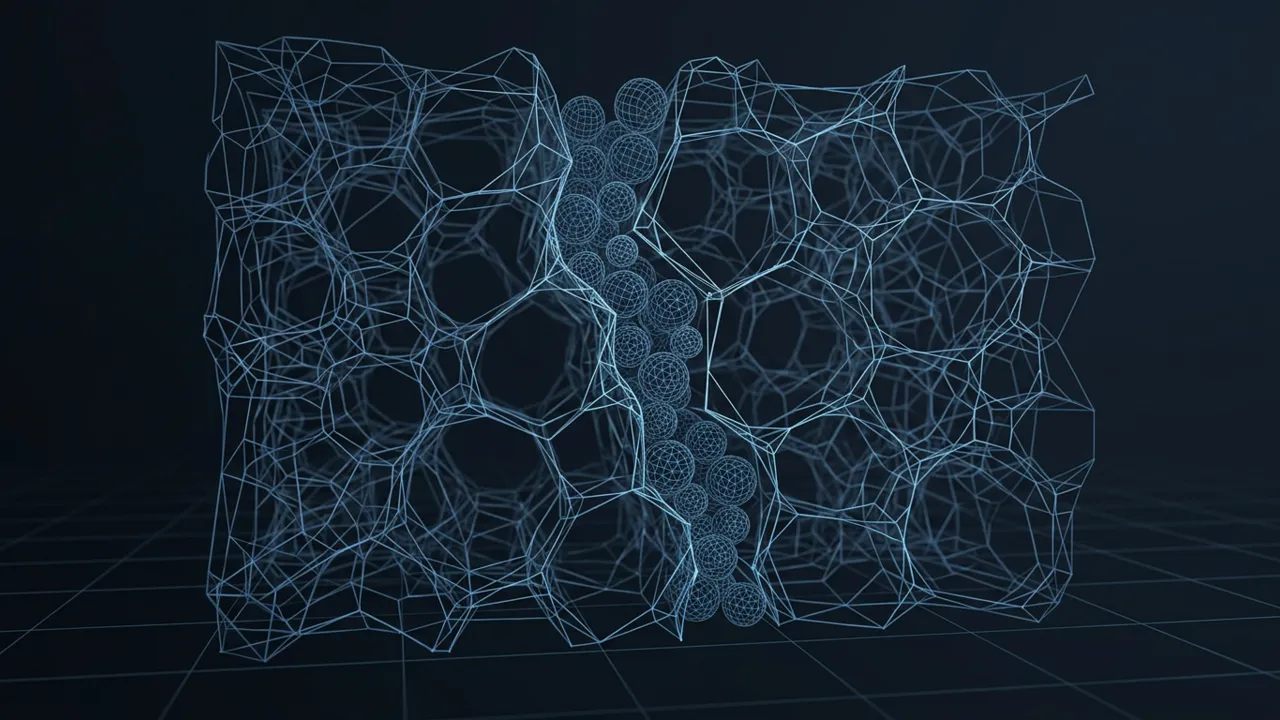
Hydraulic fracturing increases the effective permeability of a reservoir, but it does not meaningfully change the permeability of the rock itself. The tiny pores in shale stay just as tight after a frac as before. What changes is that the well now connects to propped fractures, which act as high-permeability highways cutting through that tight rock. Fluid only has to travel a short distance through the rock to reach a fracture, then it flows easily along the fracture to the well. So the system behaves as if it were far more permeable, and engineers describe that gain through fracture conductivity and effective permeability rather than a change in matrix permeability.
What Is Permeability in Rock?
Permeability is a measure of how easily fluid can flow through rock. It depends on how well the pore spaces connect, not just how many there are. A rock can be full of pores (high porosity) and still let very little through if the pores are tiny and poorly connected.
Petroleum engineers measure permeability in darcies, usually millidarcies for reservoirs. To give a sense of scale:
- Good conventional sandstone often runs in the tens to hundreds of millidarcies, sometimes more.
- Tight sandstone is commonly below about 0.1 millidarcy.
- Shale is usually in the microdarcy to nanodarcy range, many thousands of times lower.
That last point is the whole story of shale. The oil and gas are there, but they cannot move through the rock fast enough to make an economic well on their own.
Does Hydraulic Fracturing Increase Permeability or Just Flow?
It increases flow by adding pathways. Engineers sometimes call the result "effective" or "system" permeability, meaning the permeability the reservoir appears to have when you look at how fast the well produces.
Think of a big parking lot with one exit. Cars crawl toward the gate. Now cut a dozen new lanes running across the lot to the highway. The cars did not get faster, but each one now has a short trip to a fast lane. Production goes up for the same reason.
There is one nuance. Fracturing can also reactivate natural fractures in the rock, causing them to slip and stay slightly open. That can raise permeability in a zone around the main fractures. How much this matters is debated and varies by formation. It is real, but it is not the main mechanism in most designs.
What Rock Mechanics Control a Fracture?
A hydraulic fracture forms when fluid pressure exceeds the stress holding the rock together plus the rock's tensile strength. Underground, rock is squeezed from all sides, and the stresses are usually not equal. That imbalance controls almost everything about the fracture.
Why Do Fractures Usually Grow Vertically?
Fractures open in the direction of least resistance. They grow perpendicular to the minimum principal stress. At typical reservoir depths, the weight of the overlying rock makes vertical stress the largest, so the minimum stress is usually horizontal. The result is a fracture that stands vertically, like a sheet of paper on edge.
This is also why horizontal wells are usually drilled in the direction of minimum horizontal stress. Fractures then grow across the lateral rather than along it, so each stage reaches fresh rock.
What Makes Rock Easier to Fracture?
Engineers look at a few properties:
- Young's modulus, a measure of stiffness. Stiffer rock tends to make narrower fractures.
- Poisson's ratio, which describes how rock bulges sideways when squeezed.
- Brittleness, a loose term for how readily the rock breaks rather than deforms. Shales with more quartz or carbonate tend to be more brittle than clay-rich ones.
- Stress contrast between layers, which helps keep a fracture contained in the target zone.
None of these change the matrix permeability. They control how well you can build the highways.
What Is Fracture Conductivity?
Fracture conductivity is how easily fluid flows along a propped fracture. It equals the permeability of the proppant pack times the fracture's width, and it is usually reported in millidarcy-feet. A wide fracture packed with clean, strong sand has high conductivity. A narrow fracture with crushed or dirty proppant has low conductivity.
Engineers also compare fracture conductivity to the reservoir's own permeability using a ratio called dimensionless fracture conductivity. The idea is simple. In very tight rock, even a modest fracture is a huge improvement, so length and contact area matter most. In more permeable rock, the fracture has to be highly conductive or it becomes the bottleneck, so width and proppant quality matter most.
That trade-off explains much of frac design. It is a big reason slickwater dominates shale and gel fracs still show up in higher-permeability reservoirs.
Why Does Fracture Conductivity Fade Over Time?
Propped fractures are not permanent highways at full speed. Several things wear them down:
- Closure stress squeezes the proppant pack as reservoir pressure drops.
- Proppant crushing creates fines that plug the pack.
- Embedment, where grains press into softer rock faces and narrow the fracture.
- Gel residue or scale left behind in the pack.
- Fines migrating from the formation.
This is part of why shale wells decline quickly in their first years. Some of the decline is simply the near-fracture rock draining, and some is lost conductivity. Stronger proppant and cleaner fluids help, at a cost. Whether that cost pays off depends on the depth, stress and expected life of the well.
Why Does This Matter for Tight Rock?
Tight rock is where fracturing goes from helpful to essential. In conventional reservoirs, a frac might double or triple a well's rate. In shale, the rock is so tight that without fractures the well would barely produce at all.
Even with fractures, the distance between them matters. Fluid still has to cross some tight rock to reach the nearest fracture. Closer spacing means shorter trips but more stages, more sand and more cost. Too close, and neighboring fractures compete for the same rock. Finding that balance is one of the main reasons operators keep adjusting stage and cluster spacing.
It is also why a single vertical well in shale rarely makes sense. One frac in a thin layer can only reach so much rock. A long horizontal well with many stages reaches far more, which is the basis of fracking and horizontal drilling working as a pair.
How Do Engineers Measure the Effect?
Nobody can walk down and look at a fracture, so the evidence is indirect. The most important test is the simplest one: production. If a well flows far better than the rock's measured permeability predicts, the fractures are doing their job.

Engineers also use a few other tools:
- Pressure analysis during and after pumping, which hints at fracture length, closure and conductivity.
- Microseismic monitoring, which maps tiny rock-breaking events and shows roughly where the fractures went.
- Chemical or radioactive tracers, which show which stages are contributing fluid.
- Fiber optic sensing in some wells, which can show where fluid entered the rock along the lateral.
Each method has limits. Microseismic shows where rock broke, not where proppant ended up. That is a useful reminder that a fracture you created and a fracture that stays conductive are not always the same thing.
Is the Common Explanation Wrong?
Mostly it is just loose. Saying fracking "increases permeability" is fine shorthand, and plenty of technical papers use the term effective permeability in exactly that sense. Where it misleads is when people picture the whole formation turning porous like a sponge.
It doesn't. The fractures are thin planes, often fractions of an inch wide when propped, separated by lots of untouched rock. That picture matters when people talk about fluids "migrating" thousands of feet. The rock between the fractures, and the layers above, are still extremely tight. For a neutral overview of the process, the SLB Energy Glossary definition is a solid reference.
Does Hydraulic Fracturing Increase Permeability?
Yes, in the way that counts for production, and no, in the way most people picture it. The rock's own pores stay tight. The frac adds conductive pathways that make the whole reservoir act more permeable.
If you remember one term from this article, make it fracture conductivity. It explains why sand quality, fluid cleanup and stage spacing matter, and why two wells in the same rock can perform so differently.