The Hydraulic Fracturing Process – Step by Step on a Frac Site
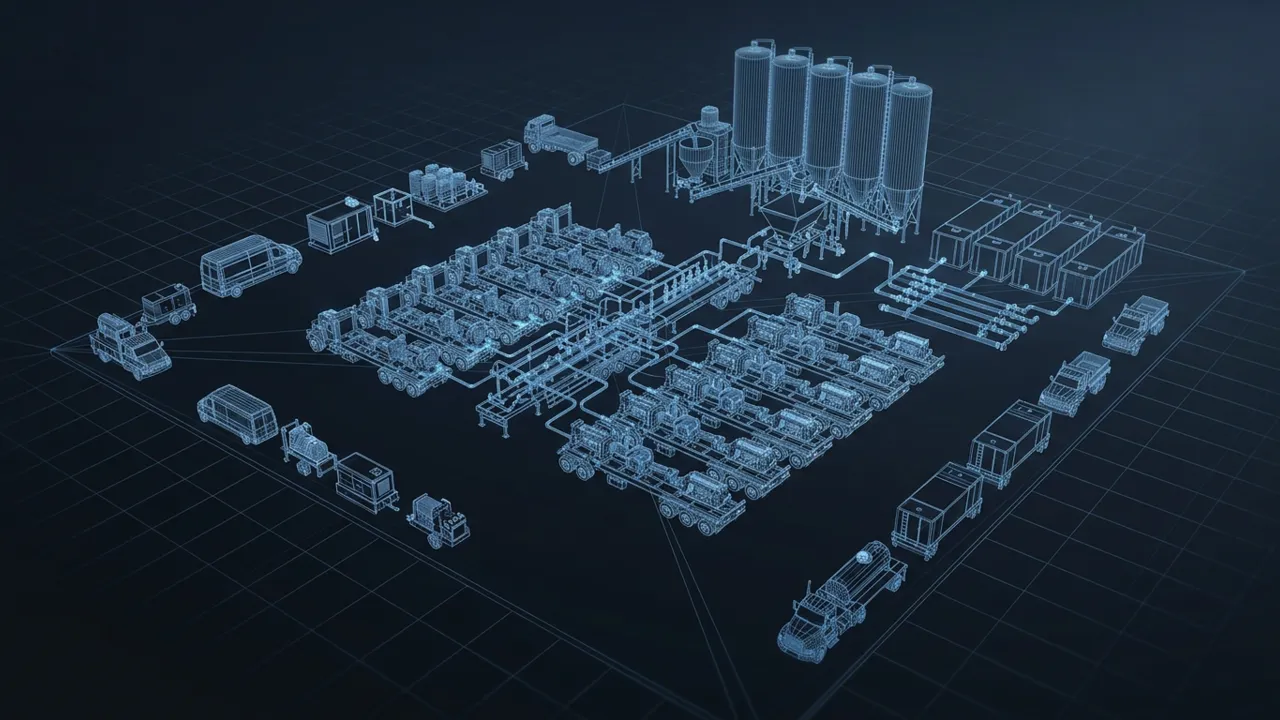
Driving past a frac site at night, you see a small city of trucks, tanks and light towers, with engines roaring around a cluster of wellheads. It looks chaotic. It isn't. A frac job runs on a tight, repeating sequence, and once you know the steps, the whole site starts to make sense. Most explanations stop at "they pump water and sand down the hole," which skips the interesting parts. So what does the hydraulic fracturing process actually look like, step by step?
The hydraulic fracturing process follows a set order: prepare the well, rig up the frac spread, perforate the first stage, pump fluid and sand to crack the rock, plug off that stage, and repeat until the whole lateral is done. After the last stage, the crew rigs down, drills out the plugs, and flows the well back before it goes on production. On a modern pad, crews usually work several wells in rotation so pumping never stops for long. Here's the sequence in short form:
- Prepare the well and install the frac tree
- Rig up the frac spread
- Open the toe stage
- Run wireline to set a plug and perforate
- Pump the frac stage
- Repeat plug and perf, stage by stage, up the lateral
- Rig down the frac spread
- Drill out the plugs
- Flow back the well
- Put the well on production
Step 1: How Is the Well Prepared for Fracking?
Before any frac crew shows up, the well has been drilled, cased and cemented. The production casing runs the full length of the well, including the horizontal lateral.
The completion crew then installs a frac tree on the wellhead. It's a stack of large valves rated for the high pressures of fracking. The casing is pressure tested to confirm it can handle the job. If it can't hold pressure, nothing else happens until that's fixed.
The first stage, at the far end of the lateral (the toe), is often opened with a pressure-activated sleeve or a perforating run on coiled tubing. That gives fluid a way out at the very bottom so wireline tools can be pumped down later.
Step 2: What Equipment Goes Into Rigging Up a Frac Spread?
The frac spread is the full set of equipment that pumps the job. Rigging it up can take a day or more, depending on the site.
- Water storage: frac tanks or large lined pits, fed by transfer lines or trucks.
- Proppant storage: sand silos or boxes that feed sand to the blender.
- Hydration and chemical units: mix gels and meter additives.
- Blender: combines water, sand and chemicals into frac slurry.
- High-pressure pumps: a row of frac pumps, each on a trailer, that push slurry downhole.
- Manifold and frac iron: high-pressure piping that collects pump output and routes it to the wellhead.
- Data van: the control center where engineers and the frac supervisor monitor and run the job.
Once everything is plumbed together, the high-pressure lines are tested well above planned treating pressure. That test protects everyone on location.
Step 3: What Is Plug and Perf?
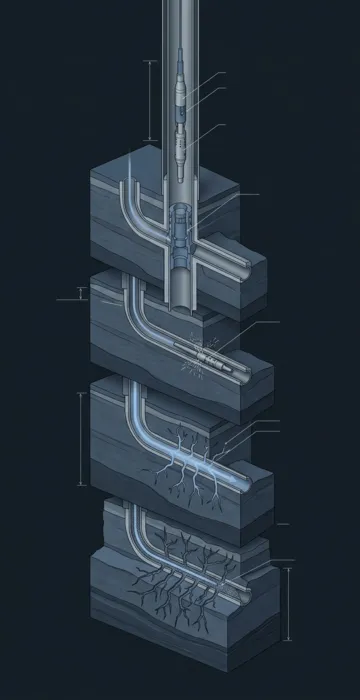
Plug and perf is the most common method for fracking horizontal wells in stages. A wireline crew pumps a tool string down the lateral that carries both a frac plug and perforating guns.
When the tools reach the right depth, the crew sets the plug to seal off the stage that was just fracked below it. Then they pull up and fire the guns. A perforating gun uses shaped charges to punch holes through the casing and cement into the rock. Usually several clusters of holes are shot per stage.
The wireline crew then pulls the spent guns out, and the well is ready for the next frac stage. The cycle repeats from the toe back toward the heel of the lateral.
There are other methods, like sliding sleeve systems that open with balls dropped from surface. Plug and perf stays popular because it's flexible and well understood.
Step 4: What Happens When a Frac Stage Is Pumped?
Pumping a stage is the heart of the hydraulic fracturing process. It usually follows three phases.
- Pad: clean fluid is pumped first to break down the rock and open fractures.
- Proppant stages: sand is added, and its concentration is stepped up as the fractures grow.
- Flush: clean fluid pushes the last of the sand out of the casing and into the fractures.
Treating pressures can run from several thousand psi to more than 10,000 psi, depending on depth and rock. The frac pumps work in unison, and the data van watches pressure, rate and sand concentration second by second.
The sand is what keeps the fractures open after pumping stops. The SLB glossary's entry on proppant explains the different types, from natural sand to manufactured ceramic grains.
What Is a Screenout?
A screenout happens when sand packs off in the fractures or the wellbore and pressure spikes. Pumping stops early, and the crew may need to clean out the well before continuing. It's one of the most common frac problems, and avoiding one is a big part of the job design.
Step 5: How Many Frac Stages Does a Well Have?
It depends on the lateral length and the design. A modern horizontal well can have dozens of frac stages, and very long laterals may have many more.
Engineers choose the stage spacing and the number of perforation clusters per stage. Tighter spacing generally means more stages and more fracture contact with the rock. It also means more time and cost. Each operator balances that differently, and designs keep changing as they learn what works in each basin.
What Is a Zipper Frac?
A zipper frac is when a crew works two or more wells on the same pad in rotation. While one well is being pumped, wireline is setting a plug and perforating the next stage on another well. Then they switch.
The name comes from the pattern. Stages alternate between wells like the teeth of a zipper closing.
The payoff is efficiency. The expensive frac pumps spend far more time pumping and less time waiting on wireline. Some operators go further with simultaneous fracs, where two wells are pumped at the same time from one spread. I'd argue these techniques did more to cut frac costs than most of the headline technology of the last decade.
Step 6: What Happens After the Last Stage?
When the final stage is pumped, the frac spread is rigged down and moved to the next pad. Then the well still has a plug sitting between every stage, which has to go.
A coiled tubing unit or a workover rig runs in with a small bit or mill and drills out each plug. The debris is circulated out of the well. Some operators use dissolvable plugs that break down on their own, which can shorten or skip the drill-out step.
Planning around this matters. If you're wondering about schedules, here's a breakdown of how long fracking takes, from rig-up through flowback.
Step 7: What Is Flowback?
Flowback is when the well is first opened and the frac fluid starts coming back to surface, along with sand and eventually oil and gas. It's done through temporary equipment designed to handle high pressure and sand.
Flowback equipment typically includes chokes to control rate, sand separators to catch proppant, and separators and tanks to split and store fluids. The crew watches closely, because opening a well too aggressively can pull sand out of the fractures and damage the well.
Only part of the pumped fluid returns. The rest stays in the formation. Flowback and produced water are recycled, treated or sent to permitted disposal wells.
Step 8: How Does the Well Go on Production?
Once flowback stabilizes, the well is turned over to production. It's tied into permanent facilities: separators, tanks, gas lines and meters.
Many shale wells flow on their own at first. As pressure drops, most eventually need artificial lift, like gas lift, rod pumps or electric submersible pumps.
How Much Water and Sand Does a Frac Job Use?
A lot, and the amount has grown over time as laterals got longer and designs got more aggressive. A modern horizontal well commonly uses millions of gallons of water and many millions of pounds of sand. The exact figures vary widely by basin, lateral length and operator.
That's why logistics run the frac site. Water arrives by temporary lines from ponds or recycling facilities, or by truck. Sand arrives by truck, often from mines located in or near the basin. If either supply falls behind, the pumps stop, and an idle frac spread is very expensive.
Who Works on a Frac Crew?
A frac crew is bigger than most people expect, and several companies usually work on the same site at once.
- Frac service crew: equipment operators who run the pumps, blender and sand systems.
- Frac supervisor and engineers: run the job from the data van and adjust the design on the fly.
- Wireline crew: sets plugs and runs the perforating guns between stages.
- Water transfer and sand logistics crews: keep supplies flowing.
- Company representative: the operator's on-site lead, often called the company man.
- Pressure control and flowback hands: handle wellhead valves and early flowback.
Crews typically work round-the-clock shifts, because a spread earns its keep only while it's pumping. It's long, loud work, and good crews take real pride in clean, fast stage transitions.
What Safety Hazards Exist on a Frac Site?
High pressure is the biggest hazard. A failed connection or line can release enormous energy, so frac sites keep strict exclusion zones around the iron when it's pressured up.
Other hazards include silica dust from sand handling, heavy truck traffic, working at height on equipment, and the usual risks of moving heavy loads. Modern sand systems and dust controls have reduced silica exposure, but it still demands attention.
Everything comes back to procedures. Pressure tests, lockouts and clear communication between the data van and the field crew are what keep people safe.
The Hydraulic Fracturing Process: A Repeating Rhythm From Toe to Heel
The hydraulic fracturing process is a cycle. Prepare the well, rig up the spread, then plug, perforate and pump each stage from the toe of the lateral back to the heel. After the last stage, drill out the plugs, flow the well back and put it on production.
The steps haven't changed much in principle, but the efficiency has. Zipper fracs, better pumps and smarter designs mean today's crews pump far more stages in less time than they used to.
If you're trying to understand a frac schedule or a site you drive past, look for the rhythm. Wireline goes in, pumps go to work, and the cycle starts again.