How Long Does It Take to Frack a Well?
Fracking gets talked about as if it's a long, drawn-out project. Neighbors near a new pad often expect months of trucks and noise. Investors want to know how fast a new well turns into cash. And people new to the industry are often surprised at how quickly the pumping part goes. The honest answer depends on what you count. So how long does it take to frack a well?
The fracking itself usually takes a few days to a couple of weeks per well, depending on lateral length, the number of stages and how many wells share the pad. A single horizontal well with dozens of stages can often be pumped in about a week. On a multi-well pad, the frac crew may be on location for several weeks, because it works all the wells in rotation. Add rig-up, plug drill-out and flowback, and the full completion cycle commonly stretches to a month or more. First production often follows within a few weeks.
What Does a Typical Frac Schedule Look Like?
Here's a rough frac schedule for a horizontal well on a pad. Treat the times as typical ranges, not promises. Every basin, operator and crew is different.
| Phase | Typical duration |
|---|---|
| Well prep and frac tree install | A day or two |
| Rig up the frac spread | One to a few days |
| Pumping the frac stages | Several days to a couple of weeks per well |
| Rig down and move off | A day or two |
| Drill out plugs | A few days per well |
| Flowback | Days to a few weeks |
Pumping takes the biggest chunk of time, but it's not the only piece. Waiting on equipment, water, sand or weather can add days anywhere in that schedule.
How Many Frac Stages Per Day Can a Crew Pump?
That's the number that really drives frac time. Stages per day depends on how much downtime there is between stages, not just how long each stage takes to pump.
On a single well, the pumps sit idle while wireline sets the next plug and perforates. That waiting time limits how many stages get done in a day. On a zipper frac, the crew alternates between two or more wells. While one is pumping, wireline works on another, so the pumps stay busy.
Efficient zipper operations commonly reach around ten or more stages per day, and simultaneous fracs, where two wells are pumped at once, can go higher. Single-well jobs run slower. Those are broad industry ranges, and they keep improving as crews and equipment get better.
Once you know the stage count and the pace, the math is simple. A well with 50 stages at 10 stages a day is about five days of pumping, assuming nothing goes wrong. Something usually does, so plan for more.
What Makes Fracking Take Longer?
Plenty of things can stretch a frac job. These are the usual culprits:
- Longer laterals with more stages simply take more pumping time.
- Screenouts, when sand packs off and the crew has to clean out the well.
- Equipment failures on pumps, wireline or wellhead valves.
- Supply problems, especially running short of water or sand.
- Weather, from lightning holds to winter freeze-ups.
- Wireline problems, like a plug that won't set or a gun that misfires.
- Pressure limits that force slower pump rates in some formations.
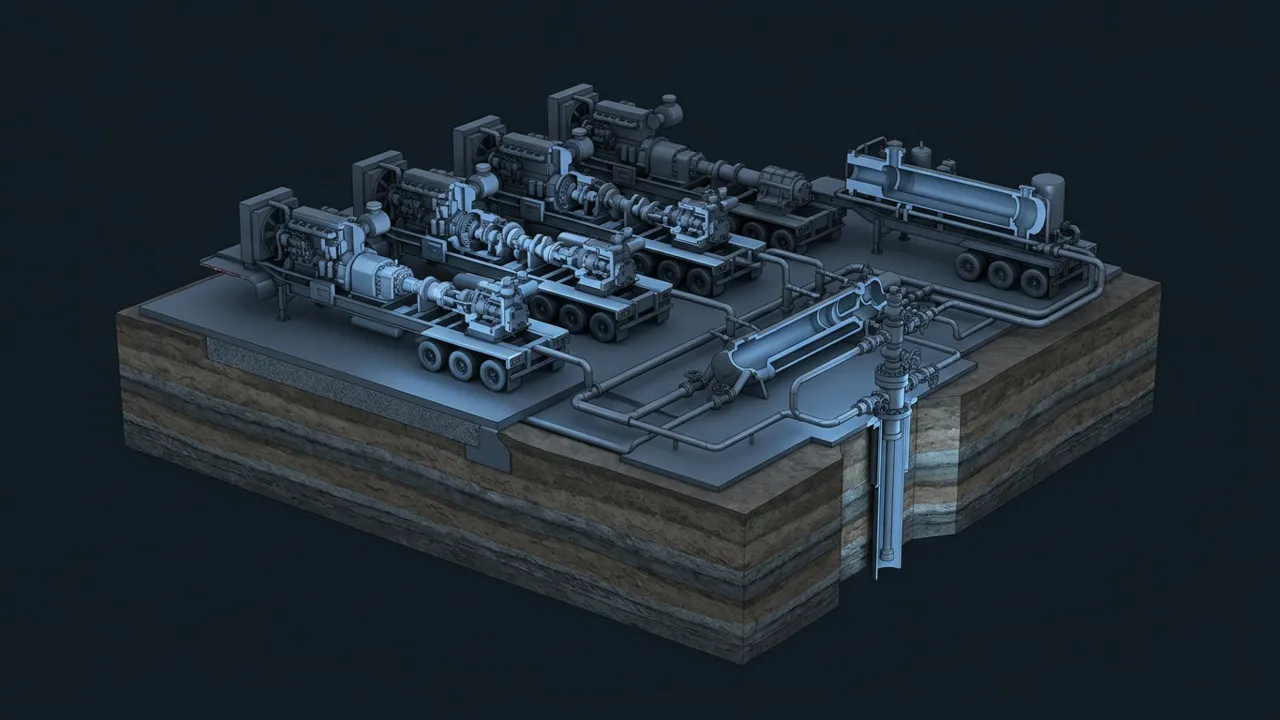
Pump horsepower and the size of the fleet matter too. Understanding the frac spread equipment on location helps explain why one crew can move faster than another on the same kind of well.
How Long From Frac to Production?
After the last stage, the well isn't producing yet. The plugs between stages have to be drilled out, usually with coiled tubing, unless dissolvable plugs were used. That alone takes a few days per well.
Then comes flowback, when frac fluid, sand and eventually oil and gas come back to surface through temporary equipment. Once flow stabilizes, the well is tied into permanent production facilities.
All told, the time from frac to production is commonly a few weeks. It can be much longer if pipelines, processing or facilities on the pad aren't ready.
Why Do Some Wells Wait Months Before Fracking?
A well that's been drilled but not yet fracked is called a DUC, short for drilled but uncompleted. Operators sometimes keep a backlog of DUCs on purpose.
The reasons are mostly business. Companies may wait for better prices, for pipeline capacity, for a frac crew to become available, or for enough wells on a pad to frac them all together. The EIA tracked DUC counts by basin in its Drilling Productivity Report, which shows how that backlog rose and fell with the market.
So if you see a finished well pad that sits quiet for a while, that's often why. The drilling is done. The fracking just hasn't been scheduled yet.
How Long Does the Whole Process Take, From Spud to Sales?
For a typical shale well, drilling might take a couple of weeks, depending on depth and lateral length. The completion cycle, including the frac, drill-out and flowback, usually adds a few weeks to a month or more.
On a multi-well pad, everything gets grouped. The rig drills all the wells first, then the frac crew completes them together. That means the first well drilled may wait weeks or months before it's fracked, even though each step is efficient. The way I see it, pad development is faster overall, but it's not faster for any single well.
How Long Does It Take to Frack a Well? Days of Pumping, Weeks of Everything Else
Fracking a single well usually takes a few days to a couple of weeks of actual pumping. On a multi-well pad, the frac crew may stay several weeks. Add rig-up, drill-out and flowback, and the full completion often runs a month or more before the well is producing.
The biggest factors are the number of stages, stages per day, and downtime between them. Supply, weather and equipment problems can stretch any schedule.
If you're planning around a frac, ask the operator for the stage count, the expected pace and the flowback plan. Those three numbers will tell you far more than any general rule.