Hydraulic Fracturing Equipment – What's on a Frac Spread
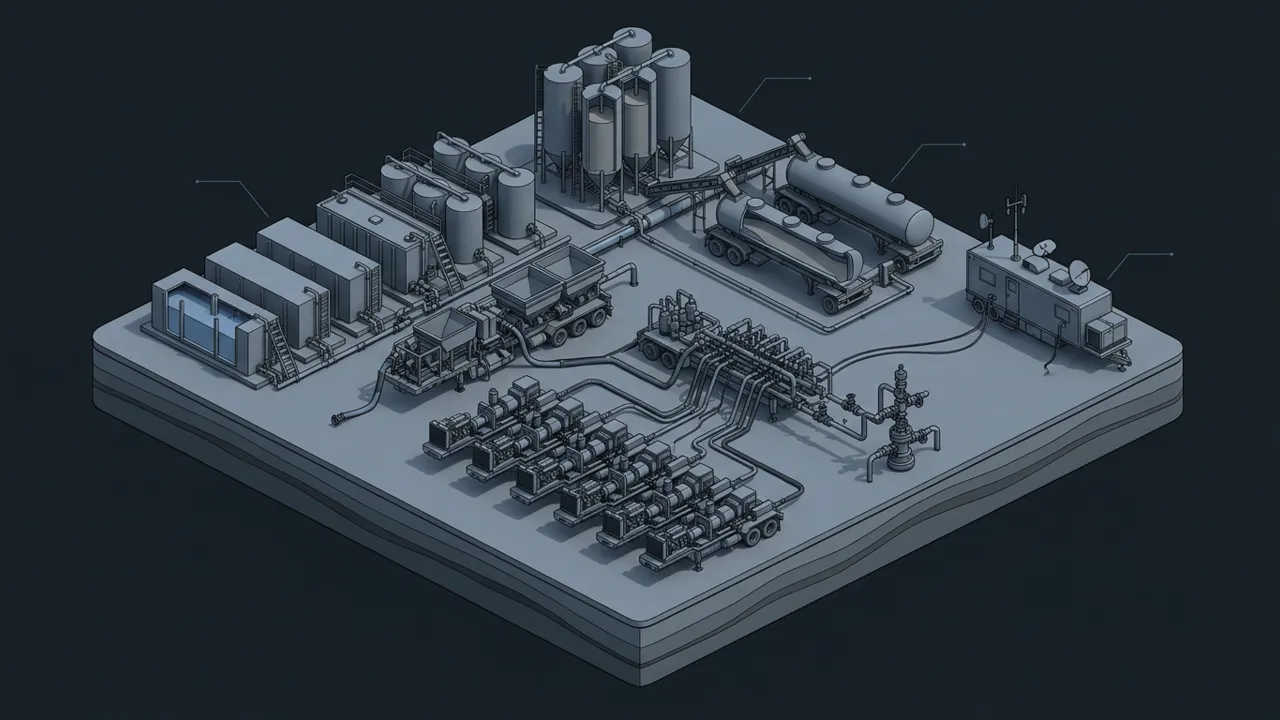
Drive past a frac job and it looks like a truck stop that got lost in a pasture. Dozens of trailers, a wall of sand containers, hoses everywhere, and a low roar that you feel in your chest. So what is all that iron actually doing? And which pieces matter most? This article walks the location the way a hand would, from the water tanks to the wellhead, to answer one question: what hydraulic fracturing equipment makes up a frac spread?
A frac spread is the full set of hydraulic fracturing equipment needed to pump a fracture treatment: water storage, a hydration unit, chemical units, proppant storage, a blender, a bank of high-pressure frac pumps, a manifold, treating iron, the frac tree and a data van that runs it all. Water and chemicals become a base fluid, the blender adds sand, and the pumps push that slurry downhole, often at 10,000 psi or more. Everything upstream of the pumps is low pressure; everything downstream is high pressure. The exact spread varies by job and basin, but these core pieces show up almost everywhere.
Here are the ten core units of a frac spread, roughly in the order the fluid moves through them, with the data van watching over all of it:
- Water storage (frac tanks or a lined pit)
- Hydration unit
- Chemical additive units
- Proppant storage (sand kings, silos or containers)
- Blender
- High-pressure frac pumps
- Manifold trailer
- Treating iron
- Frac tree on the wellhead
- Data van
What Is a Frac Spread, in Plain Terms?
A frac spread is a portable factory. Its one product is a slurry of water, sand and a small dose of chemicals, delivered at high rate and high pressure to a specific interval of a well.
The term "spread" comes from how the equipment is laid out. It spreads across a pad that can cover several acres, and most of it rolls in on trailers and rolls out again when the job is done. A pad with several wells might keep the same spread on location for weeks.
The flow follows a simple path. Think of it in two halves:
- Low-pressure side: water tanks, hydration unit, chemical additive units, sand storage, conveyors and the blender.
- High-pressure side: frac pumps, the manifold trailer, treating iron and the frac tree on the wellhead.
Every piece has a job. Lose one and the whole stage stops.
What Hydraulic Fracturing Equipment Handles Water and Chemicals?
Water is the bulk of any slickwater job, so the water side of the spread is big. Depending on the operator, it comes from frac tanks lined up in rows, from large above-ground storage tanks, or from a lined pit fed by transfer lines. Water transfer crews run lay-flat hose and pumps to keep it coming.
The Hydration Unit
When a job uses gel, the hydration unit is where the gel gets made. It mixes the gelling agent (often guar or a guar derivative) into water and gives it enough residence time to build viscosity before it reaches the blender. On a pure slickwater job, the hydration unit may play a smaller role or be left off entirely.
Chemical Additive Units
Liquid additives like friction reducer, biocide, scale inhibitor and surfactant are metered in by chemical additive trailers or skids. These use small, accurate pumps tied to the data van, so the rates track the job design. Dry additives have their own feeders. The volumes are small next to the water and sand, but getting them right matters for how the fluid behaves downhole.
What Are Sand Kings and How Is Proppant Stored?
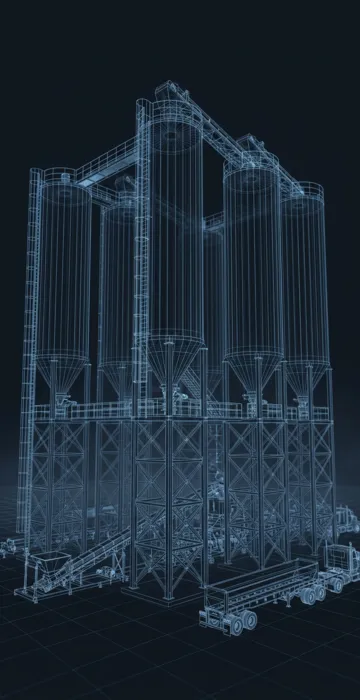
"Sand king" is field slang for a large, multi-compartment proppant storage trailer. A sand king holds a lot of sand, sits upright on location and feeds a conveyor belt that carries proppant to the blender. Older spreads used them heavily, and you will still hear hands call any big sand bin a sand king.
Many operations have shifted to containerized proppant systems. Sand arrives in boxes that stack on a frame, then a conveyor below them feeds the blender. Fans of containers like them because they cut down on pneumatic transfer, which reduces airborne silica dust. Silica exposure is a real health concern on frac sites, and dust control is now a standard part of spread design.
Proppant is the sand or ceramic grain that keeps the fracture propped open after pumping stops. If you want a clean definition, the SLB Energy Glossary entry on proppant is a good one. The volumes are large, which is why sand logistics can make or break a job's schedule.
What Does a Frac Blender Do?
The frac blender is the mixing heart of the spread. It pulls base fluid in from the hydration unit or water supply, adds proppant and chemicals in the right ratios, and feeds the finished slurry to the pumps.
Inside the blender, a tub and agitator keep the sand suspended. Sand screws (augers) meter proppant into the tub, and a centrifugal discharge pump pushes slurry out to the low-pressure manifold. The blender only needs to supply enough suction pressure for the frac pumps, so it works at low pressure but high rate.
The sand concentration is usually stepped up through a stage, starting with clean fluid (the pad) and ramping up in pounds of proppant per gallon. The blender operator and the data van control that ramp. If the blender goes down mid-stage, the pumps lose clean, steady feed, so most crews treat the blender as the one piece they cannot afford to lose. Some spreads bring a backup.
How Do the Frac Pumps and Manifold Work Together?
The pumps are where low pressure becomes high pressure. Each pump is a big positive-displacement plunger pump, usually mounted on its own trailer with its power source. A large job may line up a dozen or more of them, depending on the rate and pressure the design calls for. For the parts and the newer electric fleets, see this breakdown of the frac pump.
Slurry flows from the blender to the manifold trailer, which crews often call the missile. The missile has a low-pressure side that distributes slurry to every pump's suction. It also has a high-pressure side that collects every pump's discharge into one or more treating lines heading to the well.
This setup lets crews take one pump offline without stopping the job. If a pump starts leaking or losing prime, the operator can isolate it and the others pick up the rate. In my experience, a well-designed spread always has more horsepower on location than the job strictly needs. Pumps go down. Planning for it is cheaper than a screenout.
What Is the Treating Iron and the Frac Tree?
Treating iron is the high-pressure pipe, fittings, swivels, check valves and plug valves that connect the missile to the wellhead. It is rated for high pressure and erosive sand flow, and it gets inspected and tested on a schedule. Some newer spreads replace much of the loose iron with larger-bore, fewer-connection lines to cut down on leak points.
At the well, the treating lines tie into a frac tree (a stack of large valves sitting on the wellhead), sometimes topped by a "goat head" connection block that accepts several lines. On multi-well pads, a zipper manifold lets crews frac one well while wireline works on the next. That alternating rhythm is what people mean by a zipper frac.
Everything on the high-pressure side gets pressure tested before the job starts. Crews keep people out of the red zone around the iron during pumping, because a failed connection at these pressures is deadly. OSHA's well completion eTool covers many of these hazards in plain language.
What Happens in the Frac Data Van?
The data van is the control room. Inside, the frac crew's engineers and supervisors watch real-time rate, pressure, proppant concentration and chemical rates for every stage. In many spreads, the van also sends control signals to the blender, chemical units and pumps.
The data van records everything, which is where the stage reports and treatment charts come from. The company representative usually spends a lot of time there too. When something looks wrong, like pressure climbing toward a screenout, this is where the call to cut sand or flush gets made.
Modern vans often stream data offsite so engineers in an office can watch along. That is useful, but the people on location still make the fast calls.
What Other Equipment Shows Up on Location?
A spread is more than the pumping equipment. Several support units work alongside it on most jobs.
| Unit | What it does |
|---|---|
| Wireline unit and crane | Runs perforating guns and frac plugs between stages in plug-and-perf completions |
| Pressure control equipment | Lubricator and valves that let wireline enter a pressured well safely |
| Fuel trucks or gas supply | Feeds diesel, dual-fuel or gas-powered pumps and generators |
| Power generation | Turbines or gas generators that run electric frac fleets |
| Flowback equipment | Separators, sand traps and tanks used after the frac to clean up the well |
| Coiled tubing unit | Often drills out frac plugs after the stages are pumped |
How much of this sits on location at once depends on the job. A small vertical well frac might need a modest spread. A big multi-well pad can look like a small town.
How Is a Frac Spread Laid Out?
Layout follows the flow. Water storage usually sits at one edge, sand at another, both feeding toward the blender in the middle. The pumps line up in rows on either side of the missile, and the iron runs from there to the wellheads.
Crews also plan for traffic. Sand haulers and fuel trucks need room to get in and out without crossing the high-pressure zone. Good spread layouts keep the people and the iron apart as much as the pad allows.
A rough walk-through, in order of flow:
- Water tanks or pit feed the hydration unit or blender.
- Chemical units dose additives into the fluid stream.
- Sand storage feeds proppant by conveyor into the blender.
- The blender mixes slurry and sends it to the missile.
- Frac pumps draw from the missile and discharge at high pressure.
- Treating iron carries slurry to the frac tree and down the well.
- The data van watches and controls the whole sequence.
What Hydraulic Fracturing Equipment Really Makes a Frac Spread?
Strip it down and a frac spread is water, chemicals, sand, a blender, a row of pumps, a manifold, iron, a tree and a control room. The low-pressure side builds the fluid. The high-pressure side drives it into the rock. The data van keeps both halves honest.
If you are sizing up a spread, start with the pumps and the blender, because those set the job's limits. Then look at sand logistics and dust control, which quietly decide whether a job runs on schedule. The rest is support, but it is support nobody can skip.