When Was Hydraulic Fracturing Invented?
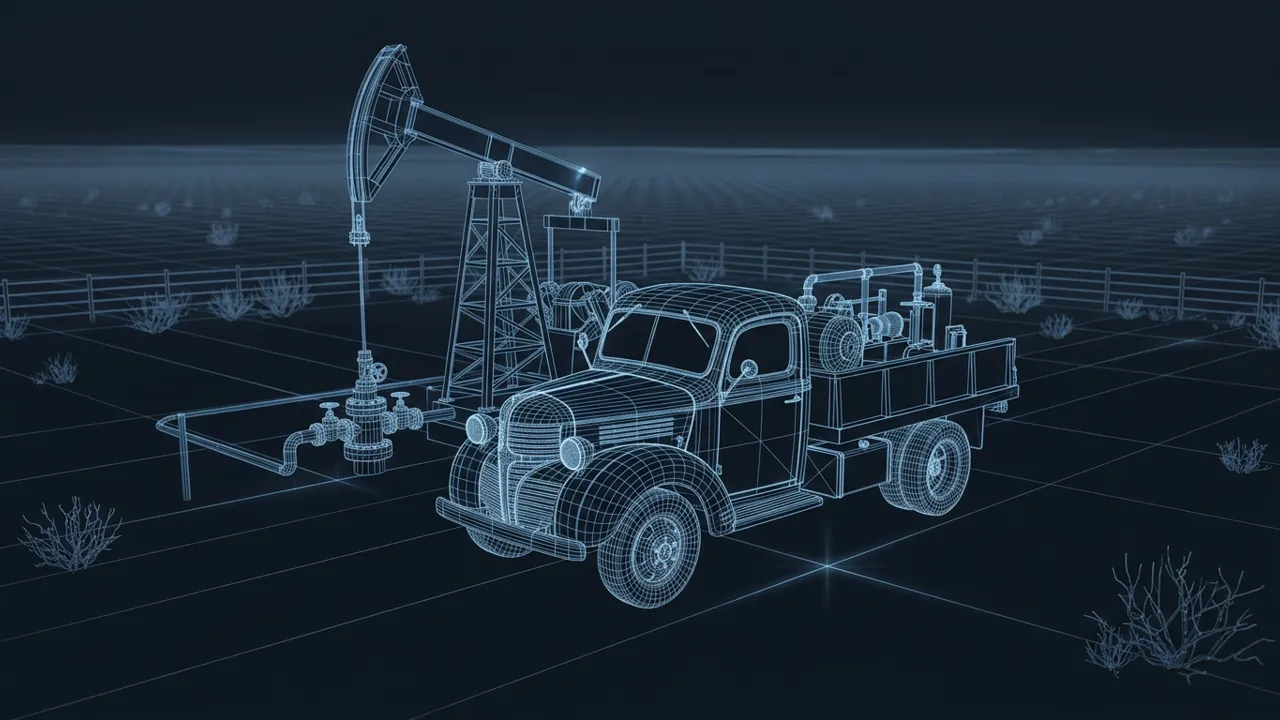
Fracking gets talked about as if it showed up around 2008 along with the shale boom. It didn't. The technique is older than most of the people arguing about it, and its roots go back to the first decade of the American oil business. The real story is a long series of small, practical steps. So when was hydraulic fracturing invented?
Hydraulic fracturing was invented in the late 1940s: the first experimental frac job was pumped in 1947 in the Hugoton gas field in Kansas, and the first commercial treatments followed in 1949 in Oklahoma and Texas. Stanolind Oil and Gas ran the 1947 experiment, using gelled gasoline and sand to try to boost a gas well's output. Stanolind patented the process and licensed it to Halliburton, which pumped the first commercial jobs in March 1949. The method spread quickly through the 1950s. What most people call "fracking" today, meaning large-volume, multi-stage fracs in horizontal shale wells, came decades later, in the late 1990s and 2000s.
What Came Before Hydraulic Fracturing?
Before hydraulic fracturing, oilmen tried to break up rock with explosives. In the 1860s, a Civil War veteran named Edward Roberts patented a "torpedo," an iron shell packed with powder (and later nitroglycerin) that was lowered into a well and detonated. "Shooting" wells this way often boosted production, and it became common practice in the Pennsylvania oil region.
It was also very dangerous. Nitroglycerin killed and injured plenty of the "shooters" who hauled it. Well shooting continued well into the 20th century, but it was a blunt tool.
In the 1930s, operators began pumping acid into wells to dissolve rock and improve flow, especially in limestone. Some engineers noticed that, at high enough pressure, the rock seemed to part. That observation set the stage for the next idea: use fluid pressure itself to crack the rock.
What Was the First Frac Job?
The first frac job was an experiment in 1947 on the Klepper No. 1 gas well in Grant County, Kansas, in the Hugoton field. Stanolind Oil and Gas, a part of Standard Oil of Indiana, had been studying the relationship between pumping pressure and well performance.
The crew pumped gasoline thickened into a gel, along with sand, into a limestone gas zone. Then they pumped a breaker so the gel would thin and flow back. The experiment did not produce a dramatic jump in production. But it showed the concept could work, and Stanolind kept at it.
In 1949, Stanolind engineer J.B. Clark published a technical paper describing the "Hydrafrac" process. Stanolind received a patent and granted an exclusive license to the Halliburton Oil Well Cementing Company.
When Did Commercial Fracking Begin?
Commercial fracking began on March 17, 1949, when Halliburton crews pumped treatments on wells in Stephens County, Oklahoma, near Duncan, and in Archer County, Texas. These used crude oil or lease oil mixed with sand, pumped by equipment that would look tiny next to a modern spread.
The results were good enough to catch on fast. Hundreds of wells were treated in the first year, and the number grew quickly through the 1950s. Over time, crews moved from oil-based fluids to water-based ones, which were cheaper and safer, and pumps grew larger.
The AOGHS chronology of U.S. petroleum history is a good place to place these dates against the rest of the industry's timeline.
How Did Fracking Change From the 1950s to the 1990s?
For several decades, fracking was a routine completion tool used on many conventional vertical wells. Jobs got bigger, and fluids got better. Gelled water and later crosslinked gels let crews carry more sand into wider fractures.
A few milestones stand out:
- 1950s: rapid spread of fracturing across U.S. oil and gas fields.
- 1960s: Project Gasbuggy (1967) in New Mexico tested a nuclear device to fracture tight gas rock. It produced gas that was too radioactive to sell, and the idea was dropped.
- 1970s: "massive hydraulic fracturing" of tight gas sands, with much larger fluid and sand volumes. Federal research, including the Eastern Gas Shales Project, studied how to produce gas from shale.
- 1980s and 1990s: better fracture modeling, better proppants and steady research by operators and government-backed programs.
Through all of this, shale remained mostly uneconomic. The rock was too tight for the tools of the time.
How Did Frac Equipment Change Over the Years?
Early frac jobs were pumped with the same kind of truck-mounted pumps used for cementing. Volumes were small by today's standards, and a job might take a few trucks and a few hours. Halliburton's cementing roots made it a natural fit, since it already had pumping crews and equipment in the field.
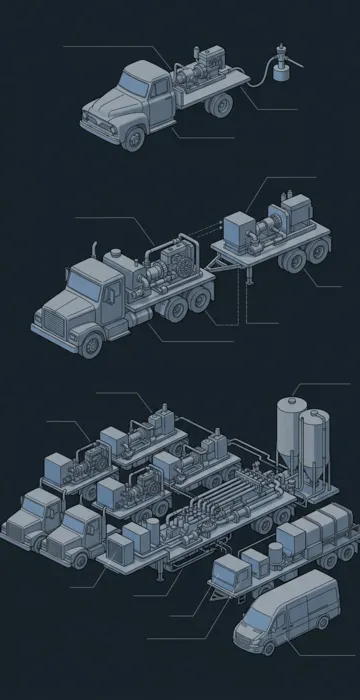
As jobs grew, so did the iron. Dedicated frac pumps with more horsepower replaced converted cement pumps. Blenders were built to mix sand into fluid continuously rather than in batches. Sand storage, chemical units and monitoring equipment followed.
The biggest change came with multi-stage horizontal work. A modern frac spread can bring many high-horsepower pumps, large proppant systems and a data van that controls the job in real time. Newer fleets run on natural gas or electricity instead of diesel alone.
Why Did Water Replace Oil as the Base Fluid?
The first commercial jobs used oil-based fluids because engineers worried water would damage the formation. Oil, however, is flammable, costly and harder to handle at volume. As water-based gels and additives improved through the 1950s and 1960s, crews found water could do the job safely and for less money. By the shale era, water-based fluids were the standard almost everywhere.
What Role Did the Barnett Shale Play?
The Barnett Shale in North Texas is where modern shale fracking took shape. Mitchell Energy, led by George P. Mitchell, spent years in the 1980s and 1990s trying to make Barnett wells pay. Gel fracs worked but were expensive.
In the late 1990s, Mitchell's engineers tried slickwater fracs, which used mostly water with friction reducer. They were far cheaper, and the wells performed as well or better. That was a turning point.
In 2002, Devon Energy acquired Mitchell Energy. Devon and others then paired slickwater fracs with horizontal wells in the Barnett, and the results jumped again. Within a few years, the same playbook was being tried in other shales.
How Did the Shale Boom Spread?
From the mid-2000s, the shale approach spread to formations across the country. The Fayetteville, Haynesville and Marcellus became major gas plays. The Bakken, Eagle Ford and the Permian Basin became major oil plays. Multi-stage completions, longer laterals and pad drilling made each generation of wells more productive.
The result was a large increase in U.S. oil and gas output. It also brought fracking into public debate for the first time. Concerns about water, earthquakes from wastewater disposal, truck traffic and emissions became national topics. Our article on fracking pros and cons lays out both sides.
Who Invented Fracking?
No single person did. Credit usually goes to Stanolind Oil and Gas for the 1947 experiment and the patent, with Floyd Farris of Stanolind often named for the early research and J.B. Clark for the 1949 paper. Halliburton commercialized it.
George Mitchell is sometimes called the "father of fracking," but that title is about making shale work, not inventing the technique. He applied and refined it decades later. My take: the honest version is that fracking was invented in the 1940s and reinvented for shale in the 1990s.
When Was Hydraulic Fracturing Invented, Really?
The first experimental hydraulic frac was pumped in 1947, and commercial fracking began in 1949. Everything since has been refinement: bigger jobs, better fluids, horizontal wells and multi-stage completions.
That history matters when you hear fracking described as brand new and untested. It is a 75-plus-year-old technology. What is newer is the scale and the rock it is used in, and that is where the real questions about cost, safety and environmental impact belong.