How Does Horizontal Drilling Work?
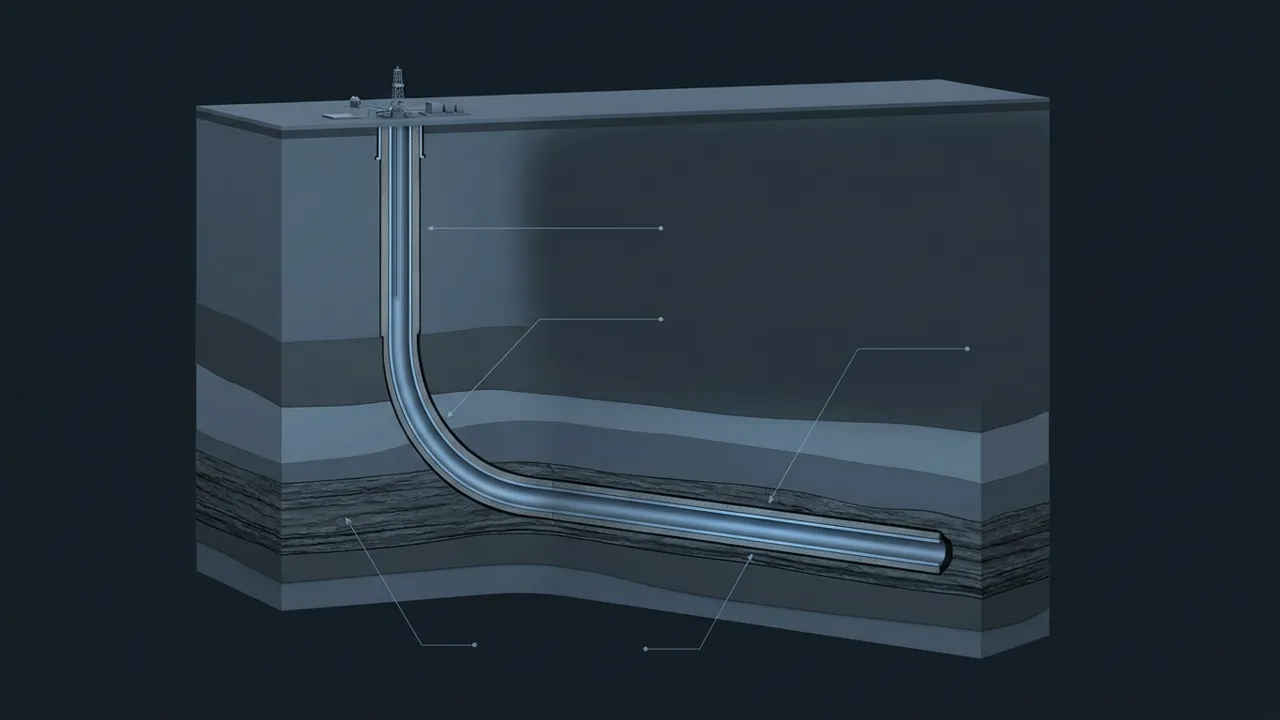
Horizontal drilling changed the oil patch in my working life more than anything else. Fields people had written off came back to life, and rigs that used to drill straight holes started drilling wells that turn and run sideways for miles. Folks hear about it all the time and still picture a drill bit somehow making a right-angle turn underground. It doesn't work like that. So how does horizontal drilling work?
Horizontal drilling works in three sections: a vertical section drilled straight down to a kickoff point above the target, a curve that gradually turns the well from vertical to about 90 degrees, and a lateral that runs sideways through the reservoir rock, often for a mile or more. The turn is made with steerable downhole tools, usually a mud motor with a slight bend or a rotary steerable system. Data from tools near the bit keeps the lateral inside the target zone. A horizontal well puts far more of the wellbore in contact with the pay zone than a vertical well can. That's the whole point.
What Is a Horizontal Well?
A horizontal well is a well that starts vertical, then curves until it runs roughly parallel to the rock layers, which are often close to flat. It's a type of directional well, just one that goes all the way over.
Here's why it matters. Many oil and gas reservoirs are thin, maybe tens of feet thick, but spread out for miles. A vertical well only touches that layer for its thickness. A horizontal well can run through it for thousands of feet. In tight shale, where oil and gas move very slowly through the rock, that extra contact makes the difference between a dry hole and a good well.
Section 1: How Is the Vertical Section Drilled?
The vertical section is drilled much like any conventional well. The rig spuds, drills surface hole, sets and cements surface casing, nipples up the BOP and drills ahead.
The goal is a straight, clean hole down to the kickoff point. That's the depth where the curve begins, usually some distance above the target formation. On many wells, intermediate casing gets set somewhere in this section or through the curve, depending on what trouble zones the well has to pass.
It's not glamorous work, but a crooked vertical section causes problems later. Doglegs up top add torque and drag for the whole rest of the well.
Section 2: How Does the Curve Work?
The curve, also called the build section, is where the well turns from vertical to horizontal. It's the trickiest part of the job.
The directional driller uses a steerable tool to build angle at a planned rate, measured in degrees per 100 feet. With a bent mud motor, the crew stops rotating the string and slides, pointing the bend in the direction they want to go. With a rotary steerable system, the tool steers while the whole string keeps turning.
Curves are sometimes grouped by how tight they turn:
- Long radius: a gentle curve that takes a long distance to reach horizontal.
- Medium radius: a tighter curve, common in many shale wells.
- Short radius: a very tight turn, used in special cases like re-entries.
The hardest moment is landing the curve. The directional driller has to bring the well to near horizontal right inside the target zone, which might be only a few feet thick. Land too high or too low, and you're drilling the lateral in the wrong rock. That's a lot of pressure on one person's judgment, and a good one earns their pay right there.
Section 3: What Happens in the Lateral?
The lateral is the horizontal section, the part that actually produces. Once the curve is landed, the crew drills sideways through the reservoir, trying to stay inside the best part of the rock.
That's done with geosteering. Tools in the bottomhole assembly measure properties of the rock, often natural gamma ray, as the bit goes. Geologists compare that data to what they expect from the target layer. If the readings show the bit drifting out of the zone, they tell the directional driller to nudge it up or down.
Rock layers aren't perfectly flat. They tilt, roll and get offset by faults. A lateral that looks straight on paper might gently climb and dip to follow the layer. Staying in zone is half science and half feel.
How Long Is a Lateral?
Lateral length varies a lot by basin and operator. Early shale laterals were often a few thousand feet. Many wells today run a mile or two, and some have gone past three miles.
Longer laterals mean more rock contacted from one well, and often better economics. But they get harder to drill. Here's what limits lateral length:
- Torque and drag. The pipe lying on the low side of the hole creates friction that builds with length.
- Weight to bit. It gets harder to push the bit forward as the lateral grows.
- Hole cleaning. Cuttings settle in the lateral and have to be carried out.
- Getting casing to bottom at the end.
- Lease boundaries and spacing rules, which often decide how far the well is allowed to go.
Horizontal vs Vertical Well: What's the Difference?
| Vertical well | Horizontal well | |
|---|---|---|
| Path | Straight down | Down, curve, then sideways |
| Contact with reservoir | About the layer's thickness | Often thousands of feet |
| Drilling cost per well | Lower | Higher |
| Production per well | Usually lower in tight rock | Usually much higher in tight rock |
| Wells per pad | Often one | Often many |
| Surface footprint per acre drained | Larger | Smaller |
A horizontal well costs more to drill, but one horizontal well can often replace several vertical ones. Fewer pads and roads on the surface is a real benefit for landowners too.
How Many Horizontal Wells Can Share One Pad?
A lot more than most people expect. Because each well turns and heads off in its own direction underground, several wellheads can sit in a row just a few yards apart on the surface. Some pads hold a handful of wells, and big ones hold many more.
The laterals fan out or run side by side, spaced so they drain different parts of the reservoir without stepping on each other. A walking or skidding rig moves from slot to slot without rigging down. On a busy pad, the rig might drill all the vertical sections first, then come back and drill all the curves and laterals, so it only changes the mud system and tools once.
That's a big part of why horizontal drilling became so efficient. One road, one pad, one rig up, and many wells.
When Did Horizontal Drilling Become Common?
Horizontal wells have been drilled for decades, but for a long time they were special projects. They got more common as downhole motors and MWD tools improved, and they really took off once operators paired long laterals with multistage fracturing in shale. After that, horizontal wells went from the exception to the normal way to drill in many U.S. basins.
Why Is Horizontal Drilling Paired With Fracking?
In shale and other tight rock, horizontal drilling alone usually isn't enough. The rock is so tight that oil and gas barely move through it. So after the well is drilled and cased, the completion crew fractures the rock along the lateral in many stages.
The lateral gives the fractures somewhere to go, spread out over thousands of feet. The fractures give the oil and gas a path to the wellbore. Put together, they turned shale from a source rock geologists studied into one of the biggest sources of oil and gas in the country. The EIA explains how shale became a leading source in its page on where our natural gas comes from.
What Are the Challenges of Horizontal Drilling?
Horizontal wells are harder on everything. Here's what crews deal with:
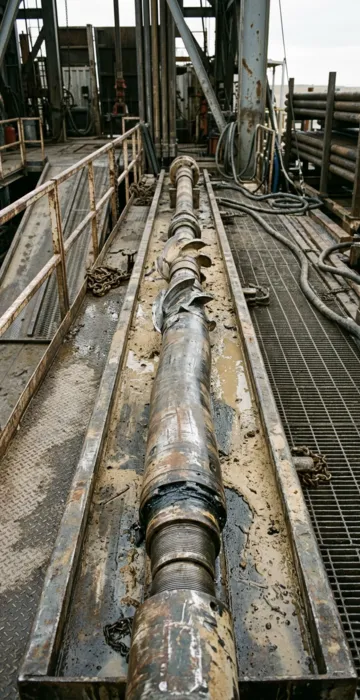
- Stuck pipe from cuttings beds or differential sticking in the lateral.
- Sliding problems, where the string hangs up and won't transfer weight.
- Higher wear on drill pipe and tool joints from rubbing the low side.
- Well control math that has to account for both measured depth and true vertical depth.
- Running long casing strings to the toe and cementing them evenly.
Honestly, the rigs and tools built for this work are impressive. Big pumps, high-torque top drives, rotary steerables and walking rigs made these wells routine. But routine isn't the same as easy. Every lateral still takes a sharp crew.
How Is a Horizontal Oil Well Different From a Pipeline Bore?
No, though the names get mixed up all the time. Horizontal drilling for oil and gas happens thousands of feet down, reaching a reservoir. Horizontal directional drilling, or HDD, is usually a shallow utility and pipeline method used to bore under roads, rivers and buildings to install pipe. They share some ideas about steering, but they're very different jobs. If you want the full breakdown, read our comparison of horizontal directional drilling and oilfield directional drilling.
So, How Does Horizontal Drilling Work? Down, Around and Through the Pay
Horizontal drilling works in three parts. Drill a straight vertical section to the kickoff point, build a curve that lands the well in the target zone, then drill a lateral that runs sideways through the reservoir, steered by data from tools near the bit.
That simple shape is what opened up so much oil and gas from tight rock, especially when paired with fracturing. If you want to understand modern drilling, start by picturing those three sections. Everything else is detail, and a whole lot of hard work by the crews who drill them.