How Deep Are Oil Wells?
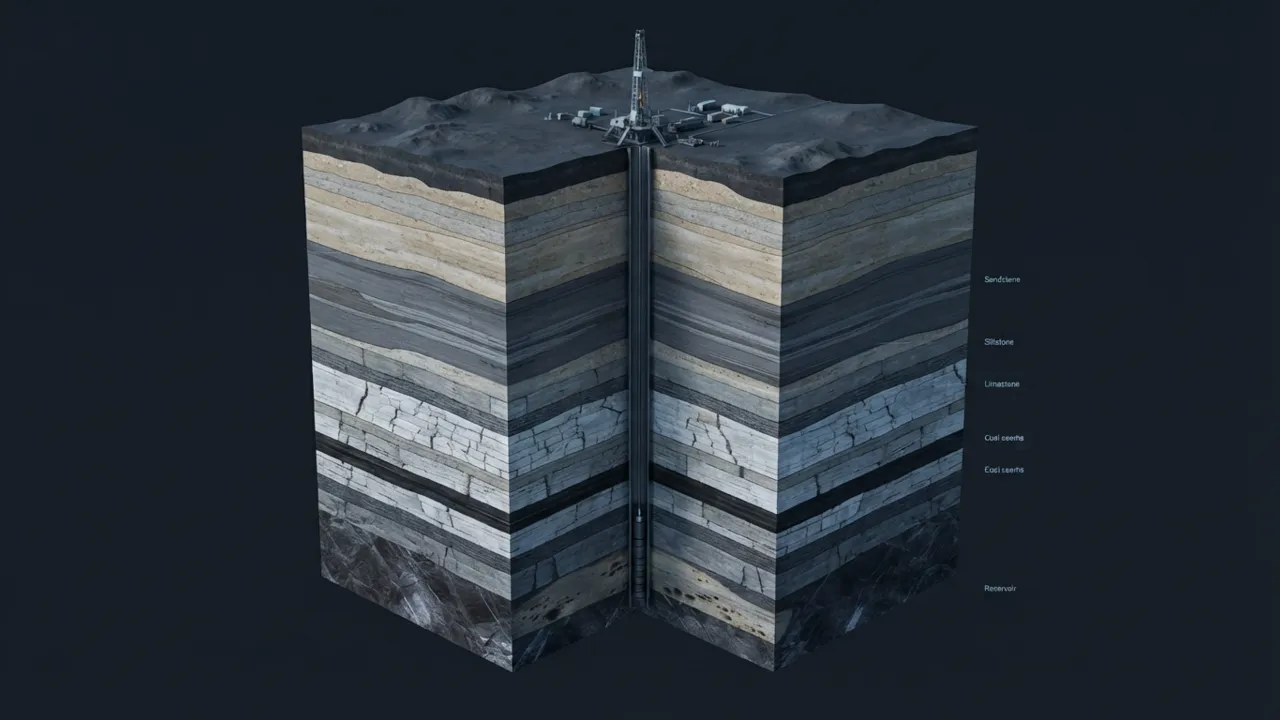
Most people picture an oil well as a straight hole a few hundred feet deep with oil sitting at the bottom like a buried pond. It's not like that. Oil sits in the tiny pores of rock, sometimes not far down and sometimes miles below your boots. And modern wells don't just go down. Many turn and run sideways for miles. So how deep are oil wells, really?
Most oil wells are drilled to somewhere between a few thousand feet and about 15,000 feet of vertical depth, though some go much deeper. Shallow wells in old fields can be only a few hundred to a couple thousand feet deep. Modern horizontal shale wells often reach a vertical depth of somewhere around one to two miles, then run sideways, so their total drilled length can pass 20,000 feet. Deepwater offshore wells and the longest extended-reach wells go farther still, with some topping 30,000 to 40,000 feet of drilled hole. The depth always depends on where the oil-bearing rock sits in that area.
What Is the Average Oil Well Depth?
There isn't one average that tells you much, because oil fields vary so much. A well in an old shallow field and a well in a deep basin can be miles apart in depth.
Here's a rough way to think about it:
| Well type | Typical vertical depth |
|---|---|
| Old shallow field wells | A few hundred to a few thousand feet |
| Conventional onshore wells | Several thousand feet to around 15,000 feet |
| Horizontal shale wells | Often around 5,000 to 12,000 feet vertical, plus a long lateral |
| Deep gas and deepwater wells | 15,000 feet to more than 30,000 feet total depth |
Those are broad strokes, not rules. Depths depend on the geology, and the geology changes from county to county.
Why Are Some Oil Wells So Much Deeper Than Others?
Because the oil is where it is. A well has to reach the reservoir rock that holds the oil or gas, and that rock sits at whatever depth nature put it.
A few things decide that depth:
- The age and burial of the rock layers in that basin.
- Where the source rock got hot enough to make oil or gas.
- Where that oil migrated and got trapped under a seal.
- For shale wells, which layer of shale holds the best oil or gas.
Deeper rock tends to be hotter and under more pressure. That's part of why deep wells are harder, slower and more expensive to drill. If you want the bigger picture of how oil gets from the rock to the surface, Britannica has a solid overview of petroleum production.
What Is Measured Depth vs True Vertical Depth?
This trips up a lot of people, and even some new hands. There are two ways to measure how deep a well is, and on a directional well they give very different numbers.
- Measured depth (MD) is the total length of hole drilled, measured along the wellbore. It's basically how much pipe it takes to reach bottom.
- True vertical depth (TVD) is the straight-down distance from the surface to the bottom of the hole, no matter how the hole curves.
On a straight vertical well, MD and TVD are about the same. On a horizontal well, they're not even close. A shale well might reach its target at a TVD of around 8,000 feet, then drill a lateral two miles long. The MD at the end could be well over 18,000 feet, while the TVD barely changes.
TVD matters for pressure, because the weight of the mud column depends on vertical height, not hole length. MD matters for the rig, because the rig has to pull and turn every foot of that pipe.
What Is the Deepest Oil Well Ever Drilled?
It depends on which "deepest" you mean.

Deepest Hole of Any Kind
The deepest hole ever drilled wasn't an oil well. The Kola Superdeep Borehole in Russia was a scientific project, and it reached a little over 40,000 feet, about 7.5 miles, before work stopped. It's still the benchmark people quote for deep drilling.
Longest Oil and Gas Wells
The longest oil and gas wells are extended-reach wells, drilled out at a shallow angle to reach reservoirs far from the rig. Wells off Sakhalin Island in Russia and in the Middle East have topped 40,000 feet of measured depth. Their vertical depth is much less, because most of that hole runs sideways.
Deepest by Total Depth Offshore
Some deepwater Gulf wells have been drilled to total depths of more than 30,000 feet below the rig, counting thousands of feet of water plus the hole below the seafloor. Those are some of the hardest wells anybody drills.
How Deep Can a Drilling Rig Go?
Every rig has a depth rating, and it's really about weight. The deeper the well, the heavier the drill string, and the more the rig's mast, drawworks and hoisting system have to lift. Pump pressure and horsepower matter too, because the mud has to be pushed down the pipe and back up the hole.
A small rig might be rated for a few thousand feet. A big land rig can handle wells of 20,000 feet or more. The biggest offshore rigs are built for the deepest, heaviest work in the business.
Depth also means time. The deeper the hole, the longer every trip takes, because the crew has to pull and run every stand. If you're curious what that work looks like, read about tripping pipe and why it takes so long on a deep well.
Have Oil Wells Gotten Deeper Over Time?
Yes. The first commercial American wells in the mid-1800s were shallow, often under a hundred feet. Cable-tool rigs pounding the hole down could only go so deep, and not very fast.
Rotary drilling, better steel, stronger rigs and heavier drilling mud changed that. Each improvement let crews reach deeper rock and handle higher pressure. The easy shallow oil in many basins got produced first, so operators kept going deeper to find more. Today, the bigger change is less about going straight down and more about going sideways, with laterals that put miles of hole in the pay zone.
Does a Deeper Well Mean More Oil?
Not necessarily. Depth doesn't decide how much oil a well makes. The quality of the reservoir rock does: how porous it is, how easily fluids move through it, how much oil it holds and how much pressure is behind it.
A shallow well in good rock can be a fine producer. A deep well in tight rock may need fracturing to flow at all. Horizontal wells help here, because a long lateral puts much more of the wellbore in contact with the pay zone than a vertical well could.
So, How Deep Are Oil Wells? As Deep as the Rock Says
Most oil wells reach somewhere between a few thousand feet and about 15,000 feet of vertical depth. Horizontal wells add miles of lateral, and the longest wells top 40,000 feet of measured depth.
When you hear a well's depth, ask whether it's measured depth or true vertical depth. That one question will tell you a lot more about the well than the number alone. And remember, the oil doesn't care how deep we'd like it to be. We drill to where it is.