What Is Mud Logging? – Reading the Well Through Cuttings and Gas
A drill bit two miles down can't send back photos. Nobody on the rig can see what rock it is cutting, whether it just hit oil, or whether pressure is building. Yet the crew usually knows within minutes, because the mud brings the evidence to the surface. Someone has to catch it, read it and write it down. So what is mud logging, and what does a mud logger actually do?
Mud logging is the practice of examining the rock cuttings and gases carried to the surface by the drilling mud to build a depth-by-depth record of the formations being drilled. A mud logger catches cuttings at the shale shakers and describes the rock and any signs of oil under a microscope. Gas detectors measure the hydrocarbon gas released from the mud. All of this is plotted against depth, along with drilling data like rate of penetration, on a chart called a mud log. The log helps geologists pick formation tops and pay zones, and it gives the rig early warning of pressure changes.
Why Is Mud Logging Done?
Mud logging is done because it gives the first real look at the rock, while the well is still being drilled. Wireline logs and many other measurements come later. The mud log answers practical questions in real time:
- What formation is the bit in right now?
- Have we reached the target zone or a casing point?
- Are there oil or gas shows worth testing?
- Is formation pressure rising, which could mean kick risk ahead?
- Is the hole stable, or are cavings telling us the wall is breaking down?
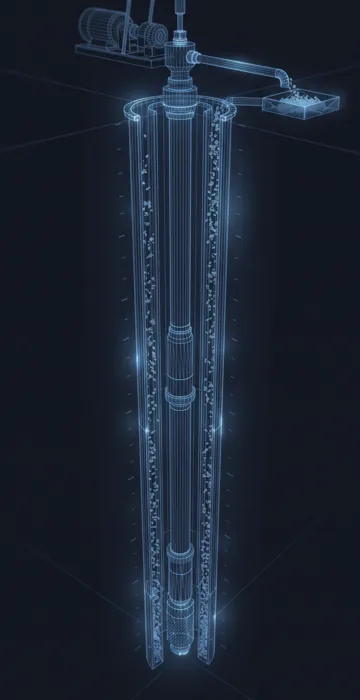
Here's the key idea: the mud is a conveyor belt from the bottom of the hole to the surface. The mud logger's job is to read what's on the belt and figure out where it came from.
What Does a Mud Logger Do on a Typical Tour?
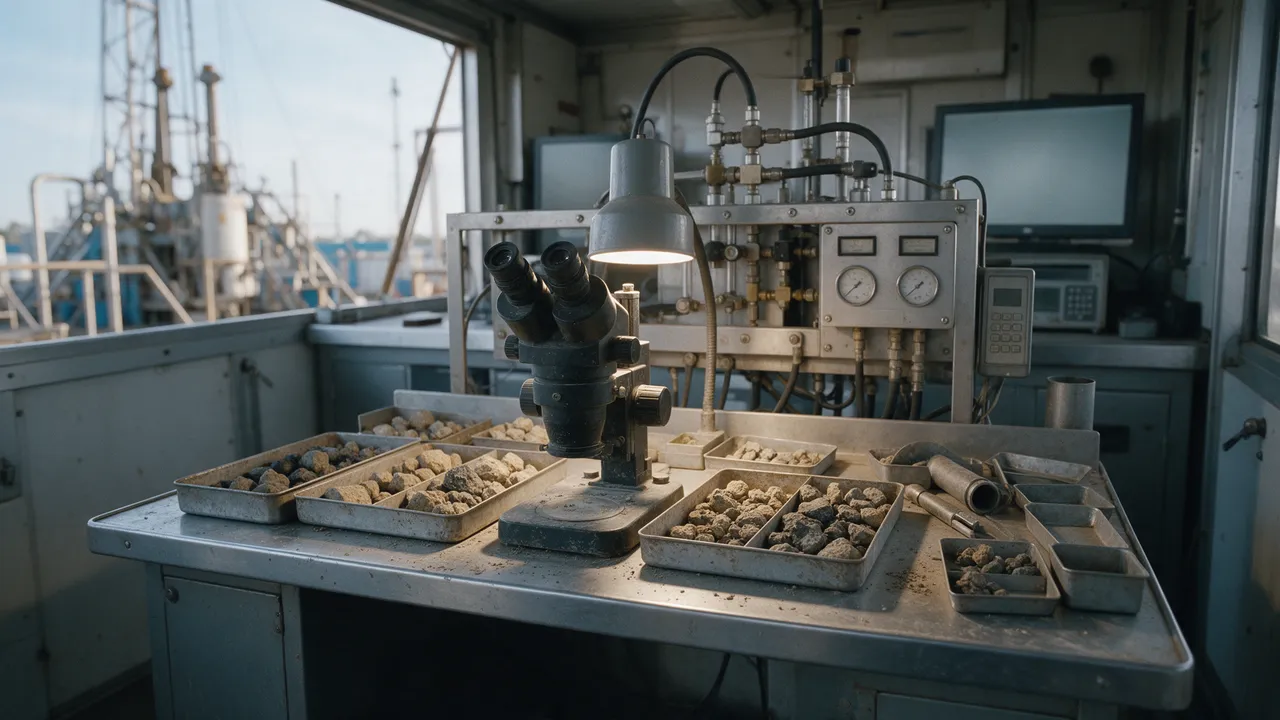
A mud logger usually works from a logging unit, a trailer or cabin on location packed with gas equipment, computers, a microscope and sample-processing gear. On a typical tour, the work looks like this:
- Calculate lag time so each sample can be matched to the depth it came from.
- Catch cuttings at the shakers at set depth intervals (the well plan sets the spacing).
- Wash and sieve each sample to remove mud.
- Examine the cuttings under a microscope and describe the lithology.
- Check for oil shows using ultraviolet light and solvent tests.
- Monitor gas readings and note any spikes, connection gas or trip gas.
- Track drilling parameters and pit levels on the screens.
- Update the mud log and report anything unusual to the geologist and the driller.
Samples are often bagged, labeled and kept, so geologists can study them later.
What Is Lag Time in Mud Logging?
Lag time is how long it takes cuttings to travel from the bit up the annulus to the shakers. It's the key to the whole craft. Without it, you'd be describing rock and putting it at the wrong depth.
The basic calculation divides the annular volume by the pump output. If the annular volume is 300 barrels and the pumps put out 10 barrels per minute, the lag is about 30 minutes. That means the rock on the shakers right now was drilled half an hour ago.
Because hole size is never exactly what the plan says, loggers check the calculated lag with a tracer. A common trick is dropping a bit of carbide or another easy-to-detect material into the pipe at a connection and timing how long it takes to show up on the gas detector.
How Does Cuttings Analysis Work?
Cuttings analysis is the geology side of the job. Under the microscope, the logger describes each sample using standard terms:
- Rock type: sandstone, shale, limestone, dolomite, anhydrite, salt and so on.
- Color, grain size, sorting and rounding.
- Cement and porosity (how tightly packed the grains are).
- Percentages of each rock type in the sample.
- Oil shows: stain, odor, fluorescence under UV light and "cut" (oil leaching into a solvent).
Some units add calcimetry (testing carbonate content) and shale density measurements. Shale density is a nice example of teamwork between geology and safety. Shale normally gets denser with depth as it compacts. If density starts dropping instead, that can signal overpressured rock ahead.
How Does Gas Detection Work?
Gas detection starts with a gas trap, a small agitator mounted in the possum belly where mud returns arrive. It stirs the mud and pulls released gas through a sample line to the logging unit. There, instruments measure:
- Total gas: the overall hydrocarbon gas content.
- Chromatograph breakdown: individual gases such as methane, ethane, propane and butanes.
- Hydrogen sulfide (H2S) and sometimes carbon dioxide.
Loggers watch for three patterns. Background gas is the steady level while drilling. Connection gas is a small spike that shows up one lag after a connection, when the pumps were off and bottom-hole pressure dropped. Trip gas appears after a trip for the same reason. Rising connection gas is one of the classic hints that mud weight is getting close to pore pressure.
The ratios between heavier and lighter gases also help geologists judge whether a zone is likely to hold gas, oil or water. It's not a final answer, but it guides where to test.
How Does Mud Logging Help With Well Safety?
Mud loggers are an extra set of eyes for the driller. They watch pit volumes, flow, pump pressure and gas around the clock. If formation fluid starts entering the well, the signs (pit gain, flow increase, gas rising) may show up on their screens at the same time as the driller's. Two sets of eyes catch more than one.
A kick rarely arrives without warnings: drilling breaks, rising gas, changes in cuttings and torque. A logger who knows the trends can flag them early. The decision on what to do always belongs to the driller and the well-site leadership.
Gas readings depend partly on the fluid. In oil-based mud, gas can dissolve into the base oil and show up differently than in water-based mud. Mud weight, viscosity and flow rate all change how gas reaches the trap. That is why loggers keep close tabs on the drilling mud properties and talk with the mud engineer.
What Is on a Mud Log?
A mud log is a long strip chart with depth running down the page. Typical tracks include:
| Track | What it shows |
|---|---|
| Rate of penetration | How fast the bit drilled each foot |
| Lithology column | Rock type percentages, shown as patterns |
| Depth and formation tops | Measured depth and named formations |
| Gas curves | Total gas and individual gas components |
| Shows and descriptions | Written notes on rock and oil shows |
| Remarks | Mud weight, bit changes, trips, surveys, events |
Today most mud logs are built in software and shared in real time with geologists in town, alongside data from tools like logging-while-drilling.
Is Mud Logging a Good Career?
Mud logging is a common entry point into the oilfield for people with a geology or earth science background. Some companies hire sample catchers with less formal training and teach them on the job. It's hands-on work, and it puts you right next to the drilling action.
The lifestyle is like most rig work. Loggers often work rotations of several weeks on and then time off, live on location and work long shifts. Many move on to wellsite geology, operations geology or data roles after building field experience. If you like rocks, puzzles and being where the work happens, it is worth a look.
What Is Mud Logging? Reading the Well One Sample at a Time
Mud logging is the real-time study of cuttings and gas brought up by the drilling mud. A mud logger catches samples, describes the rock, measures the gas, and plots it all against depth to show what the well is drilling through and how it's behaving.
It answers geology questions (where are we, and is there oil?) and safety questions (is pressure changing?) at the same time. If you want to understand the job, start with lag time. Once you can match a sample to its depth, the rest of the mud log starts to make sense.