Oil and Gas in Texas – From Spindletop to the Permian
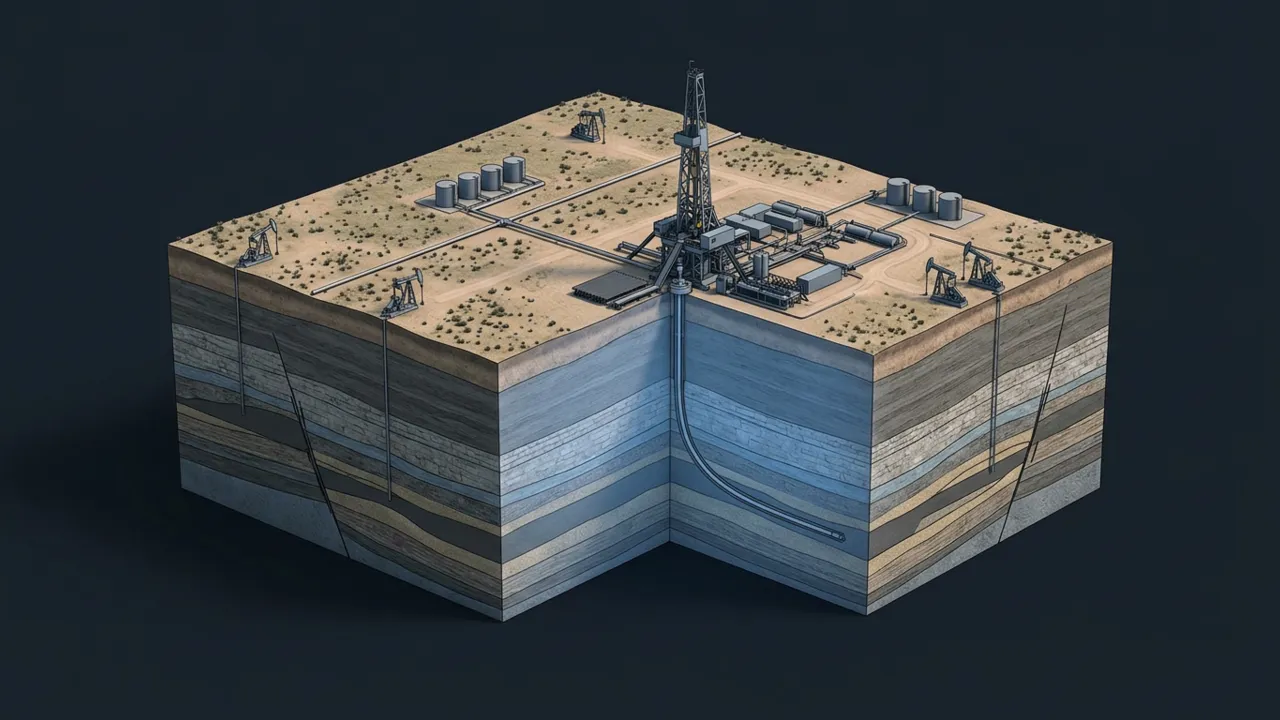
If you grew up anywhere near the oil patch, Texas is the place your mind goes first. It's in the old photos of wooden derricks packed shoulder to shoulder, in the pumpjacks nodding along every farm road, and in the flares you can see from the highway at night in West Texas. Families there can trace their fortunes, and sometimes their heartbreaks, straight back to a well. So how did Texas get here, and what does oil and gas in Texas look like from Spindletop to the Permian today?
Oil and gas in Texas went from a lucky discovery to the backbone of the state's economy in about a century. The modern industry took off on January 10, 1901, when the Lucas gusher blew in at Spindletop near Beaumont and showed the world how much oil Texas held. Big finds followed across the state, including the Permian Basin in the 1920s and the giant East Texas field in 1930. The Railroad Commission of Texas became the regulator that brought order to the chaos. Today Texas produces more crude oil and natural gas than any other state, mostly from shale in the Permian Basin and South Texas.
Where Did Texas Oil History Begin?
Texas oil history really began with small, accidental finds in the 1800s. Early settlers knew about oil seeps, and a few shallow wells were drilled with little success. The first real field came in 1894 at Corsicana, where a crew drilling for water hit oil instead.
Corsicana grew into the first commercial oil field in the state, and Texas's first refinery was built there a few years later. It was a modest start. Nobody yet guessed what was waiting under a low salt dome on the Gulf Coast.
What Happened at Spindletop?
At Spindletop, a well drilled on a salt dome south of Beaumont blew out with a roar on January 10, 1901, spraying oil far above the derrick for days. The Lucas gusher, named for engineer Anthony Lucas who led the effort, flowed at a rate far beyond any well America had seen. Its output is commonly estimated at around 100,000 barrels a day before it was capped.
The rotary rig that drilled it was run by the Hamill brothers, and their use of drilling mud helped them punch through the soft sands that stopped other crews. Local believer Pattillo Higgins had insisted for years that oil lay under that hill. Many people laughed at him until that morning.
Almost overnight, Beaumont went from a small town to a boomtown, with crowds, speculators and derricks jammed so close you could walk across their floors. Companies that later became household names got their start there. The Handbook of Texas has a detailed history of the Spindletop oilfield if you want to go further.
I always try to remember the people in those old boomtown photos. They lived in tents and shacks, breathed gas and smoke, and worked dangerous jobs with no safety rules to speak of. The wealth that came out of the ground was built on their backs.
What Were the Early Texas Oil Booms Like?
After Spindletop, booms rolled across Texas one after another. Fields came in along the Gulf Coast, then in North and Central Texas, often in places nobody expected. Around the time of World War I, towns like Ranger and Burkburnett swelled from quiet farm stops into crowded, muddy boomtowns within months.
The pattern was nearly always the same. A discovery well came in, crowds rushed to town, lease prices soared, and derricks went up on every scrap of ground. Then production fell off, the crowds moved to the next strike, and many towns emptied out almost as fast as they filled.
Those booms also trained a generation of drillers, toolies and roughnecks who carried their skills to new fields. Plenty of oil families today can point to a great-grandparent who followed the booms across the state.
How Did the Permian Basin Get Started?
The Permian Basin got started in 1923 when the Santa Rita No. 1 well struck oil on University of Texas land in Reagan County. It took a long time to drill and it wasn't a huge well, but it proved oil existed out in that dry, far West Texas country. Royalties from university lands went on to build the state's Permanent University Fund, which still supports Texas public universities.
More discoveries followed through the 1920s and beyond, including the giant Yates field. Towns like Midland and Odessa grew into oil capitals. For decades the Permian was a steady, conventional oil province, full of pumpjacks and waterfloods.
The basin covers a big piece of West Texas and southeastern New Mexico. It's split into areas like the Midland Basin and the Delaware Basin, stacked with layer upon layer of oil-bearing rock.
Why Was the East Texas Oil Field So Important?
The East Texas field was important because it was enormous, and its discovery during the Great Depression nearly broke the oil market. In October 1930, a wildcatter named Columbus Marion "Dad" Joiner brought in the Daisy Bradford No. 3 near Kilgore. Experts had doubted the area, but the field turned out to be one of the largest ever found in the lower 48.

Thousands of wells went in fast. In downtown Kilgore, derricks crowded right up against each other. So much oil flooded out that prices collapsed to pennies a barrel.
Things got so wild that in 1931 Governor Ross Sterling declared martial law in the field and sent in the National Guard to shut wells down. Out of that mess came strict production limits, called proration, and a much stronger role for the state regulator.
A Hard Lesson at New London
East Texas also carries one of the saddest days in Texas history. In March 1937, natural gas leaked into the New London School and exploded, killing roughly 300 students and teachers. The gas had no smell, so no one knew it was there.
After that tragedy, Texas required a strong odor to be added to natural gas so leaks could be noticed. That's why gas smells the way it does today. I think about those children every time I catch that rotten-egg smell near a stove.
What Does the Texas Railroad Commission Do?
The Railroad Commission of Texas regulates the state's oil and gas industry, despite its name. It was created in 1891 to oversee railroads, then picked up oil and gas duties in the early 1900s. Its railroad work was eventually moved to other agencies, but the old name stuck.
Today the commission handles things like:
- Drilling permits and well spacing rules
- Production reports and records
- Pipeline safety within the state
- Rules for plugging wells when they're done
- Cleanup of abandoned and orphaned well sites
For much of the 20th century, the commission's production limits helped set world oil prices. Some historians point out that OPEC's founders studied how Texas managed supply. That's a remarkable legacy for an agency named after trains.
How Did Shale Change Oil and Gas in Texas?
Shale changed oil and gas in Texas by opening up huge volumes of oil and gas that were stuck in tight rock. Starting in the Barnett Shale near Fort Worth, operators combined horizontal drilling with hydraulic fracturing in ways that made shale wells pay. By the late 2000s, the same methods were spreading fast.
The Eagle Ford in South Texas boomed next, turning small ranch towns into busy hubs almost overnight. Then the Permian came roaring back. Its stacked layers of shale and tight rock were perfect for long horizontal wells drilled from shared pads.
The old Permian of steady pumpjacks became the busiest oil basin in the country. Modern rigs now walk from well to well on a single pad, drilling laterals that run miles underground. It's a far cry from the crowded wooden derricks of Kilgore.
Where Does Texas Oil and Gas Stand Today?
Texas today leads every other state in both crude oil and natural gas production by a wide margin, according to the U.S. Energy Information Administration. The EIA's page on where our oil comes from shows just how much of the country's crude comes out of Texas. The Permian Basin is the heart of it.
The industry supports jobs far beyond the rigs: trucking, sand mines, pipelines, refineries along the Gulf Coast, export terminals, and the cafes and motels in every oil town. School districts and universities lean on oil tax and royalty money too.
It also brings real challenges, and the people who live with them deserve to be heard:
- Heavy truck traffic and dangerous rural highways in boom areas
- Gas flaring when pipelines can't keep up
- Huge volumes of produced water that must be disposed of or recycled
- Earthquakes in some areas linked to wastewater disposal
- Housing shortages and sky-high rents during booms
- Painful layoffs when prices crash
Anyone who has lived through a Texas oil bust knows the feeling: the empty motels, the "for sale" signs, the trucks parked in rows. Then prices recover and the cycle starts again. That rhythm is part of life in oil country.
How Does Texas Compare to Its Neighbors?
Texas isn't the only state with a deep oil story. Oklahoma, Louisiana and New Mexico all have their own booms, legends and hard lessons. In fact, a lot of the same companies and crews moved back and forth across the Red River for generations.
If you want to see how a neighbor's story played out differently, read about oil and gas in Oklahoma, where Tulsa once called itself the oil capital of the world.
From Spindletop to the Permian: Why Oil and Gas in Texas Still Matters
The story of oil and gas in Texas runs from a gusher on a salt dome to miles-long horizontal wells in the Permian. Along the way it built cities, funded universities and shaped how the whole world prices oil. It also cost lives and taught hard lessons that made the industry safer.
If you want to feel that history, visit the Spindletop-Gladys City museum in Beaumont, the East Texas Oil Museum in Kilgore or the Petroleum Museum in Midland. Stand under an old derrick for a minute. You'll understand why so many Texans still talk about oil like it's family.